
Batoka Gorge Hydropower Project: Zambia and Zimbabwe’s Cross-Border Zambezi Energy Vision
The Zambezi River is not only one of Africa’s great rivers. It is a regional lifeline, a source of water, power, tourism, ecology, culture, and economic possibility. From its upper catchments to Victoria Falls, Lake Kariba, Cahora Bassa, and the lower Zambezi, the river carries both natural beauty and strategic importance for Southern Africa.
This is why the Batoka Gorge Hydropower Project deserves a place among Africa’s major water and energy projects. Planned on the Zambezi River between Zambia and Zimbabwe, downstream of Victoria Falls, Batoka Gorge is one of the continent’s most important proposed hydropower schemes. It is not only a national project for one country. It is a cross-border infrastructure vision shared by two countries that depend on the same river, the same regional power system, and the same need for reliable electricity.
The project is planned to generate up to 2,400 MW of hydropower, with power-generation facilities on both the Zambian and Zimbabwean sides. According to the Zambezi River Authority, the project is expected to include two underground power stations, each with about 1,200 MW of installed capacity. This makes Batoka Gorge one of the largest proposed hydropower projects in Africa.
The project site is located in the Batoka Gorge, approximately 47 kilometres downstream of Victoria Falls. This location gives the project major hydropower potential because of the river gradient and the deep gorge terrain. But it also gives the project high environmental and social sensitivity, because the area is close to one of Africa’s most famous natural landscapes and tourism zones.
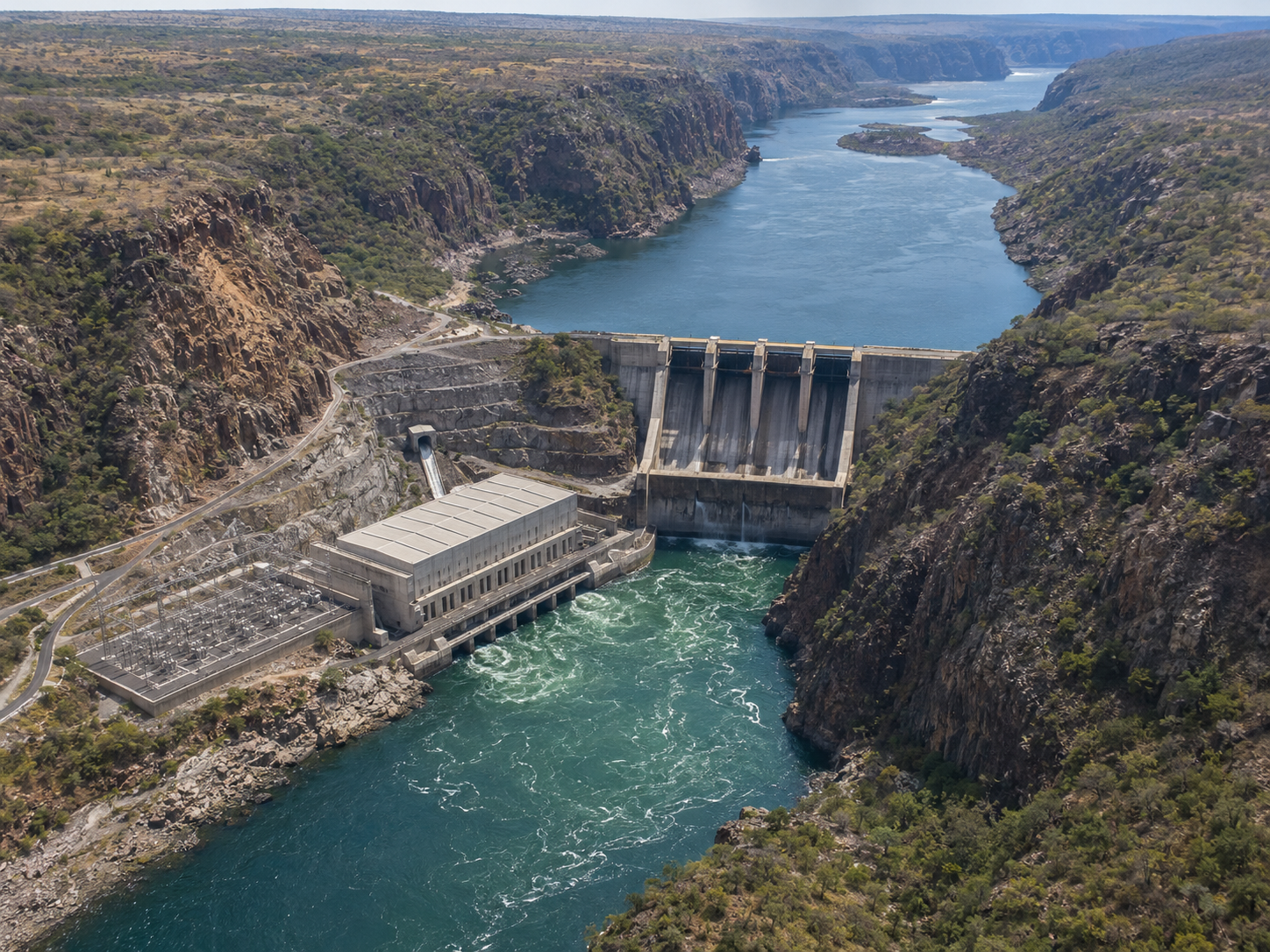
Wide view of the Zambezi River landscape near Batoka Gorge, showing the dramatic river valley downstream of Victoria Falls where Zambia and Zimbabwe plan one of Southern Africa’s largest cross-border hydropower projects.
For Zambia and Zimbabwe, Batoka Gorge is a strategic project because electricity security is one of the foundations of national development. Without stable power, industries slow down, households suffer, hospitals and schools struggle, mines and factories face interruptions, and economic growth becomes fragile. Hydropower remains one of the most important renewable energy resources in the region, and Batoka Gorge is designed to strengthen electricity supply for both countries.
Project Snapshot
- Project: Batoka Gorge Hydropower Project / Batoka Gorge Hydro-Electric Scheme
- Countries: Zambia and Zimbabwe
- River: Zambezi River
- Location: Batoka Gorge, downstream of Victoria Falls
- Implementing authority: Zambezi River Authority
- Planned installed capacity: Up to 2,400 MW
- Dam type: Roller Compacted Concrete RCC arch-gravity dam
- Dam height: About 180 m
- Dam length: About 760 m
- Salient engineering feature: Described by Studio Pietrangeli as the world’s highest RCC concrete arch-gravity dam
- Power layout: Two power stations, one on each side of the river, with about 1,200 MW each
- Main purpose: Hydropower generation, renewable energy supply, regional power security, and cross-border electricity cooperation
- Strategic value: Energy security, industrial development, regional power trade, renewable electricity, and Zambia-Zimbabwe cooperation
- Current status: Feasibility study and Environmental and Social Impact Assessment review / update work
The importance of Batoka Gorge begins with its scale. A 2,400 MW hydropower project can have national and regional significance. For Zambia and Zimbabwe, such a project could contribute to reducing electricity shortages, improving grid stability, supporting industry, and increasing the availability of renewable electricity.
The project also has regional value. Southern Africa is connected through regional energy systems and power-trading arrangements. When one country has surplus electricity, it can potentially support neighbouring countries through the regional grid. A major hydropower project such as Batoka Gorge could therefore support not only Zambia and Zimbabwe, but also the wider Southern African power system if developed and operated effectively.
The Zambezi River Authority plays a central role in the project. As a bilateral institution jointly owned by Zambia and Zimbabwe, it reflects the shared nature of the river and the need for cooperation. Transboundary rivers require trust, technical coordination, water-sharing discipline, environmental responsibility, and long-term institutional commitment. Batoka Gorge is therefore not only an engineering project. It is also a governance project.
The renewed feasibility and ESIA work is an important stage in the project’s development. AFRY reported that it was awarded a contract by the Zambezi River Authority to update the feasibility study and Environmental and Social Impact Assessment for the Batoka Gorge Hydro-Electric Scheme. This kind of review is essential because large hydropower projects must be tested against current technical, environmental, social, financial, and climate conditions before major construction decisions are made.
Hydropower site concept showing a large dam and power-generation infrastructure in a deep river gorge, representing the engineering ambition of the Batoka Gorge project on the Zambezi River.
Hydropower site concept showing a large dam and power-generation infrastructure in a deep river gorge, representing the engineering ambition of the Batoka Gorge project on the Zambezi River.
The engineering potential of Batoka Gorge is impressive. The project is planned in a deep gorge downstream of Victoria Falls, where the river’s natural topography can support hydropower generation. The Zambezi River Authority project description includes a large dam, reservoir, spillway, and two underground power stations. These elements show the complexity of the scheme and the level of technical expertise required.
But the project must also be understood with caution. A large dam on a major river changes the river system. It can affect flow patterns, sediment movement, aquatic habitats, riverine ecosystems, tourism activities, downstream conditions, and local livelihoods. Because Batoka Gorge is near Victoria Falls, environmental and heritage-sensitive planning becomes even more important.
Victoria Falls is one of Africa’s most iconic natural sites and a major tourism engine for both Zambia and Zimbabwe. The Batoka Gorge area is also known for adventure tourism, including river-based activities. Any hydropower development in this zone must therefore consider how reservoir levels, flow changes, construction works, access roads, and operation rules may affect tourism, local businesses, landscape value, and the wider visitor economy.
This does not mean that the project cannot be developed. It means that the project must be developed carefully, transparently, and responsibly. The best hydropower projects are not only those that generate electricity. They are those that balance energy needs with river health, community protection, cultural heritage, biodiversity, climate resilience, and long-term economic value.
The Environmental and Social Impact Assessment (ESIA) process is therefore not a formality. It is one of the most important parts of the project. It must examine environmental flows, aquatic ecology, fisheries, sediment, biodiversity, tourism impacts, cultural and heritage concerns, social risks, land acquisition, community consultation, construction impacts, and cumulative impacts in the Zambezi River system.
Batoka Gorge also raises important questions about climate resilience. Hydropower depends on river flow. Southern Africa has experienced drought periods and climate variability that affect reservoirs and electricity production. A major hydropower scheme must therefore be tested under future hydrological scenarios, including drought years, extreme floods, long-term climate trends, and competition between water uses.
For hydrologists, Batoka Gorge is a case study in river-flow analysis, flood routing, drought risk, reservoir operation, sediment behaviour, and transboundary water management. For dam engineers, it is a case study in dam design, underground power stations, spillway capacity, structural safety, construction logistics, and geotechnical challenges. For environmental experts, it is a case study in biodiversity protection, environmental flows, and riverine ecosystem management. For social specialists, it is a case study in community consultation, tourism livelihoods, social safeguards, and benefit sharing.
The project’s current status must be discussed honestly. Batoka Gorge has been planned and discussed for many years. Like many large African infrastructure projects, it has experienced delays, financing questions, procurement issues, environmental concerns, and shifting implementation conditions. The renewed feasibility and ESIA review shows that the project is still strategically important, but not yet a completed success story.
This honesty matters. Africa’s major water and energy projects should not be presented only through beautiful numbers and large megawatts. They must also be evaluated as real development processes. A project can be technically powerful and still face financial, social, environmental, institutional, and climate challenges. Batoka Gorge is one of those projects where ambition and responsibility must move together.
For Zambia, the project could support national electricity supply, mining, manufacturing, urban growth, and economic resilience. For Zimbabwe, it could contribute to power security, industrial recovery, and grid stability. For the region, it could add renewable generation capacity to the Southern African power system. But these benefits will depend on financing, implementation discipline, transparent governance, environmental safeguards, and fair sharing of benefits.
Regional map-style illustration showing Zambia, Zimbabwe, the Zambezi River corridor, Victoria Falls, and the Batoka Gorge project area as a cross-border energy development zone.
Regional map-style illustration showing Zambia, Zimbabwe, the Zambezi River corridor, Victoria Falls, and the Batoka Gorge project area as a cross-border energy development zone.
The cross-border character of Batoka Gorge is one of its strongest features. Shared infrastructure can build cooperation when it is managed well. It can create shared benefits, shared responsibility, and shared technical knowledge. But shared projects also require clarity: who finances what, who owns what, who receives how much power, how risks are divided, and how environmental and social responsibilities are handled.
This is why the Zambezi River Authority’s role is important. Strong institutions are the backbone of transboundary water infrastructure. Without institutional trust and technical coordination, even good engineering can become difficult to implement. Batoka Gorge will require long-term cooperation between governments, utilities, financiers, engineers, environmental specialists, communities, and regional power institutions.
The project also offers lessons for African infrastructure planning. It shows that Africa has enormous renewable energy potential, but that potential must be developed with modern standards. Large hydropower can support clean energy and development, but only when projects are planned with full awareness of environmental limits, climate uncertainty, social justice, and river-basin sustainability.
For AquaLinked / Water for Africa Experts Media, Batoka Gorge is an essential story because it brings together water, energy, environment, engineering, and regional cooperation. It is not simply a dam project. It is a test of how two countries can share a river and develop a major renewable energy asset while respecting one of Africa’s most valuable natural landscapes.
If the updated studies confirm technical, financial, environmental, and social viability, Batoka Gorge could become one of Africa’s landmark hydropower projects. It could help Zambia and Zimbabwe strengthen power supply, support industrial development, reduce electricity shortages, and contribute to renewable energy generation in Southern Africa.
If the project continues to face delays, financing challenges, environmental concerns, or social opposition, it will remain a reminder that major infrastructure requires more than ambition. It requires trust, competence, transparency, environmental wisdom, and long-term commitment.
Batoka Gorge is therefore more than a proposed 2,400 MW hydropower scheme. It is a symbol of Southern Africa’s energy future, the power of cross-border cooperation, and the responsibility of managing the Zambezi River wisely.
Its final value will not be measured only in megawatts. It will be measured in reliable electricity delivered, communities respected, ecosystems protected, regional cooperation strengthened, and the Zambezi River managed with intelligence for future generations.
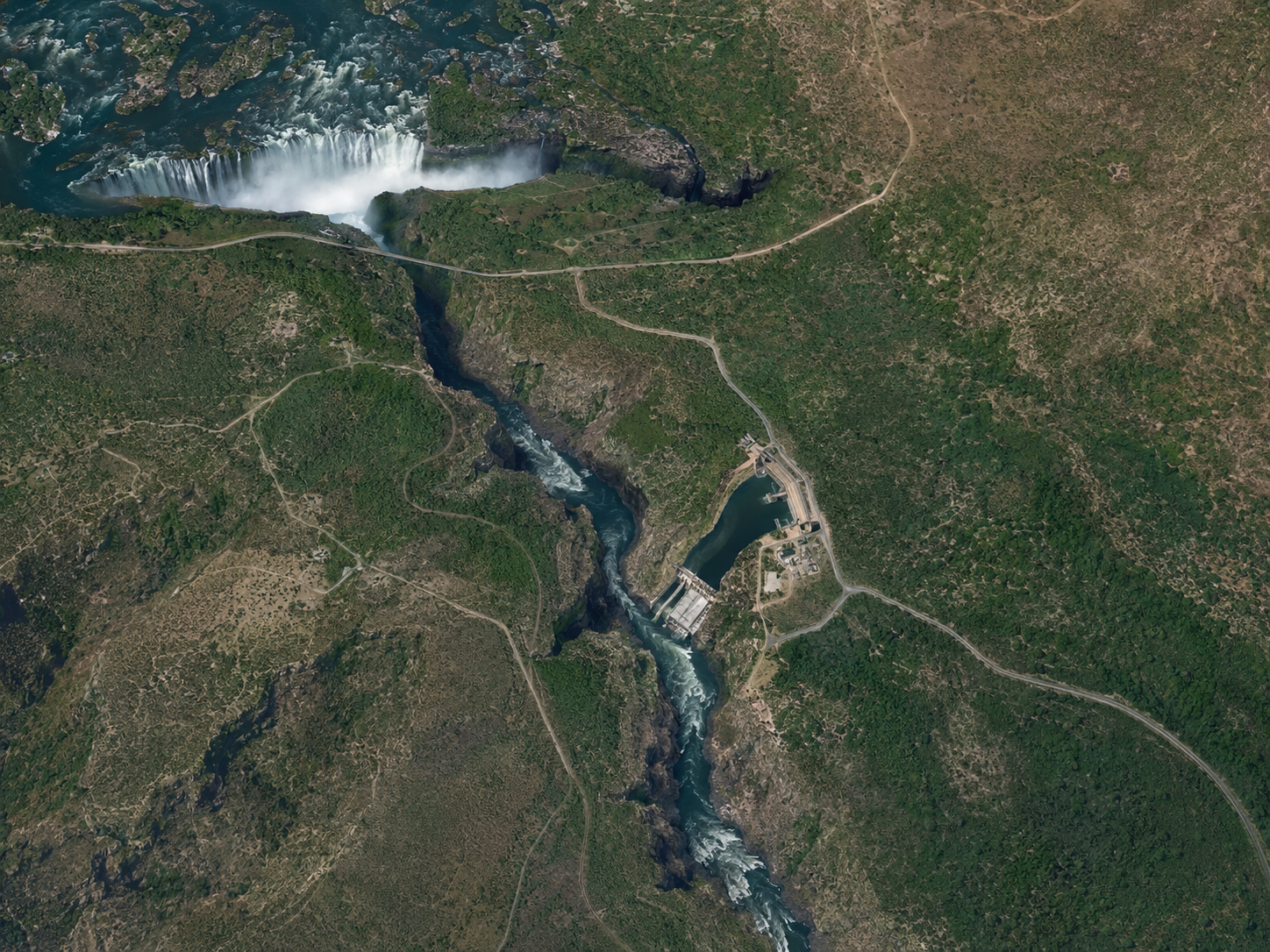
Clean satellite-style view of the Zambezi River corridor downstream of Victoria Falls, showing the gorge landscape, river course, and the strategic location that makes Batoka Gorge important for regional hydropower planning.
Sources
Official references used for this article.
Comments
Comments are reviewed by AquaLinked Media before public display. If your email matches an approved AquaLinked expert profile, your comment may appear with your expert profile link after approval.
No approved comments yet. Be the first to contribute respectfully.
No password is needed. Enter the email connected to your expert profile, and the system will check whether your expert profile exists.
Please login or register before commenting.