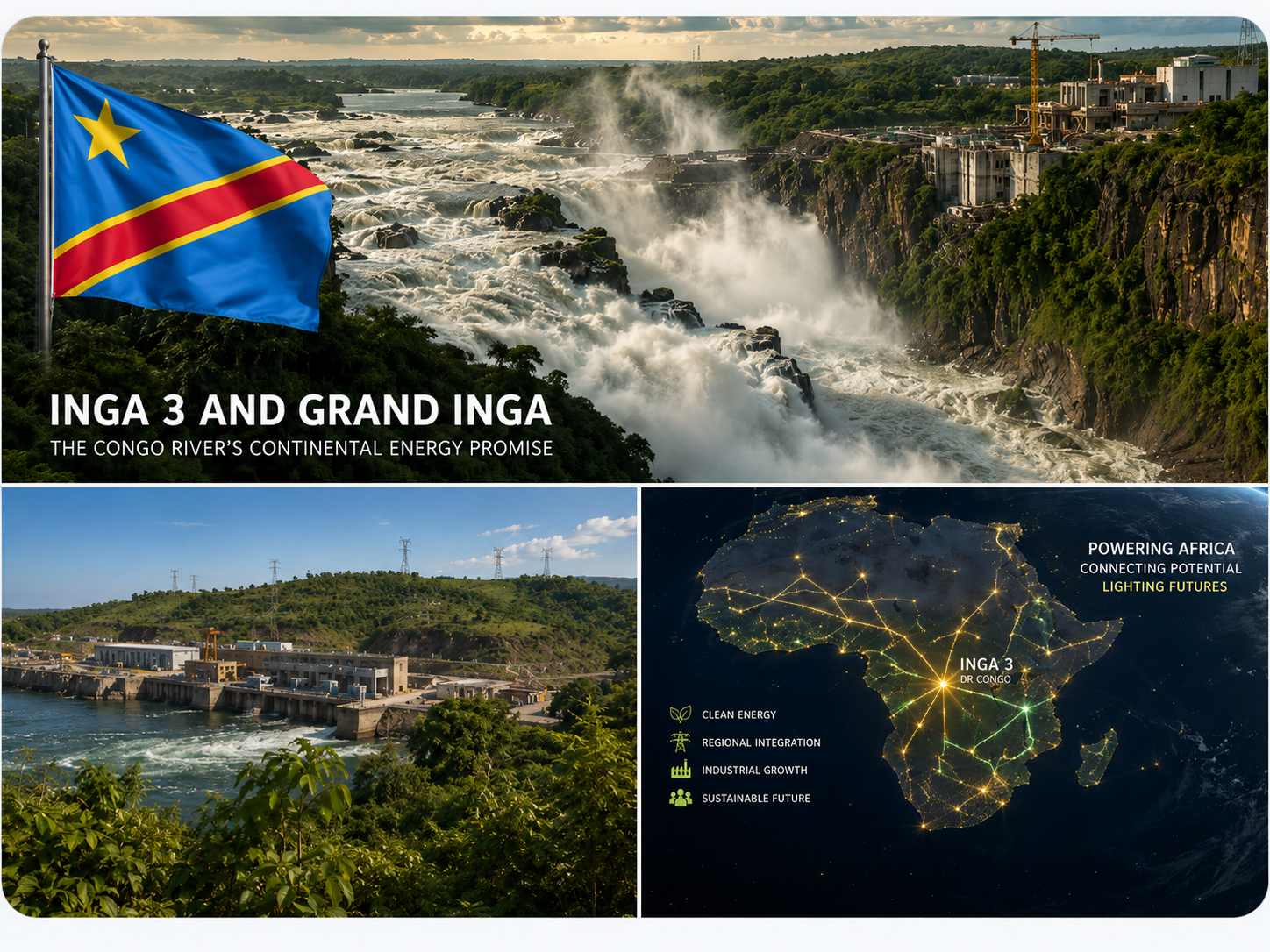
Inga 3 and Grand Inga: The Congo River’s Continental Energy Promise
On the lower Congo River, where one of the world’s most powerful river systems descends through the Inga Falls area toward the Atlantic Ocean, Africa holds one of its greatest unfinished infrastructure possibilities. This is the story of Inga 3 and the wider Grand Inga vision — not yet a completed achievement, but a project so large in potential that it has shaped African energy imagination for generations.
Inga speaks of continental scale. It is the kind of project that forces engineers, economists, governments, communities, financiers, and environmental specialists to think beyond one country and imagine an African power system that could influence regions, industries, mines, cities, and future generations.
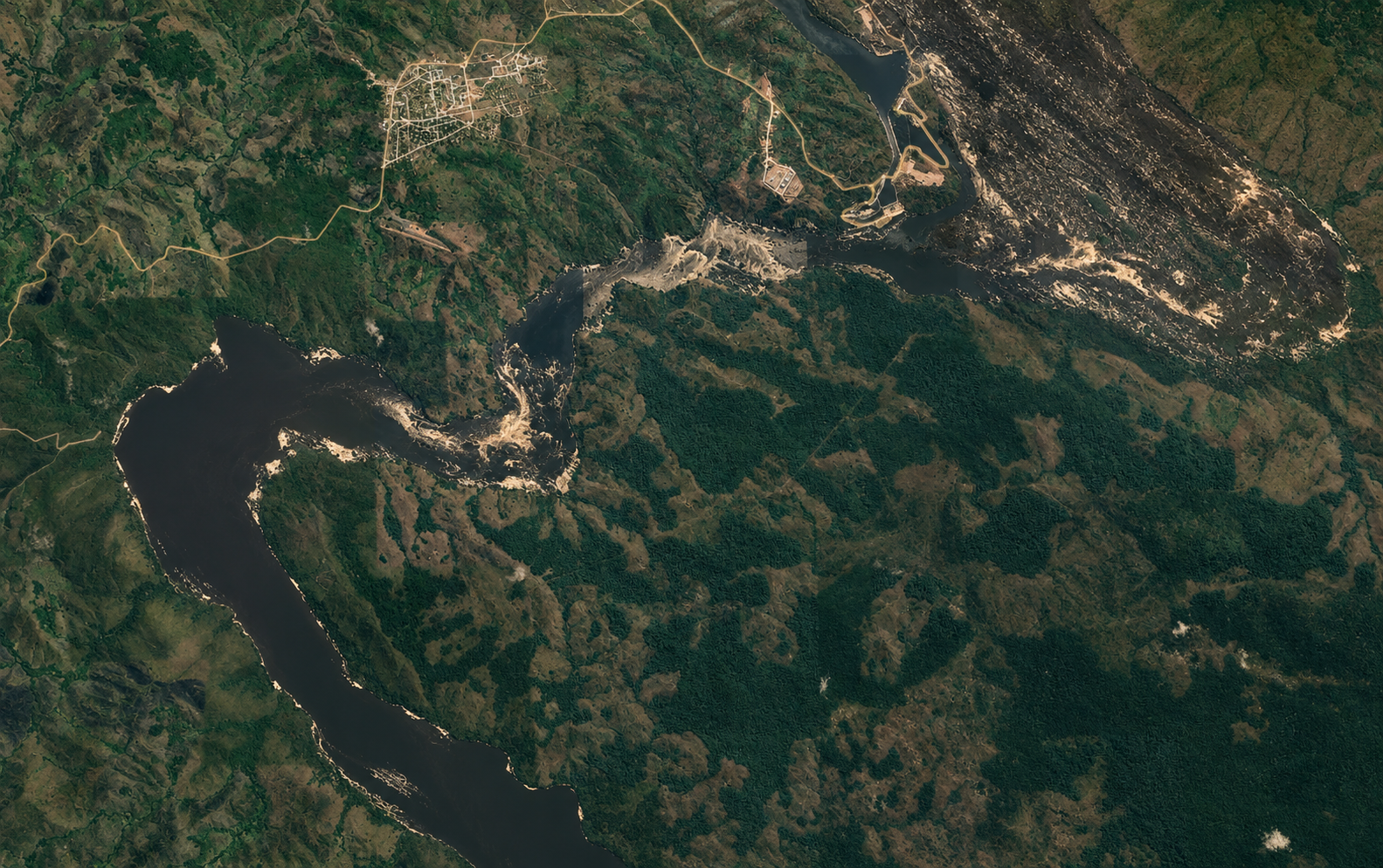
The Inga site is located in the Democratic Republic of Congo, on the Congo River. The Congo is one of the world’s great rivers by discharge, and its enormous flow gives the Inga area exceptional hydropower potential. The total hydropower potential of the Inga site is commonly estimated at about 42 GW. This is why Grand Inga has long been described as one of the largest hydropower opportunities in the world.
But Inga’s story is also a story of delay, complexity, and unfinished promise. For decades, the dream of harnessing the Congo River at scale has moved through studies, proposals, financing debates, institutional changes, political questions, environmental concerns, and social justice arguments. Inga 1 and Inga 2 already exist, but the larger expansion — especially Inga 3 and the full Grand Inga vision — remains a major development challenge.
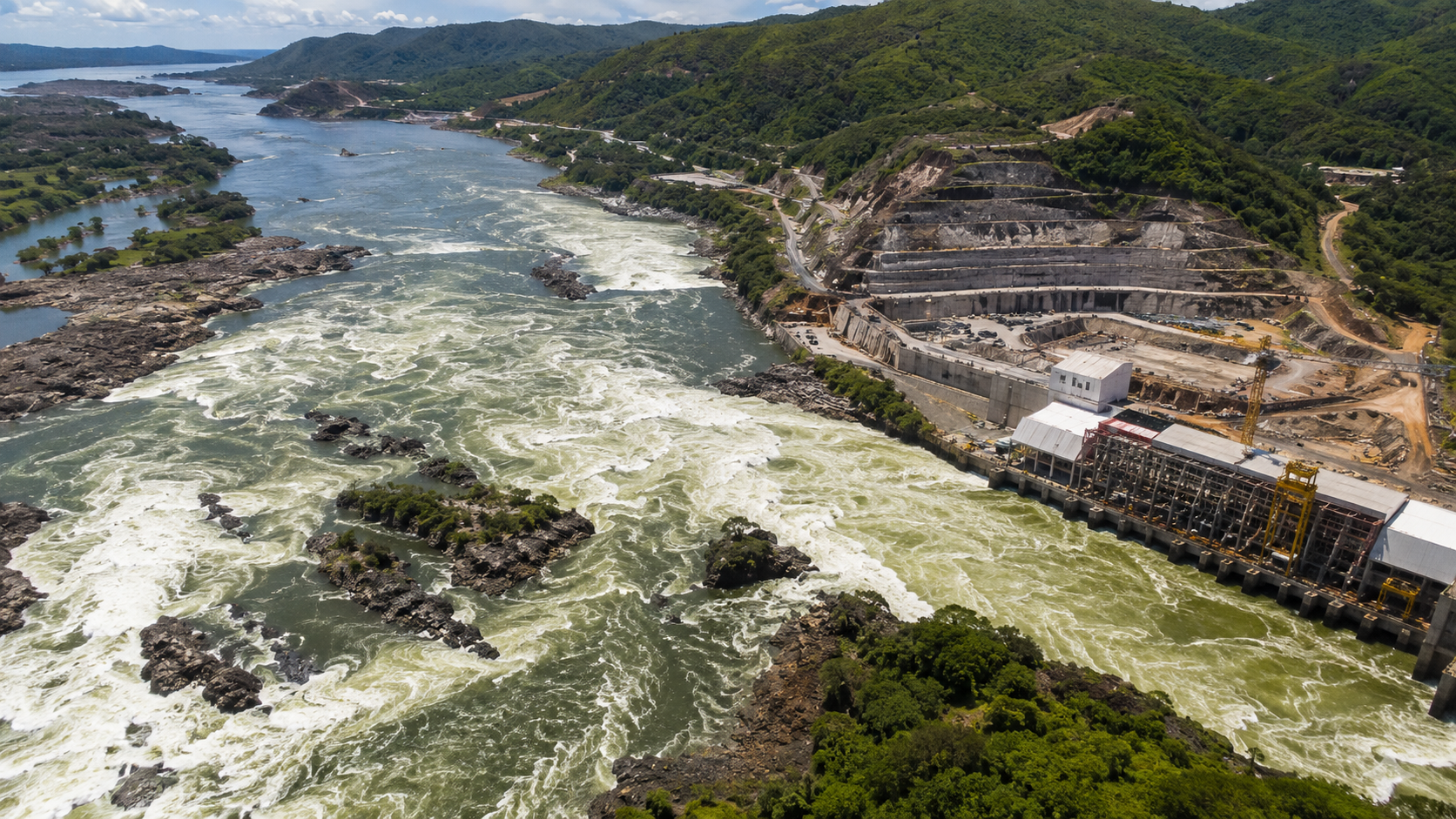
In June 2025, the World Bank approved the first phase of a new Inga 3 Development Program. The approved first phase includes $250 million in financing as part of a planned $1 billion multiphase program intended to help the Democratic Republic of Congo prepare the foundations for sustainable development of Inga 3. This does not mean the full dam is already built. It means the project has entered a renewed preparation stage involving institutions, studies, local development, infrastructure, jobs, and readiness for future investment.
Strategic Dossier
- Project: Inga 3 Development Program / Grand Inga vision
- Country: Democratic Republic of Congo
- River: Congo River
- Location: Inga area, Kongo Central Province
- Main purpose: Large-scale hydropower development
- Status: Preparation / Development Program
- Estimated Inga site potential: About 42 GW
- World Bank 2025 support: $250 million first phase within a planned $1 billion program
Strategic value: Electricity access, industrial growth, regional power trade, mining value addition, jobs, clean-energy development, and continental power integration
The importance of Inga 3 begins with electricity access. The Democratic Republic of Congo has enormous natural-resource wealth, but electricity access remains low for many people. The World Bank has noted that only about 21% of Congolese people have access to electricity, while the country’s National Energy Compact aims to raise access significantly by 2030. This makes Inga not just an engineering project, but a human-development question.
Electricity is not an abstract number. It is the difference between darkness and study time, between a clinic with reliable refrigeration and one without, between raw minerals exported cheaply and minerals processed domestically, between a small enterprise surviving and a local economy expanding. For DRC, Inga 3 could support a much larger national transformation if the generated power is connected to people, industries, cities, and productive sectors.
The Congo River gives Inga its extraordinary physical power. Unlike rivers that require very large artificial storage to create energy potential, the Inga site benefits from massive natural river flow and elevation change. This creates the possibility of generating very large amounts of electricity from the river’s movement. For engineers, the site is remarkable because the river itself already carries an enormous hydraulic force.
However, potential is not the same as delivery. This is the central lesson of Inga. A project may have world-class hydropower potential, but it still requires strong institutions, transparent governance, credible financing, environmental and social safeguards, transmission infrastructure, market agreements, construction capacity, and long-term operation discipline. Without these, even the greatest river can remain an unrealized promise.
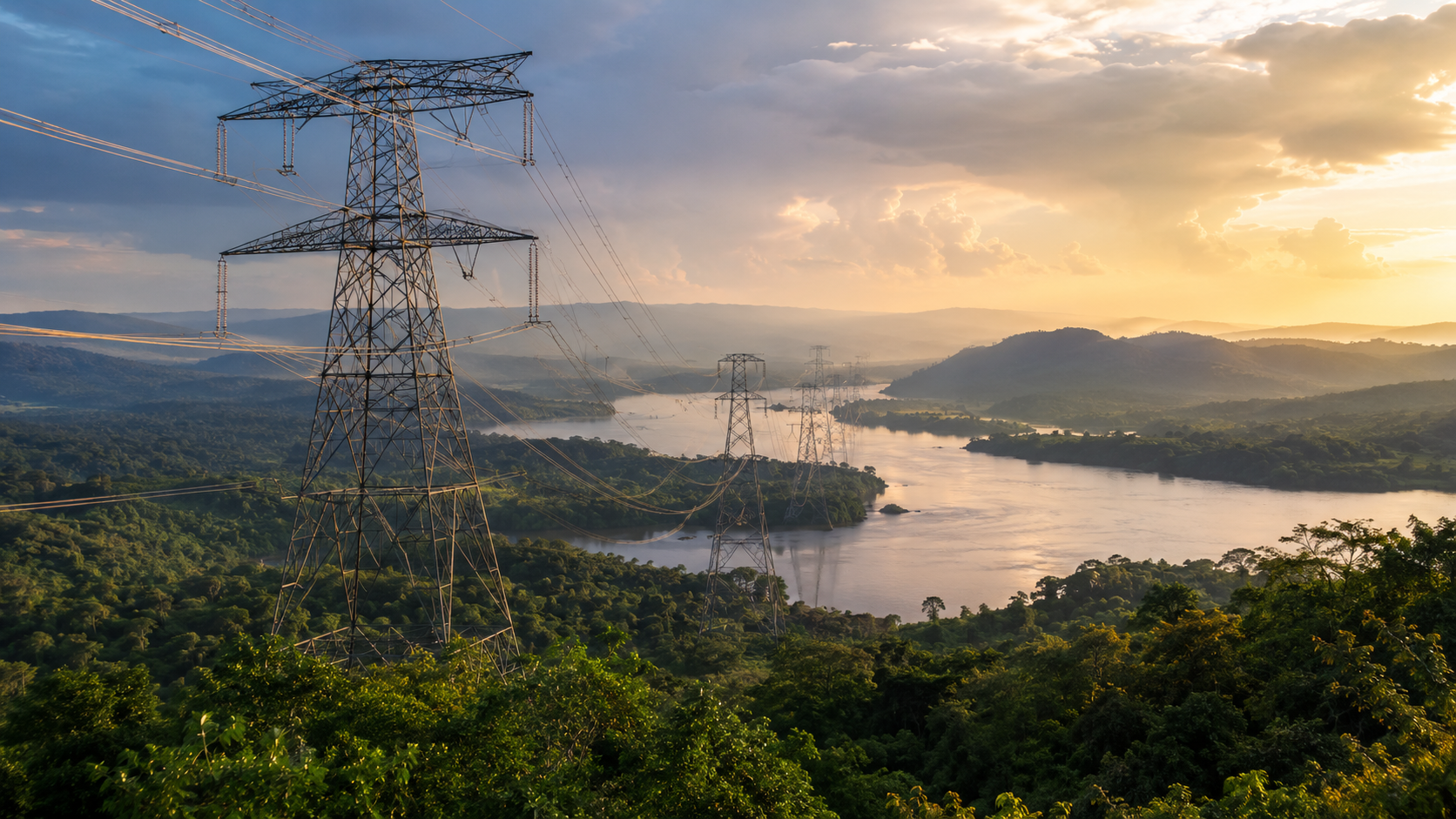
Inga 3 also raises the question of transmission. Generating power at the Congo River is only one part of the challenge. The electricity must reach demand centres. That means high-voltage transmission lines, substations, grid reinforcement, power-purchase agreements, cross-border coordination, and industrial users that can pay for reliable supply. Inga is therefore not only a dam project; it is a grid, market, and governance project.
The regional importance is enormous. If developed responsibly, Inga 3 could support electricity supply within DRC and contribute to wider African power trade. Central Africa, Southern Africa, and possibly other regions could benefit if the transmission network, agreements, and markets are built with discipline. This is why Inga is often discussed as a continental energy project rather than only a Congolese project.
The mining sector is another important part of the story. DRC is central to the global energy transition because of minerals such as copper and cobalt. But mining and mineral processing require reliable electricity. If Inga 3 supports domestic value addition, DRC could move beyond exporting raw materials and strengthen processing, manufacturing, employment, and public revenue. This is one reason Inga is tied to the country’s wider economic transformation.
The 2025 development program also emphasizes local communities near Inga. This is essential. Too many major infrastructure projects in Africa and around the world have promised national benefit while local people carried the greatest burden. If Inga 3 is to become a new kind of African mega-project, local development must not be treated as an afterthought. Roads, clean water, local electricity, jobs, training, health services, fair compensation, and community participation must be built into the project from the beginning.
Inga also carries environmental and social concerns. Civil society organizations have questioned whether the project will truly serve Congolese households, whether debt risks are manageable, whether affected communities will be protected, and whether decision-making will be transparent. These concerns are not enemies of development. They are part of responsible development. A project of this size must earn legitimacy through evidence, fairness, and accountability.
This is where Inga 3 becomes a test of modern African infrastructure governance. Africa needs large projects, but large projects must be done better. They must combine engineering ambition with public trust. They must deliver national development without sacrificing local communities. They must attract investment without creating unsustainable debt. They must protect rivers and ecosystems while expanding energy access. They must be African in benefit, not only African in location.
For hydrologists, Inga is a study of one of the world’s strongest river systems. For dam engineers, it is a study in large-scale hydropower design and staged development. For transmission engineers, it is a study in moving power across long distances. For economists, it is a study in financing, tariffs, power markets, and industrial demand. For environmental and social specialists, it is a study in how mega-projects affect people, land, rivers, and trust.
The greatest question around Inga 3 is not whether the Congo River has power. It clearly does. The question is whether institutions can convert that natural power into reliable electricity, fair development, regional cooperation, and long-term African value. That is the real engineering challenge — not only the river, but the system around the river.
Inga 3 deserves a place in the “Major African Water Projects” series because it represents Africa’s largest unfinished hydropower possibility. It is not yet an accomplished structure like GERD or Julius Nyerere. It is an accomplished idea returning to serious preparation. Its importance lies in what it could become if handled wisely.
If Inga 3 is developed with transparency, technical excellence, social justice, environmental responsibility, and strong regional planning, it could become one of the most transformative energy projects in African history. If it is developed poorly, it could become another warning about mega-projects that promised too much and delivered too little to ordinary people.
That is why African water experts must follow Inga closely. It is not enough to admire its 42 GW potential. Experts must ask: Who will receive the power? Who will pay? Who will benefit? Who will be affected? How will the river be managed? How will communities be protected? How will DRC’s citizens gain real access to electricity? How will Africa avoid repeating old infrastructure mistakes?
The Congo River is already powerful. The task now is to make the project worthy of the river. Inga 3 and Grand Inga are not only about building Africa’s largest hydropower dream. They are about proving that Africa can govern greatness with wisdom.
For AquaLinked / Water for Africa Experts Media, Inga 3 is the fifth major story in this series. It adds a different voice to the continent’s water infrastructure narrative: the voice of possibility, preparation, caution, and continental ambition. It reminds us that Africa’s future will not be shaped only by projects already completed, but also by the great projects now being prepared — and by the quality of the decisions made before the first concrete is poured.
Sources
Official references used for this article.
Comments
Comments are reviewed by AquaLinked Media before public display. If your email matches an approved AquaLinked expert profile, your comment may appear with your expert profile link after approval.
No approved comments yet. Be the first to contribute respectfully.
No password is needed. Enter the email connected to your expert profile, and the system will check whether your expert profile exists.
Please login or register before commenting.