
Ruzizi III Regional Hydropower Project: Shared Water, Shared Power, and Regional Cooperation
Some African water projects are powerful because of their size. Others are powerful because of what they represent. The Ruzizi III Regional Hydropower Project belongs strongly to the second category. It may not be as large as GERD, Inga, or Julius Nyerere, but its meaning is profound: three countries sharing one river, one power project, and one development opportunity.
Planned on the Ruzizi River in Africa’s Great Lakes region, Ruzizi III is designed to serve the Democratic Republic of Congo, Rwanda, and Burundi. The river flows from Lake Kivu toward Lake Tanganyika, passing through a region where water, mountains, borders, communities, electricity demand, and political history are deeply connected.
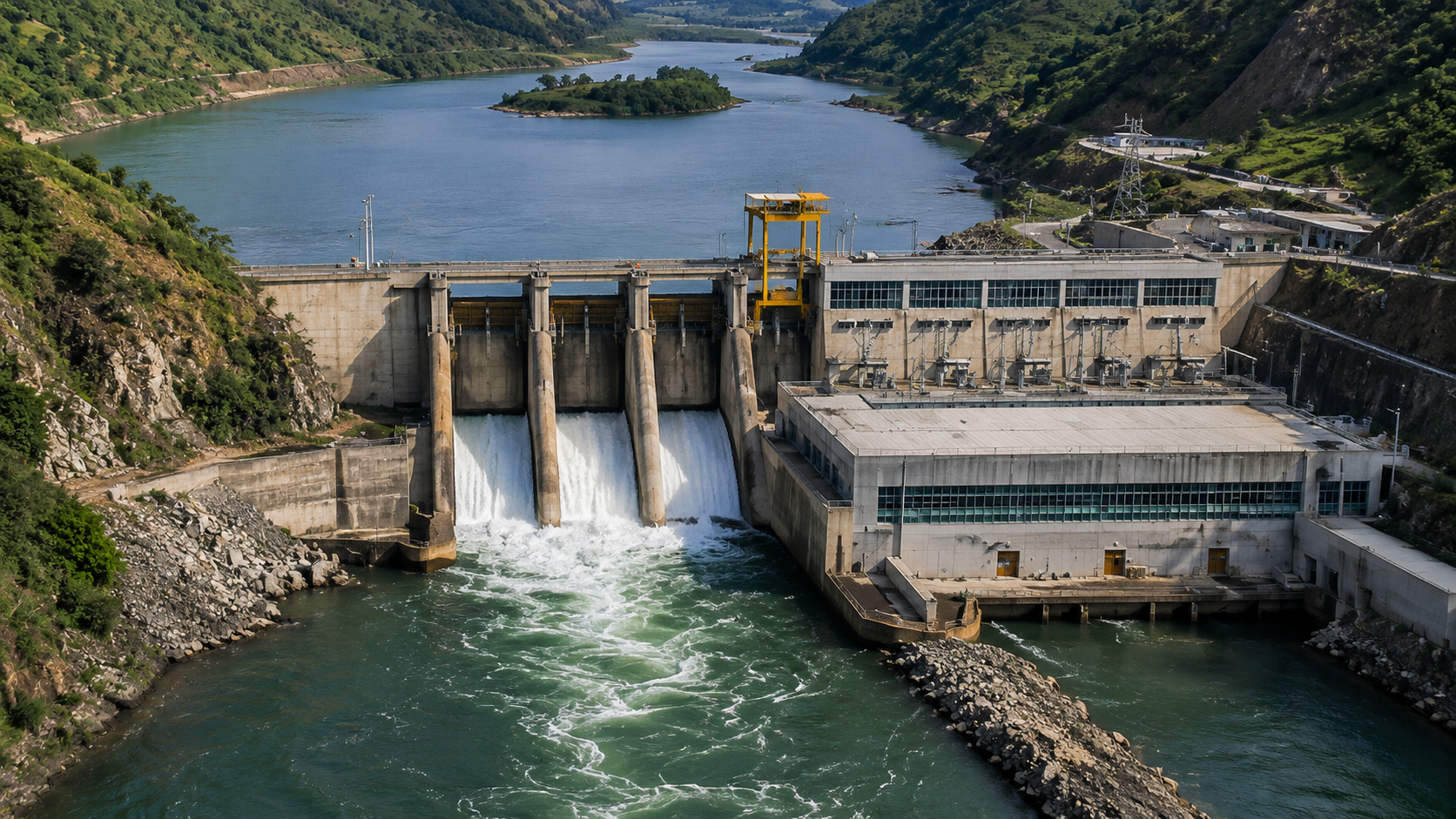
The project is planned as a 206 MW run-of-river hydropower plant. Unlike large storage dams that create massive reservoirs, a run-of-river project uses the natural flow and hydraulic drop of the river with more limited storage. This makes Ruzizi III a different kind of hydropower story: compact in size, regional in ownership, and strategic in impact.
Project Snapshot
- Project: Ruzizi III Regional Hydropower Project
- Countries: Democratic Republic of Congo, Rwanda, and Burundi
- River: Ruzizi River
- Region: African Great Lakes / Central-East Africa
- Type: Run-of-river hydropower project
- Planned installed capacity: About 206 MW
- Purpose: Clean electricity generation and regional power supply
Strategic value: Regional integration, shared water-resource development, energy security, private-public cooperation, and cross-border infrastructure development
Status: Advanced development / financing and implementation preparation, with regional security and financing risks requiring careful management
The Ruzizi River already has hydropower history. Ruzizi I and Ruzizi II were developed earlier on the same river system. Ruzizi III is the next major step in that cascade. Its purpose is not only to add electricity, but to strengthen a regional system where power can be shared among countries with urgent energy needs.
For Burundi, Rwanda, and eastern DRC, reliable electricity is not a luxury. It is necessary for hospitals, schools, water utilities, small businesses, agriculture, industry, mining, digital services, and household life. In many parts of the region, electricity shortages limit development and increase dependence on expensive or polluting alternatives. Ruzizi III is designed to help change that reality.
The strongest message of Ruzizi III is cooperation. The project depends on three countries agreeing to share benefits from a common river. That is not easy. Shared rivers often create tension when countries compete over control, benefits, and risks. Ruzizi III offers a more constructive example: a river can become a shared asset rather than a shared problem.
This is why Ruzizi III is important for African water professionals. It is not just a hydropower plant. It is a regional governance project. Engineers can design the dam, intake, waterways, turbines, and transmission lines, but the project cannot succeed without agreements, institutions, financing discipline, and trust among the participating countries.
The energy produced by Ruzizi III is expected to be shared among Burundi, Rwanda, and the Democratic Republic of Congo. This makes the project an example of regional power integration. Instead of every country trying to build alone, the three countries can benefit from a common resource and a common infrastructure platform.
The project also shows the importance of public-private partnership in African infrastructure. Ruzizi III has been structured with involvement from the three states and private-sector sponsors, supported by development finance institutions. This kind of structure can bring financing, technical expertise, and implementation capacity, but it also requires transparency, clear contracts, fair tariffs, and strong public oversight.
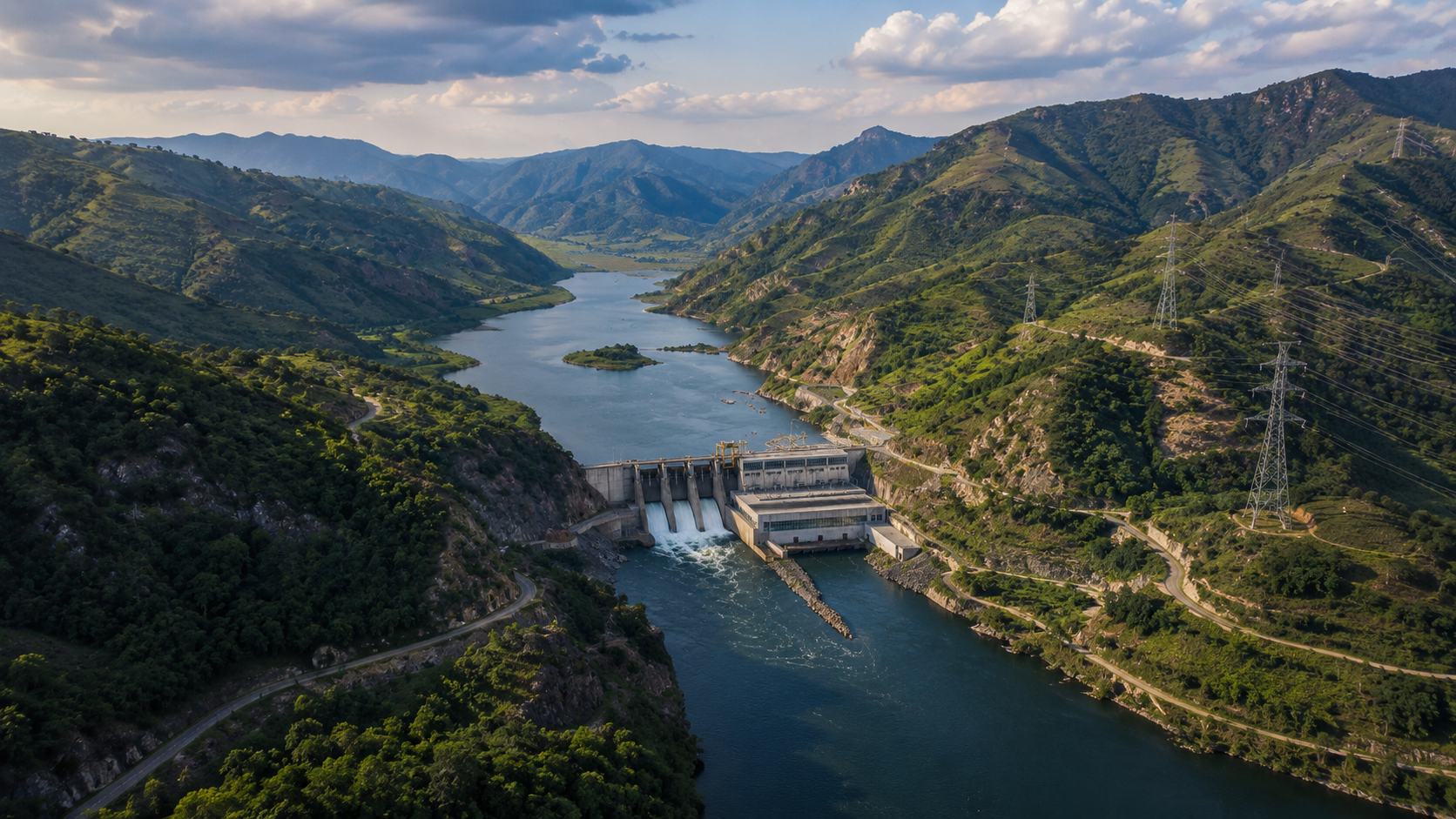
From a technical point of view, Ruzizi III is interesting because it is a run-of-river project in a steep and strategic river corridor. The project must manage river flow, hydraulic head, environmental flows, sediment movement, dam safety, intake design, powerhouse operation, transmission interconnection, and coordination with existing hydropower plants upstream.
From a regional development point of view, the project is even more important. It can increase clean power supply in a region where electricity access remains a major development challenge. More reliable electricity can support local industry, improve services, reduce energy costs, and create a stronger foundation for long-term economic growth.
But Ruzizi III also requires honesty. This is not a simple project in a simple region. The Great Lakes area has experienced conflict, instability, displacement, and political tension. Recent reporting has shown that some financiers have been cautious because of security risks and conflict dynamics in eastern DRC. This means the project’s success depends not only on engineering and financing, but also on regional stability and diplomatic maturity.
This reality should not make the project less important. It makes it more important. If Ruzizi III moves forward responsibly, it can become a sign that shared infrastructure can help rebuild trust in a difficult region. A hydropower plant cannot solve all political problems, but it can create a practical reason for countries to cooperate.
The social and environmental dimensions must also be taken seriously. A river project affects land, water, aquatic ecosystems, local livelihoods, construction areas, access routes, and downstream flow conditions. Communities must be informed and respected. Compensation and livelihood restoration must be fair. Environmental flow management must be monitored. Dam safety and emergency preparedness must be strong.
Ruzizi III therefore belongs to a new generation of African infrastructure thinking. It is not enough to say “build the dam.” The real question is: build it for whom, under what rules, with what safeguards, and with what long-term regional benefits?
For hydrologists, Ruzizi III is a project about river flow, lake outlet systems, catchment behaviour, climate variability, and cascade operation. For dam engineers, it is about run-of-river design, hydraulic head, power waterways, intake structures, and safety. For power engineers, it is about grid connection and electricity sharing. For economists, it is about tariffs, financing, risk allocation, and regional markets. For social and environmental specialists, it is about making sure the project protects people and river health.
Ruzizi III is smaller than some of Africa’s mega-projects, but it carries a very large lesson: shared water can become shared development if countries choose cooperation over suspicion. In a continent with many transboundary rivers, this lesson matters deeply.
Its message is simple but powerful: Africa’s rivers do not belong only to borders. They belong to basins, communities, ecosystems, and shared futures. When countries cooperate, water can carry more than flow. It can carry electricity, trust, stability, and development.
Ruzizi III is therefore more than a hydropower project. It is a test of shared responsibility in the Great Lakes region. If built and managed wisely, it can become one of Africa’s most meaningful examples of how common water resources can support common progress.
Sources
Official references used for this article.
Comments
Comments are reviewed by AquaLinked Media before public display. If your email matches an approved AquaLinked expert profile, your comment may appear with your expert profile link after approval.
No approved comments yet. Be the first to contribute respectfully.
No password is needed. Enter the email connected to your expert profile, and the system will check whether your expert profile exists.
Please login or register before commenting.