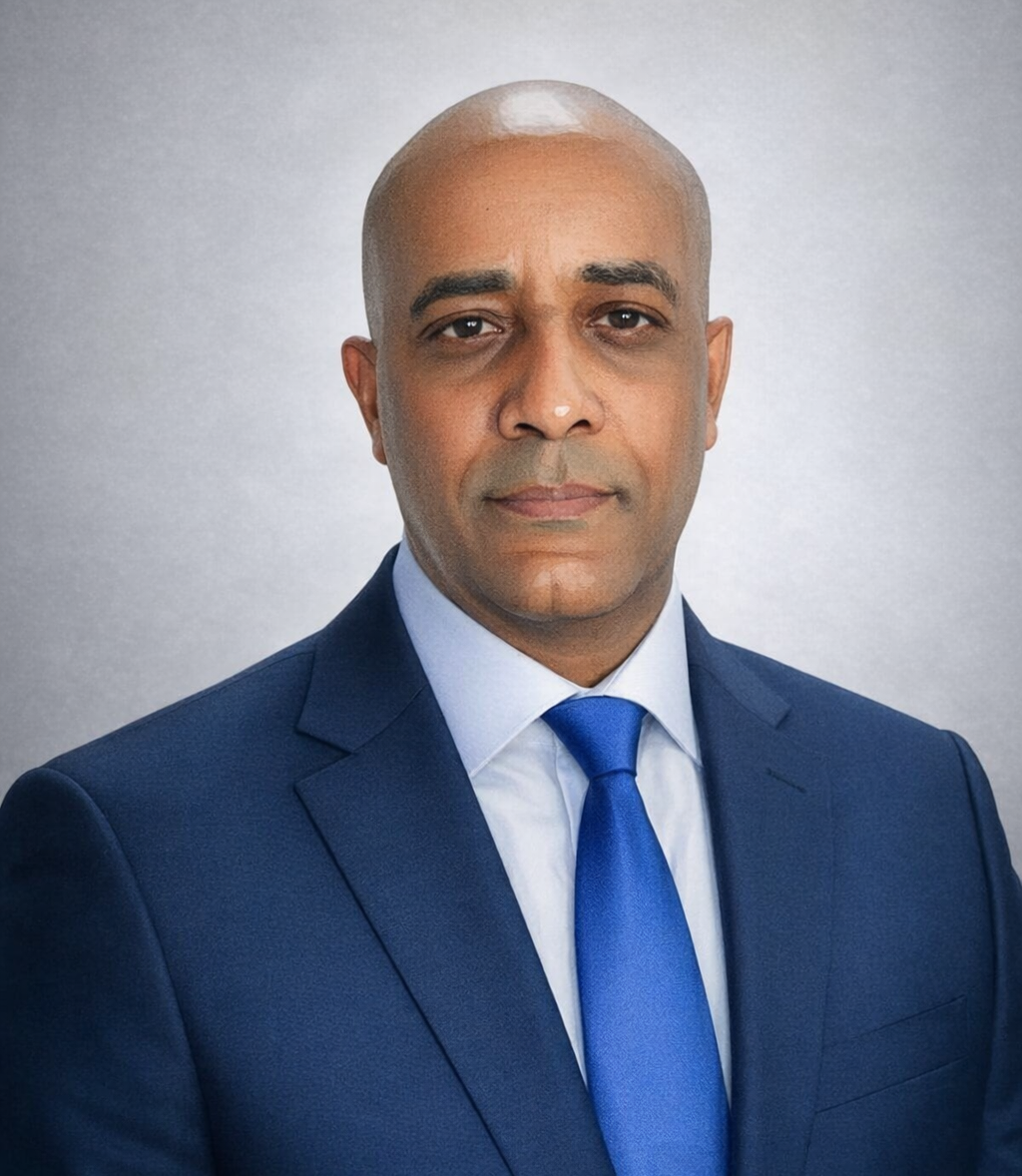
Engineering, Hydrology and Water Resources
Eng. Mesfin Hagos Tewolde is an irrigation engineer, hydrologist and civil engineer whose professional career has developed from practical irrigation engineering into engineering hydrology, dam and reservoir studies, hydraulic modelling, GIS, research and international engineering consultancy.
He studied Civil / Irrigation Engineering at the Arba Minch Water Technology Institute in Ethiopia, where the HARE Irrigation Project Design Report formed his Bachelor of Science in Engineering graduation project. The HARE study therefore represents one of the earliest major engineering works in a professional journey that has remained closely connected to water, irrigation and hydraulic infrastructure.
From Irrigation Construction to Dam Engineering
Shortly after completing his engineering studies, Eng. Mesfin began working as a construction engineer with SAERT in the Tigray Region of Ethiopia. There he gained direct field experience on the Adigudem reservoir-fed surface-irrigation project, working on primary, secondary and tertiary canals, numerous hydraulic drop structures, gated turnouts, culverts, stilling basins, surveying, setting out, quality monitoring and construction supervision.
He subsequently worked with the Ministry of Agriculture in Eritrea on irrigation systems, earth canals, hydraulic structures, reservoirs and small-scale earth dams, further strengthening the practical irrigation and dam-engineering foundation established during his university education.
Flood Routing, Catchments and Scientific Work
His professional interests later developed increasingly towards engineering hydrology. Eng. Mesfin completed a Master of Science in Hydrological Engineering at the University of KwaZulu-Natal in South Africa, where his research focused on flood routing in ungauged catchments using Muskingum methods.
This research developed into a peer-reviewed scientific publication, a conference contribution and a published book, which was subsequently translated into seven widely spoken languages, extending the accessibility of the work to readers in different parts of the world.
He later worked as an assistant researcher at the University of KwaZulu-Natal and as a research collaborator at the Central University of Technology in Bloemfontein, contributing to research on small-scale rainwater-harvesting technologies for Southern Africa.
Geomatics, GIS and River Hydraulics
Following his work in South Africa, Eng. Mesfin continued his academic and professional development in Switzerland. At the University of Fribourg, he worked as a scientific collaborator and doctoral candidate in areas combining hydrology, geomatics, GIS, photogrammetry, satellite imagery and spatial modelling.
He subsequently undertook advanced studies and professional training in geomatics, water management, GIS, urban planning, AutoCAD, Revit and related engineering subjects through Swiss institutions including HES-SO, the University of Geneva and EPFL.
He also worked temporarily as a hydrologist for the Republic and Canton of Geneva, where his assignment involved low-flow discharge analysis and HEC-RAS modelling of the Aire River.
Integrated Water-Resources Engineering
Over the course of his career, Eng. Mesfin has developed broad expertise in surface, sprinkler and drip irrigation; canal hydraulics and water-control structures; small dams and reservoirs; engineering and design hydrology; flood routing; reservoir routing; river hydraulics; HEC-RAS and HEC-HMS modelling; catchment studies; SWAT-based analysis; GIS and remote sensing; flood mapping; construction supervision; and technical reporting.
His professional experience spans Ethiopia, Eritrea, South Africa and Switzerland and combines practical construction, engineering design, field supervision, academic research, modelling and independent consultancy.
Engineering Recognition and Knowledge Contribution
Eng. Mesfin is professionally recognized as a European Engineer (EUR ING) and as a Mandataire Professionnellement Qualifié (MPQ) in Geneva, and he is a member of the Swiss Society of Engineers and Architects (SIA).
His scientific and technical contributions include the book Flood Routing in Ungauged Catchments using Muskingum Methods, a peer-reviewed article published in Water SA, contributions to Water Research Commission technical reports, and conference and seminar work in hydrology, irrigation, geomatics and water-resources engineering.
Extending Engineering Beyond Individual Projects
In parallel with conventional engineering practice, Eng. Mesfin has extended his work into digital water innovation and professional knowledge sharing. He has conceived and developed platforms supporting African water professionals, scientific water-data access, technical education and specialized water-sector media, together with hydrological analysis tools and Android applications.
These activities reflect a continuing effort to make engineering knowledge, scientific information, professional expertise and technical learning resources more accessible to engineers, researchers, students and water-sector institutions.
Technical and Literary Writing
Alongside his technical education, Eng. Mesfin has also pursued the study of the French language in Switzerland, undertaking courses and language development through several institutions, including the University of Fribourg, IFAGE in Geneva, the University of Geneva and the Programme CIUS de l’Université de Fribourg (Cours d’Introduction aux Études Universitaires en Suisse).
This long engagement with French has supported his academic, professional and social integration in Switzerland and has also enabled him to write and publish for both English- and French-speaking readers.
Beyond engineering and scientific writing, Eng. Mesfin is also the author of books dealing with human experience, survival, exile, memory, hope and the rebuilding of life after adversity. His non-technical works include From Expendable to Escaped: A Journey of Survival – Eritrea: A Broken Dream Made Real, published in both English and French editions; Twenty Winters in Silence, also published in English and French editions; and A Journey of Exile and Hope: Building a New Life in Switzerland – Off the Beaten Path: Switzerland’s Hidden Corners.
Past Calculations, Present Understanding
The HARE Irrigation Project occupies a special place in this long professional journey. Undertaken at the beginning of his engineering career as a university graduation project, it helped establish the foundation from which his subsequent work in irrigation, hydrology, dams, hydraulic modelling and water-resources engineering developed.
Bringing the project back into print therefore connects engineering education with professional experience, and past calculations with present understanding.
Revisiting the project through this book, after decades of field practice, research and international professional experience, brings together two perspectives separated by many years: that of the young irrigation-engineering student who participated in the original HARE study, and that of the experienced hydrologist, irrigation engineer and civil engineer who continued working with water throughout his professional life.
In this sense, the publication of the HARE Irrigation Project is not simply the reproduction of an early academic study; it is also a return to the point from which a lifetime of engineering, research and professional development began.