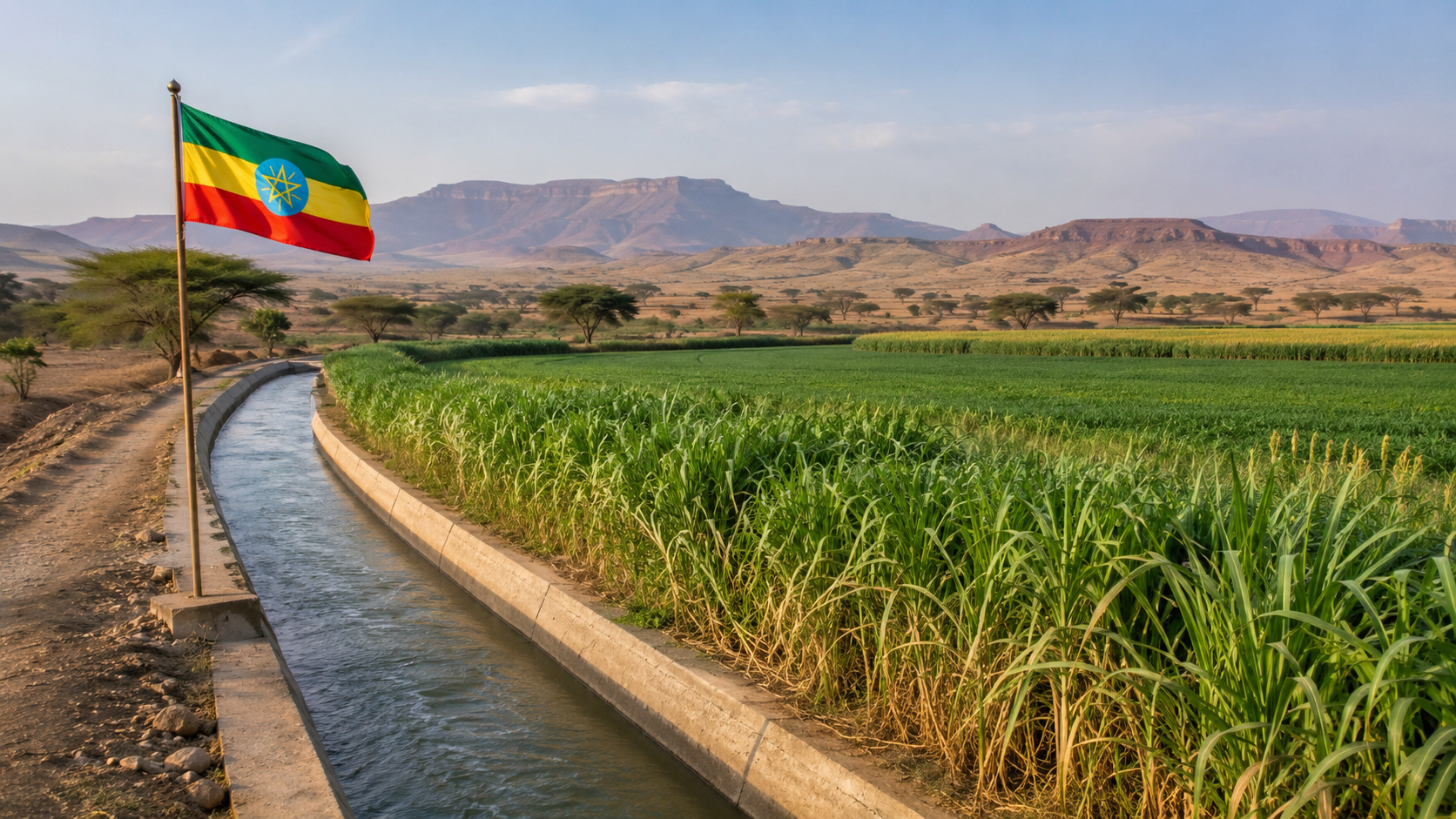
Awash Valley Irrigation Development Projects — Ethiopia
The Awash Valley Irrigation Development Projects are among Ethiopia’s most important irrigation-development systems. The Awash River rises in the central highlands of Ethiopia and flows northeast through the Rift Valley and the Afar lowlands. Unlike the Blue Nile, Tekeze, Baro, and Omo rivers, the Awash River does not leave Ethiopia. It is an internal river system that supports towns, farms, industries, pastoral communities, wetlands, and irrigation schemes before ending in the Afar depression.
The Awash Valley has a special place in Ethiopia’s irrigation history. It became one of the earliest areas where large-scale commercial irrigation was developed, especially for sugarcane, cotton, fruit, vegetables, and other crops. Over time, the valley became a major agricultural corridor linking the Upper, Middle, and Lower Awash areas.
Project Fact Box
- Project name: Awash Valley Irrigation Development Projects
- Country: Ethiopia
- Main basin: Awash River Basin
- Main river: Awash River
- Main development corridor: Upper Awash, Middle Awash, and Lower Awash Valley
- Main regions: Oromia and Afar, with strong links to nearby urban and industrial areas
- Project type: Large-scale irrigation, sugar estate irrigation, cotton irrigation, horticulture, smallholder irrigation, agro-industrial development, and dryland water-resource development
- Main crops: Sugarcane, cotton, vegetables, fruit, maize, onions, fodder crops, and other irrigated crops
- Major irrigation areas and estates: Wonji-Shoa, Metehara, Kessem, Amibara, Gewane, Tendaho, Dubti, and other Awash Valley schemes
- Strategic importance: One of Ethiopia’s oldest, largest, and most intensively used irrigation corridors
- Why the Awash Valley Is Important
The Awash Valley is important because it shows how a river can support agricultural development in dry and semi-arid landscapes. Much of the middle and lower valley receives limited and variable rainfall. Without irrigation, agriculture would be highly uncertain in many parts of the basin. With irrigation, the valley has supported sugarcane plantations, cotton production, horticulture, smallholder farming, livestock-feed production, and agro-industrial employment.
The Awash Basin is also strategically located. It is close to major roads, towns, industrial areas, and transport corridors. This has made it attractive for irrigation, sugar estates, state farms, commercial agriculture, and settlement development. Because of this, the basin is one of Ethiopia’s most intensively used water-resource systems.
The valley also matters because it supports different water users at the same time. Irrigation, domestic water supply, industry, pastoral livestock, wetlands, and ecosystems all depend on the same river. This makes the Awash River Basin a strong example of why integrated water-resource management is essential.
Historical Irrigation Development
Irrigation in the Awash Valley expanded significantly during the twentieth century. Large-scale irrigation began with commercial farms and state-supported schemes, including sugar estates and cotton farms. Wonji-Shoa, Metehara, and later Kessem became important sugarcane irrigation areas within the Awash Basin. Other schemes in the middle and lower valley supported cotton, vegetables, and food crops.
The valley’s irrigation development was strongly linked to Ethiopia’s effort to modernize agriculture and build agro-industrial production. Sugar estates created employment, factory-linked agriculture, irrigation infrastructure, roads, settlements, and related services. Cotton and horticulture also contributed to commercial agriculture in the valley.
At the same time, the Awash Valley also shows the complexity of irrigation history. Large-scale development sometimes competed with pastoral land use, traditional grazing, wetlands, and local livelihoods. This makes the valley important not only as an engineering project, but also as a social and environmental case study.
Engineering and Water-Management Significance
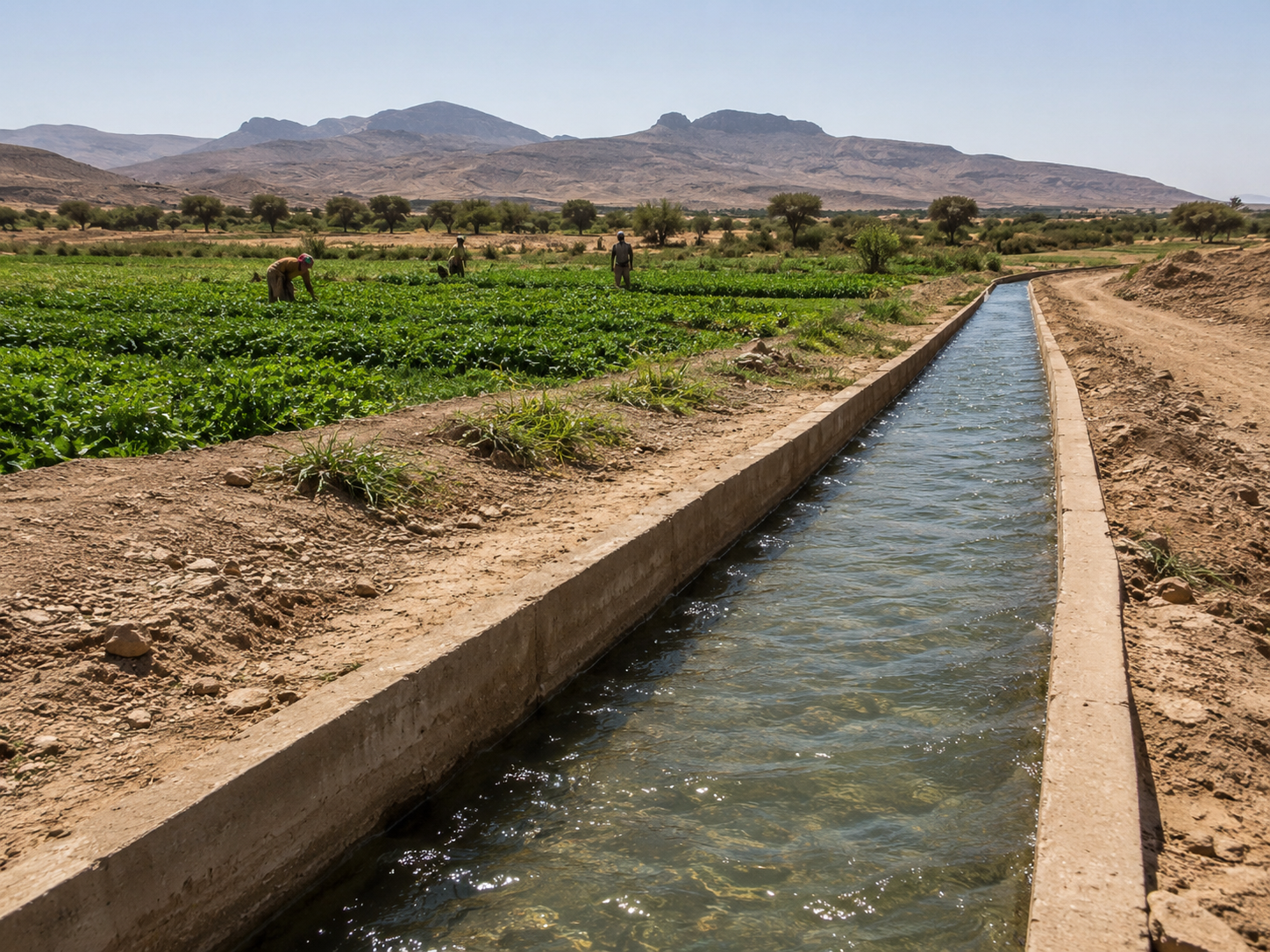
From an engineering perspective, the Awash Valley irrigation system includes river diversions, canals, pumping stations, gravity systems, reservoirs, drainage structures, field channels, and command-area development. Some schemes use diversion weirs and gravity canals, while others depend on pumping. The Awash River is also regulated by important storage structures, including Koka Reservoir in the upper basin, which plays a role in hydropower, water regulation, and downstream flow management.
The basin’s irrigation schemes include different technologies and layouts. Sugarcane schemes require reliable and repeated water delivery over large areas. Cotton and vegetable schemes require careful scheduling, drainage, and soil management. Smallholder schemes require farmer organization, local water control, and maintenance capacity.
The Awash Valley also demonstrates the importance of drainage. In semi-arid irrigation areas, poor drainage can lead to waterlogging and salinity. If salts accumulate in the soil, productivity declines. Therefore, successful irrigation in the Awash Valley depends not only on supplying water, but also on removing excess water, protecting soils, and maintaining long-term land productivity.
Awash Valley Sugarcane and Agro-Industrial Development
Sugarcane is one of the most important irrigated crops in the Awash Valley. Wonji-Shoa, Metehara, and Kessem sugar estates are located within the Awash River Basin, and their irrigation schemes have played an important role in Ethiopia’s sugar industry. These estates demonstrate how irrigation can support agro-industry by linking farms with processing factories.
Metehara, in particular, is one of Ethiopia’s well-known sugar estates. It depends on Awash River water for sugarcane irrigation and has become an important example of large-scale irrigated agriculture. Kessem is another major sugar-related development in the basin. Together, these projects show the central role of Awash River water in Ethiopia’s sugar economy.
However, sugarcane irrigation also requires careful water management. It consumes large volumes of water, and poor drainage or sediment problems can affect canals and fields. Therefore, sugar development in the Awash Valley must be managed with strong attention to water efficiency, drainage, soil health, and environmental flow needs.
Smallholder Irrigation and Rural Livelihoods
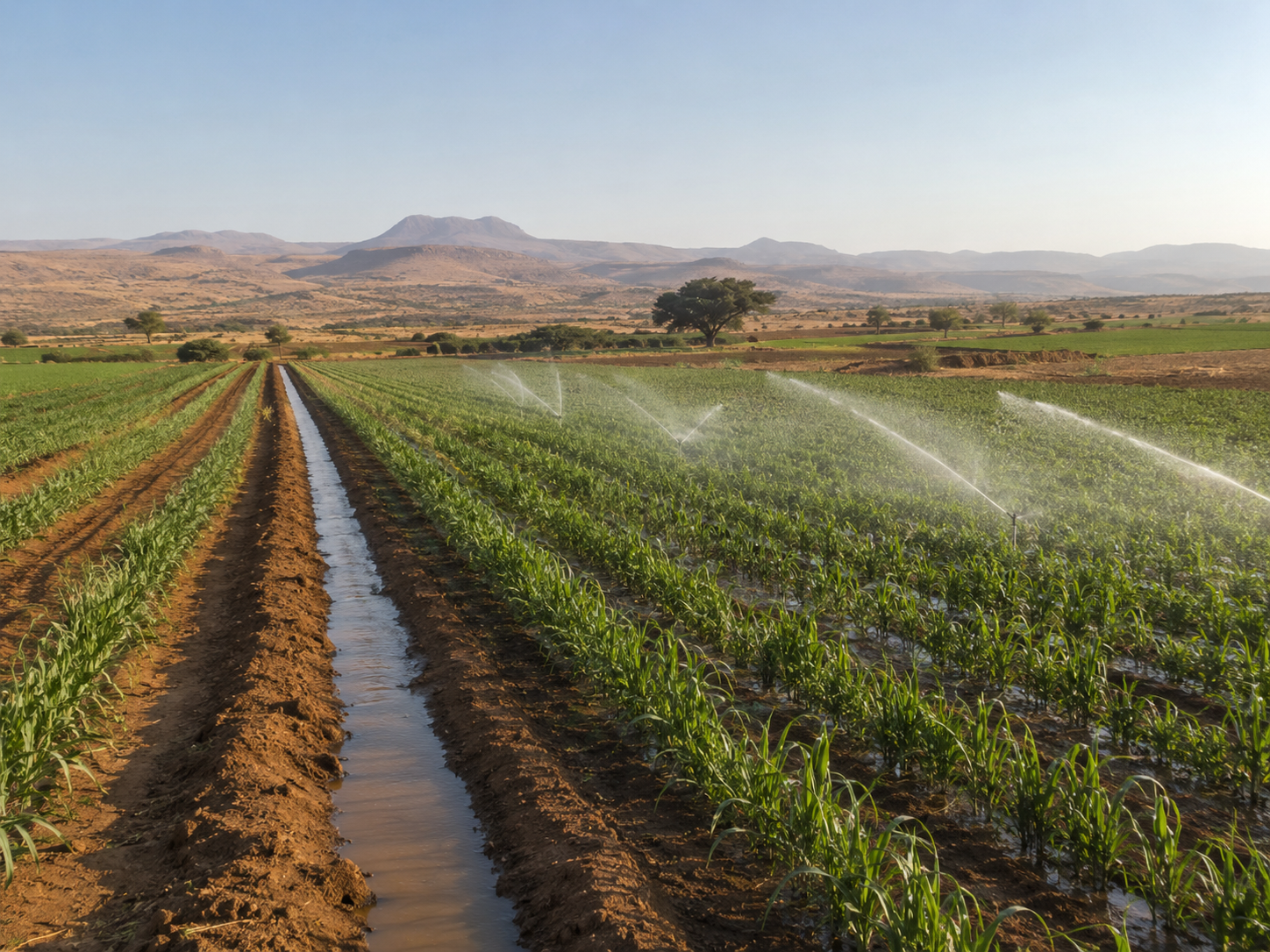
The Awash Valley is not only a place of large estates. It also includes smallholder irrigation schemes and community-based farming systems. Small-scale irrigation supports vegetables, maize, onions, fodder crops, and household food production. In dry areas, even small irrigation schemes can make a major difference by allowing farmers to produce outside the rainy season.
Smallholder irrigation is important because it connects water-resource development directly to rural livelihoods. It can support food security, income generation, women’s participation in vegetable production, livestock feed, and local market supply. However, smallholder irrigation also needs technical support, fair water distribution, access to inputs, farmer training, maintenance, and market access.
Challenges and Lessons
The Awash Valley irrigation projects face several challenges. These include water scarcity during dry periods, competition among users, sedimentation, salinity, waterlogging, flooding, pollution, invasive weeds, inefficient water use, and institutional coordination problems. Because the river is intensively used, upstream water abstraction can affect downstream users, especially in the middle and lower valley.
The basin also includes pastoral communities, especially in the Afar lowlands. Irrigation development can reduce access to grazing land, floodplain resources, and traditional mobility routes if it is not planned carefully. Therefore, irrigation development must respect pastoral livelihoods and include local communities in planning and benefit-sharing.
The major lesson from Awash is that irrigation development must be managed as a basin-wide system. A canal built upstream can affect farmers and pastoralists downstream. A sugar estate can affect water availability for smallholders. A drainage problem can damage soils. A flood-control structure can change wetlands. This is why the Awash Valley requires integrated planning, transparent water allocation, strong institutions, and long-term environmental monitoring.
Environmental and Basin-Management Issues
The Awash River Basin is one of Ethiopia’s most environmentally sensitive developed basins. Its wetlands, floodplains, and dryland ecosystems provide important services for people, livestock, wildlife, and agriculture. But intensive irrigation and urban-industrial growth can place pressure on the river.
Environmental concerns include salinity, drainage-water quality, agrochemical runoff, reduced downstream flows, floodplain change, and wetland degradation. In the lower Awash and Afar areas, water management is especially important because communities depend heavily on the river in a dry environment.
Future irrigation development in the Awash Valley should therefore focus on modernization, water-saving technologies, better drainage, soil-salinity control, improved water allocation, and stronger monitoring. The goal should not only be to expand irrigated land, but also to improve the productivity and sustainability of existing schemes.
Why This Project Matters for Africa
The Awash Valley matters for Africa because many African countries face similar challenges: dryland agriculture, climate variability, river-basin competition, food-security pressure, pastoral livelihoods, and the need for irrigation modernization. Awash shows that irrigation can transform dry landscapes, create agro-industrial production, and support national development.
But Awash also teaches that irrigation must be handled with wisdom. Water must be allocated fairly, soils must be protected, drainage must be maintained, and local communities must benefit. The success of irrigation should not be measured only by hectares developed, but by productivity, sustainability, equity, and long-term basin health.
For Ethiopia, the Awash Valley remains one of the country’s most strategic irrigation corridors. For Africa, it is a powerful lesson in both the promise and responsibility of river-based agricultural development.
Sources
Official references used for this article.
Comments
Comments are reviewed by AquaLinked Media before public display. If your email matches an approved AquaLinked expert profile, your comment may appear with your expert profile link after approval.
No approved comments yet. Be the first to contribute respectfully.
No password is needed. Enter the email connected to your expert profile, and the system will check whether your expert profile exists.
Please login or register before commenting.