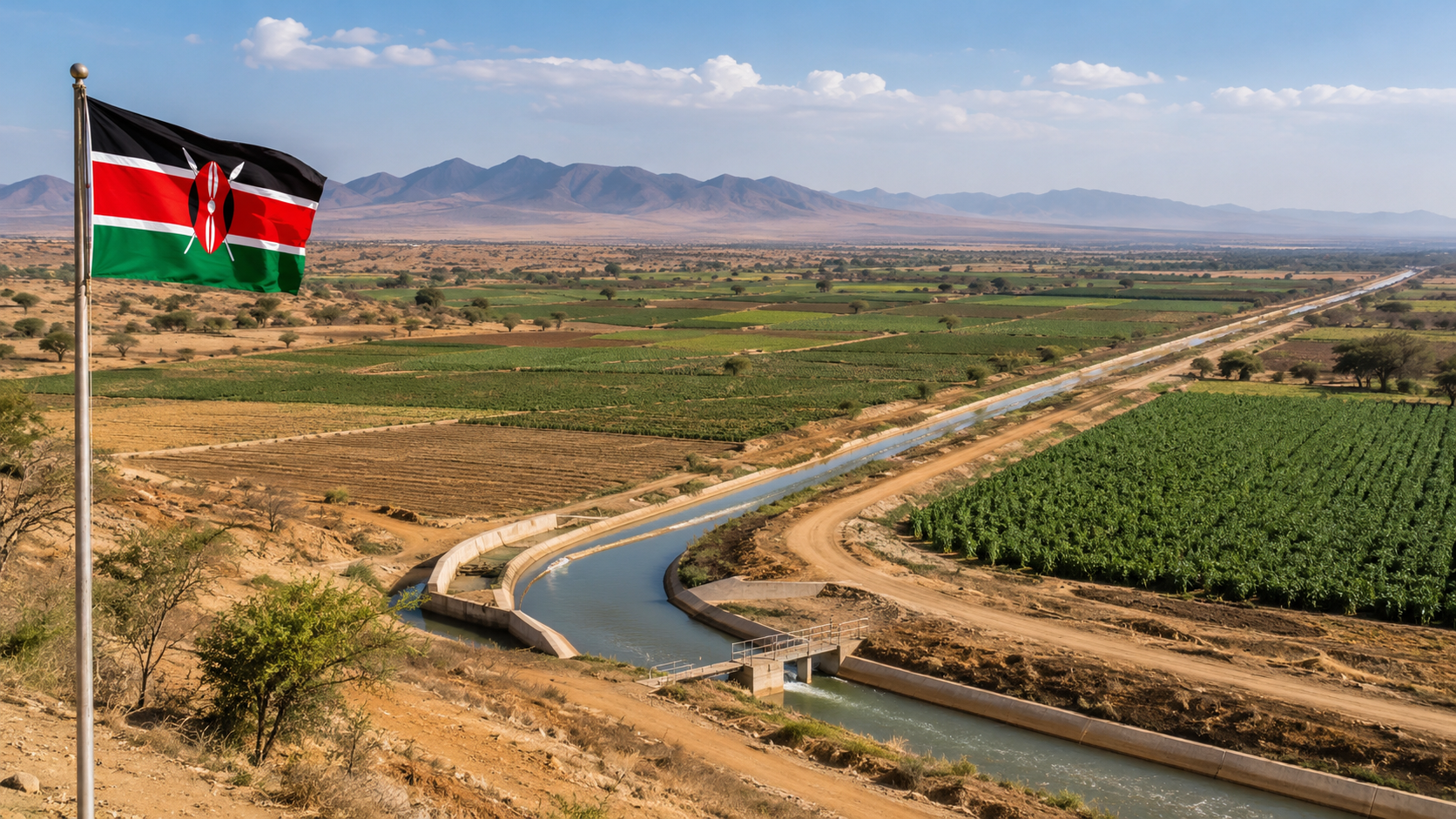
Bura / Galana-Kulalu Irrigation Projects — Kenya
The Bura / Galana-Kulalu Irrigation Projects are among Kenya’s most significant irrigation-development initiatives. Both are connected to the wider Tana River water system and to Kenya’s national objective of increasing irrigated agriculture in semi-arid regions. Bura is an older irrigation and settlement scheme located in Tana River County, while Galana-Kulalu is a larger modern food-security project located across parts of Kilifi and Tana River counties.
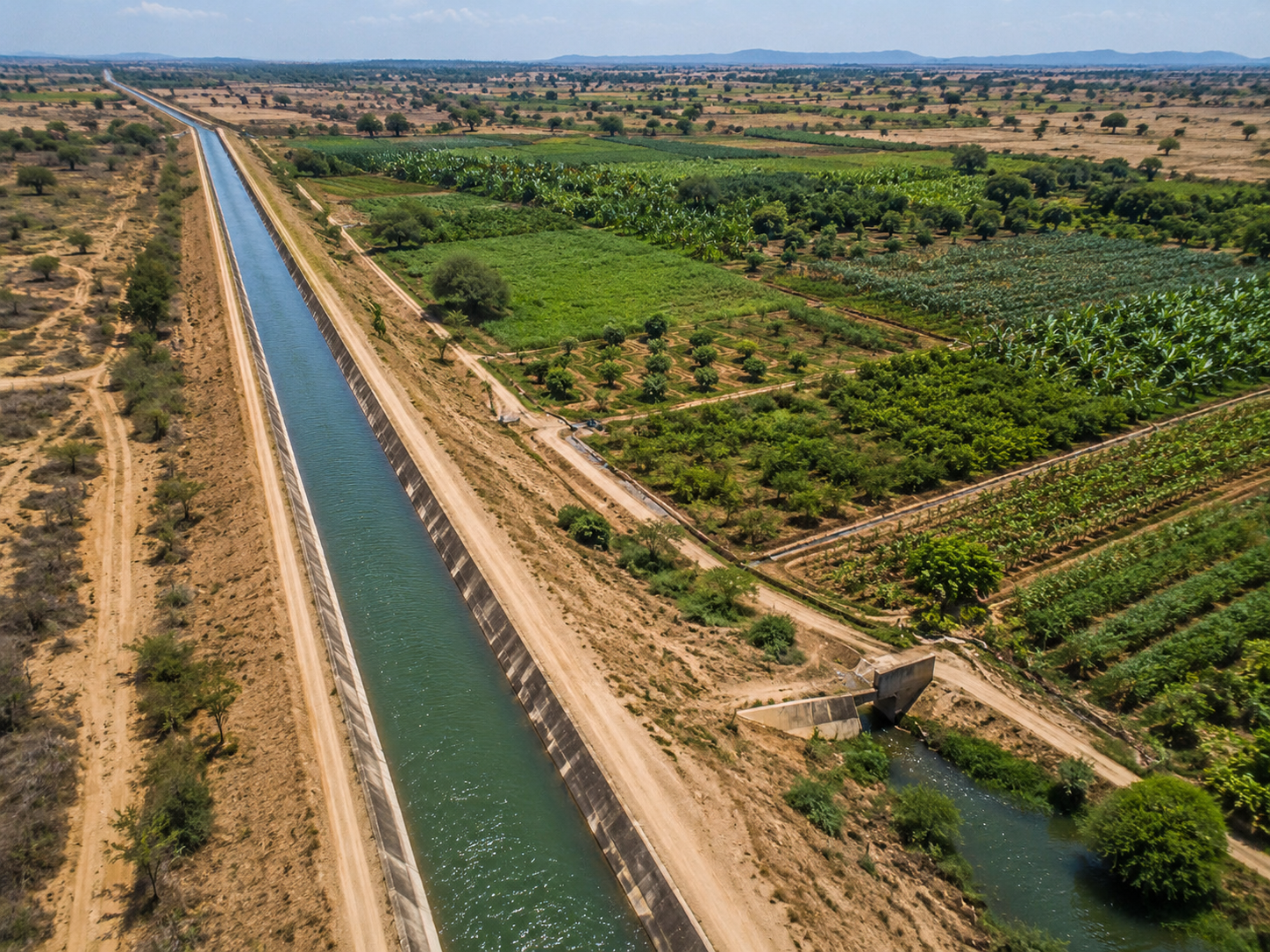
The importance of these projects lies in their ambition. Kenya has large areas of arid and semi-arid land where rainfall is unreliable, yet where irrigation can create productive agriculture if water infrastructure, land management, farmer support, and market systems are properly organized. Bura and Galana-Kulalu therefore represent not only irrigation schemes, but national experiments in food security, settlement planning, agricultural modernization, and climate resilience.
Project Fact Box
- Project name: Bura / Galana-Kulalu Irrigation Projects
- Country: Kenya
- Main region: Lower Tana River region and coastal hinterland
- Main counties: Tana River County, Kilifi County, and surrounding agricultural zones
- Main water source: Tana River system and associated irrigation infrastructure
- Project type: Large-scale irrigation, settlement agriculture, food-security development, and agricultural transformation corridor
- Bura Irrigation Scheme: Established in 1978; located in Bura Constituency, Tana North Sub-County, Tana River County
- Bura gazetted area: 176,000 acres
- Bura developed irrigation area: About 12,000 acres with irrigation infrastructure
- Bura active utilization: About 6,000 acres reported by the National Irrigation Authority
- Galana-Kulalu project type: Food-security and large-scale irrigation development project
- Galana-Kulalu target: Large agricultural development area with phased irrigation expansion
- Strategic importance: One of Kenya’s most important irrigation corridors for food security, maize, rice, sugarcane, livestock integration, and rural employment
Why Bura Is Important
Bura Irrigation Scheme is one of Kenya’s historically important irrigation and settlement projects. It is located on the west bank of the Tana River in Tana River County. The scheme was established to support irrigated crop production, farmer settlement, livelihood development, and agricultural production in a dryland environment.
According to Kenya’s National Irrigation Authority, Bura has a net gazetted area of 176,000 acres, with about 12,000 acres developed for irrigation. The scheme supports thousands of households, with farmers settled in organized villages and allocated land for main crop production and vegetable gardens.
Bura is important because it shows both the promise and difficulty of irrigation in semi-arid lands. The scheme depends on reliable water abstraction, pumping or conveyance infrastructure, canal maintenance, field-level distribution, farmer organization, crop selection, and market support. When these elements work together, irrigation can stabilize production in a region that would otherwise remain highly dependent on uncertain rainfall.
Bura Irrigation Development and the Shift Towards Gravity Supply
One of the major engineering lessons from Bura is the importance of reducing the cost of water delivery. Historically, Bura relied heavily on pumped irrigation from the Tana River. Pumping can be expensive because it requires fuel, electricity, maintenance, spare parts, and skilled operation.
The Bura Irrigation Development Project aims to improve this situation by converting the scheme from a pumped system to a gravity-fed system. This is an important engineering improvement because gravity irrigation can reduce operational costs, improve long-term sustainability, and make the scheme more resilient if designed and managed well.
For Bura, the shift towards gravity supply is not only a technical change. It is also an economic and social improvement. Lower water-delivery costs can help farmers, reduce public expenditure, and allow more land to be brought under productive irrigation.
Galana-Kulalu: Kenya’s Large Food-Security Vision
Galana-Kulalu is one of Kenya’s most ambitious irrigation and food-security projects. It is located in the Galana-Kulalu ranch area, across parts of Kilifi and Tana River counties. The project has often been presented as a national food-security initiative intended to reduce food shortages, increase maize production, support agricultural mechanization, and open large areas for productive farming.
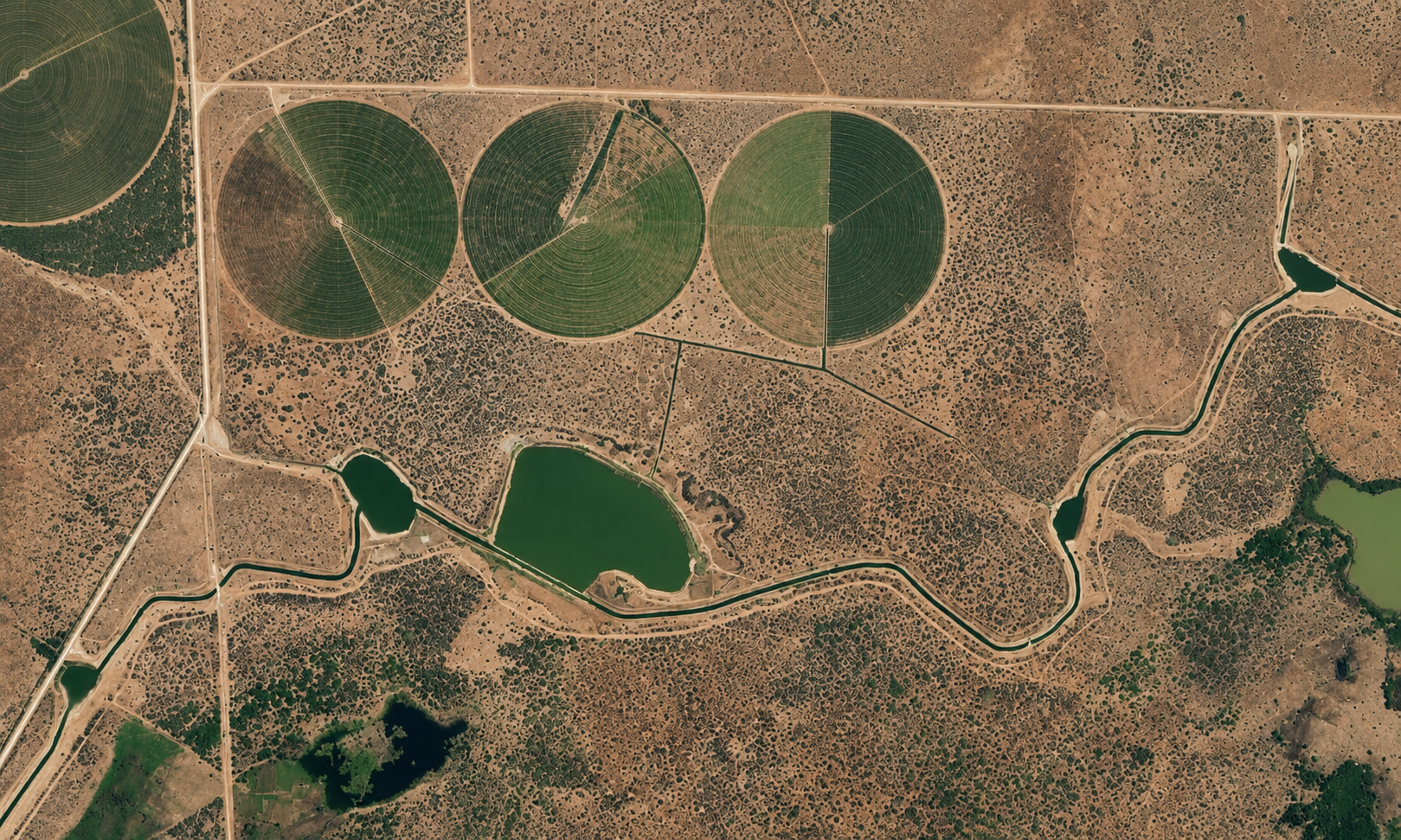
The project has been associated with Kenya’s Vision 2030 and national food-security planning. Public sources describe Galana-Kulalu as a large-scale agricultural transformation project with phased development. One current public-private partnership description states that the proposed project seeks to bring 20,000 acres under production, with expected annual production of maize and soybeans under a long-term arrangement.
The National Irrigation Authority has also described renewed efforts and agreements intended to expand Galana-Kulalu, potentially adding up to 200,000 acres through improved infrastructure and innovative agricultural practices. This shows that Galana-Kulalu remains a strategic project in Kenya’s irrigation and food-security agenda.
Engineering and Water-Management Significance
The engineering importance of Bura and Galana-Kulalu lies in the challenge of developing reliable irrigation in dryland environments. Such projects require water abstraction, conveyance canals, pumps or gravity systems, storage structures, drainage, farm roads, land levelling, field layout, soil management, and operational control.
In Bura, the main engineering challenge has been how to make irrigation economically sustainable by reducing the cost of pumping and improving water conveyance. In Galana-Kulalu, the challenge is larger: how to develop a massive food-security landscape in a semi-arid region while ensuring sufficient water, proper soils, good drainage, suitable crops, and practical management arrangements.
These projects remind us that irrigation is not simply a canal or a pump. It is a complete system. Water must arrive at the right time, in the right quantity, at the right location, and with enough reliability for farmers and investors to plan production.
Agricultural and Food-Security Importance
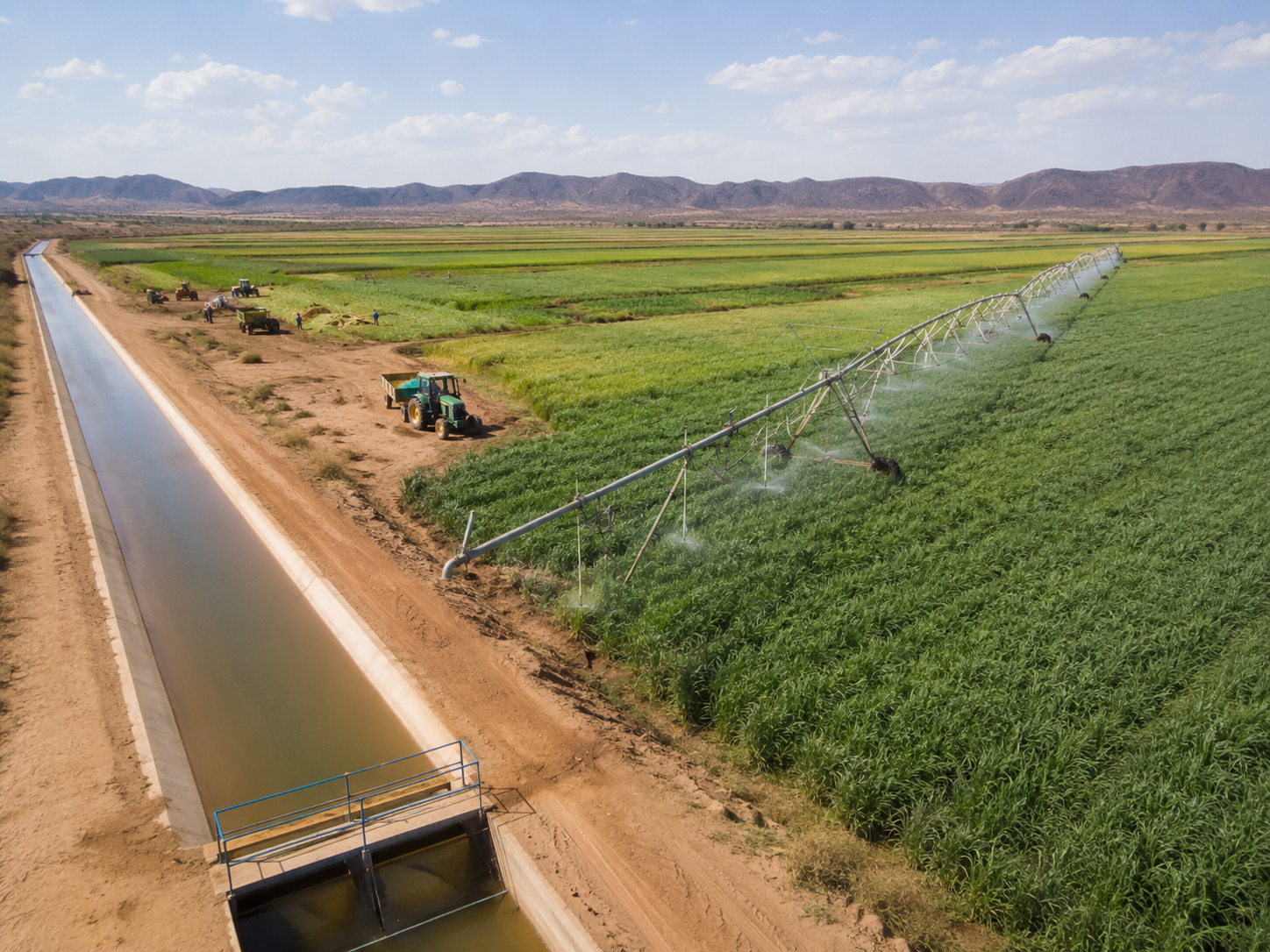
Bura and Galana-Kulalu are both linked to Kenya’s food-security priorities. Bura has supported crop production and settlement agriculture for decades, while Galana-Kulalu has been promoted as a large-scale solution for maize, soybean, and other agricultural production.
The idea behind these projects is clear: if Kenya can increase irrigated production in areas with available land and strategic water resources, it can reduce dependence on rain-fed agriculture and imports. Irrigation can also support employment, agro-processing, livestock-feed production, and rural market development.
However, food security is not achieved by land and water alone. Successful irrigation requires good agronomy, farmer training, mechanization where appropriate, strong institutions, reliable finance, storage, transport, and access to markets. Bura and Galana-Kulalu therefore teach that irrigation infrastructure must be integrated with the full agricultural value chain.
Challenges and Lessons
Both Bura and Galana-Kulalu have faced implementation challenges. Large irrigation projects require high capital investment, strong management, environmental safeguards, and realistic planning. If the cost of pumping is too high, if canals are poorly maintained, if crops are not profitable, or if institutions are weak, the scheme can operate below its potential.
Galana-Kulalu in particular has attracted public debate because of delays, high expectations, implementation challenges, and questions about how to make such a large project commercially and socially successful. This does not mean the vision is wrong. It means that large irrigation projects require careful phasing, transparent governance, technical discipline, and strong accountability.
The major lesson is that irrigation success depends on matching engineering ambition with operational reality. A project may be large on paper, but its real success is measured by hectares productively irrigated, water-use efficiency, farmer income, crop yields, maintenance capacity, and long-term sustainability.
Environmental and Social Considerations
The Tana River is one of Kenya’s most important river systems. It supports irrigation, hydropower, domestic water supply, ecosystems, floodplain livelihoods, and downstream communities. Any major irrigation expansion must therefore consider environmental flows, sedimentation, water quality, biodiversity, and the needs of communities living along the river.
Bura and Galana-Kulalu also require careful social planning. Settlement schemes and large agricultural projects affect land use, local communities, employment patterns, grazing areas, and access to natural resources. The most successful irrigation projects are those that combine engineering with community participation, fair land management, and long-term environmental monitoring.
Why These Projects Matter for Africa
Bura and Galana-Kulalu matter beyond Kenya because many African countries face similar challenges: large dryland areas, food-import dependence, climate variability, underused irrigation potential, and pressure to create rural employment. These Kenyan projects show both the opportunity and the complexity of turning semi-arid landscapes into productive agricultural zones.
For Africa, the lesson is powerful. Irrigation can transform rural economies, but it must be designed as a complete system. Water infrastructure, land governance, environmental protection, farmer support, finance, mechanization, markets, and maintenance must all work together. Bura and Galana-Kulalu remind us that irrigation is not only about bringing water to land; it is about building a sustainable agricultural civilization around that water.
Sources
Official references used for this article.
Comments
Comments are reviewed by AquaLinked Media before public display. If your email matches an approved AquaLinked expert profile, your comment may appear with your expert profile link after approval.
No approved comments yet. Be the first to contribute respectfully.
No password is needed. Enter the email connected to your expert profile, and the system will check whether your expert profile exists.
Please login or register before commenting.