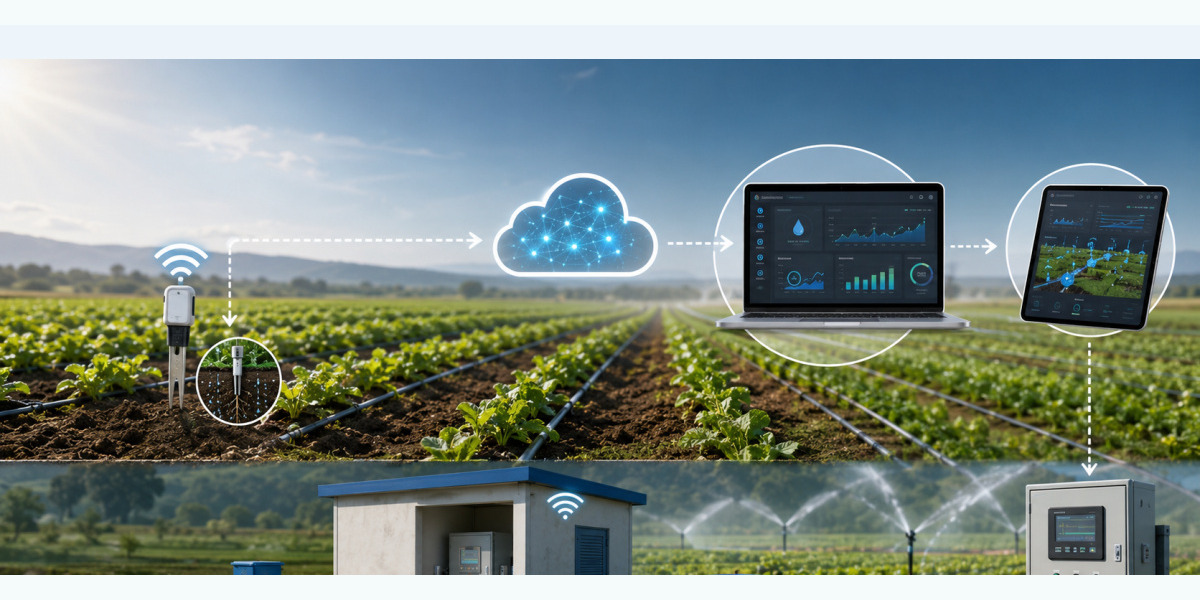
Modern Pumps — Powering the Future of Irrigation and Water Supply
Modern pumps are one of the most important technologies in modern irrigation and water supply. Every water system depends on the ability to lift, move, pressurize, and distribute water from one place to another. Whether water is drawn from a river, reservoir, borehole, lake, canal, storage tank, or treatment plant, the pump is often the central machine that makes the system work.
In traditional systems, pumps were often selected mainly by available size, local market access, or simple experience. Many were oversized, inefficient, manually operated, or dependent on diesel fuel. Today, modern pump technology has changed this situation. Pumps can now be energy-efficient, solar-powered, digitally controlled, protected by sensors, connected to remote monitoring systems, and integrated with drip irrigation, sprinkler irrigation, livestock watering, fertigation, water treatment, and urban water supply.
This change is especially important because agriculture and food systems depend heavily on both water and energy. FAO notes that agriculture and food sectors use about 70% of global water withdrawals, and that energy is required to extract, pump, lift, transport, and treat water. FAO also emphasizes that improving water-use efficiency can reduce the energy needed for pumping and transporting water.
For Africa, modern pumps are not only machines. They are development tools. They can help farmers irrigate more land, reduce dependence on rainfall, increase crop production, reduce diesel costs, improve rural livelihoods, and support food security. In water-supply systems, they can help communities access groundwater, move treated water to storage tanks, maintain pressure in distribution networks, and supply institutions, towns, farms, hospitals, schools, and industries.
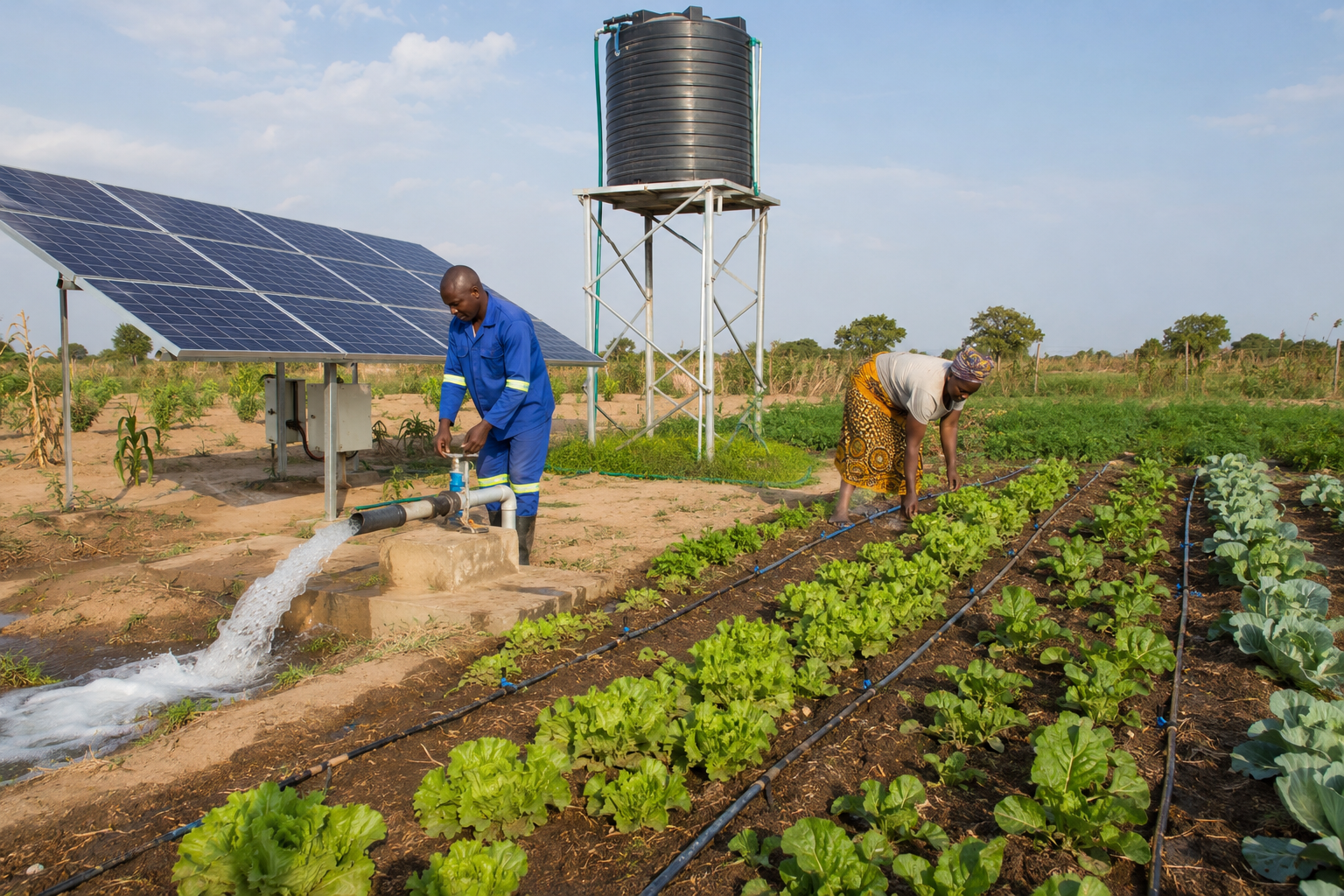
What Makes a Pump “Modern”?
A modern pump is not simply a newer version of an old pump. It is a pump designed to work efficiently, reliably, and intelligently within a complete water system.
Modern pumps may include high-efficiency motors, improved hydraulic design, variable-speed drives, pressure sensors, flow meters, dry-run protection, overload protection, automatic start-and-stop control, remote monitoring, solar power compatibility, and integration with software or control panels. Some intelligent pump systems combine pumps, motors, drives, and controls into one coordinated unit. Grundfos, for example, describes smart pump solutions as combining energy-efficient pumps, motors, drives, and controls, while integrated sensor and control systems can simplify operation and support remote or automated management.
In irrigation, modern pumps are used for borehole abstraction, river intake, reservoir pumping, booster stations, drip irrigation pressure supply, sprinkler irrigation, center-pivot systems, greenhouse irrigation, livestock watering, fertigation, and chemigation. For agricultural applications, pump manufacturers now provide solutions for groundwater and surface-water intake, micro-drip irrigation, pivot irrigation, frost protection, livestock watering, fertigation, and related systems.
Technology Fact Box
Technology: Modern Pumps
Main applications: Irrigation, water supply, borehole abstraction, river intake, reservoir pumping, booster stations, livestock water supply, fertigation, water treatment, and pressure management
Common pump types: Submersible pumps, centrifugal pumps, vertical turbine pumps, booster pumps, solar pumps, dosing pumps, and variable-speed pump sets
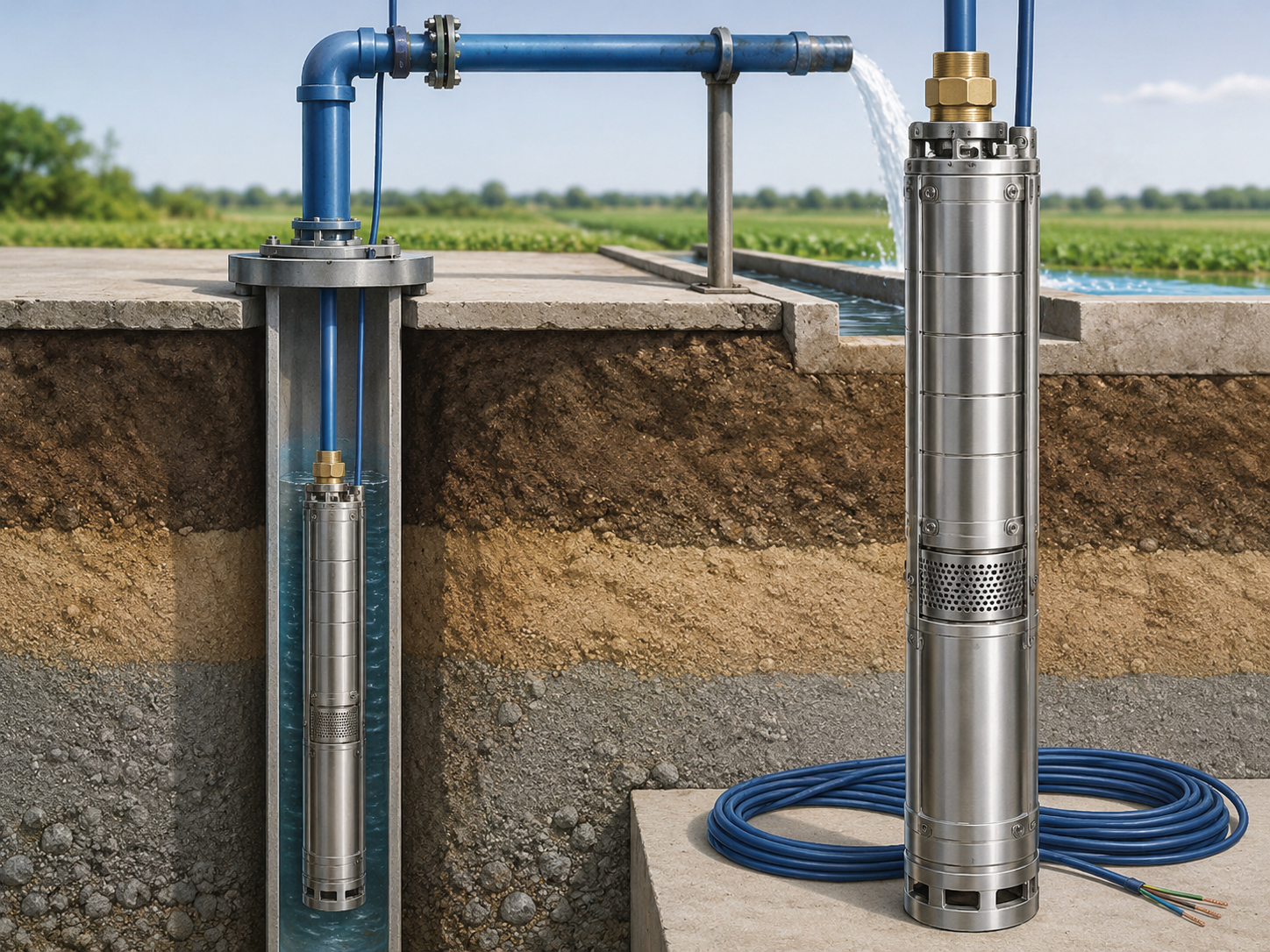
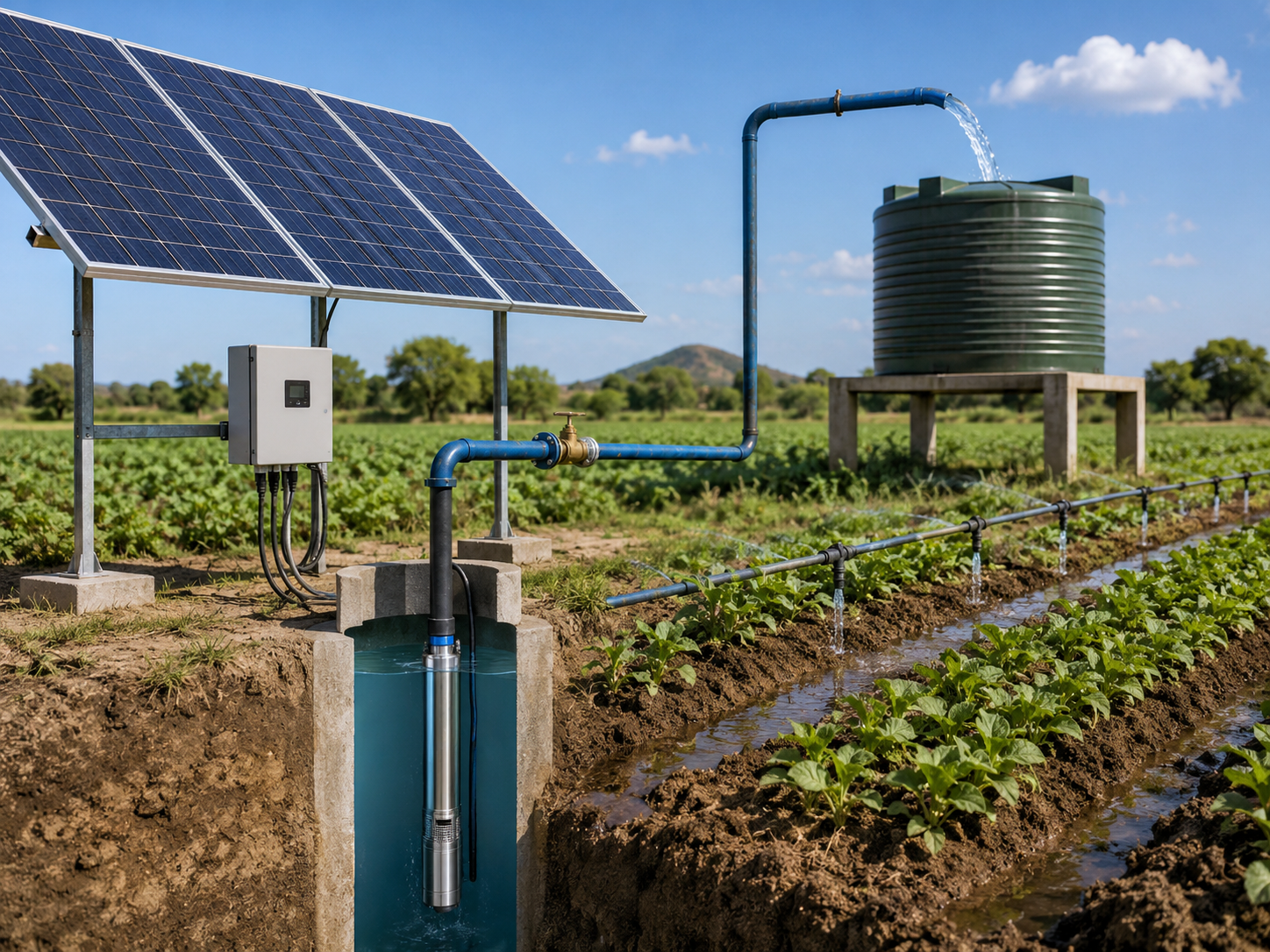
Submersible borehole pump shown in installed and standalone form, illustrating how groundwater is lifted from inside a borehole or deep well to the surface.
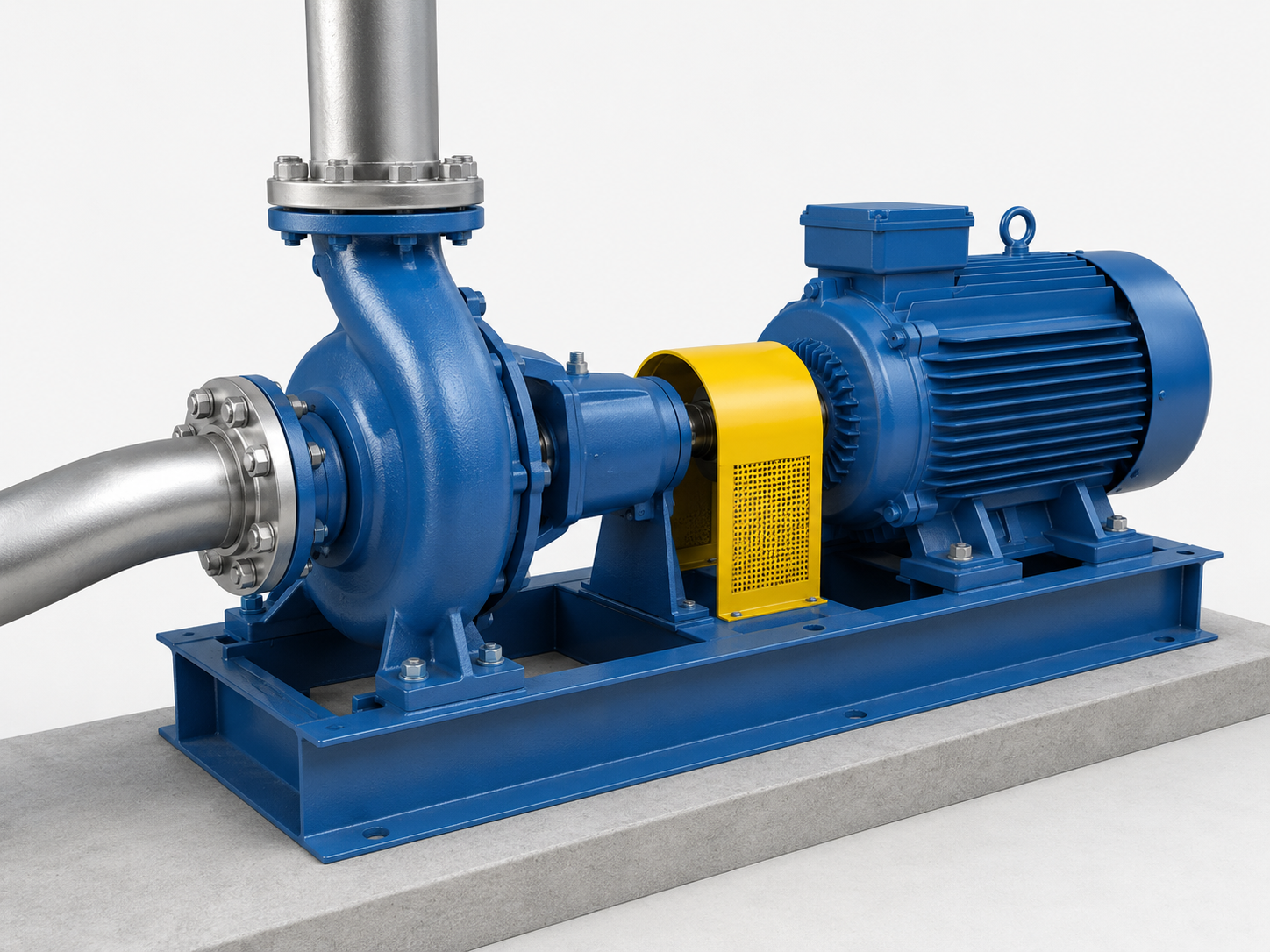
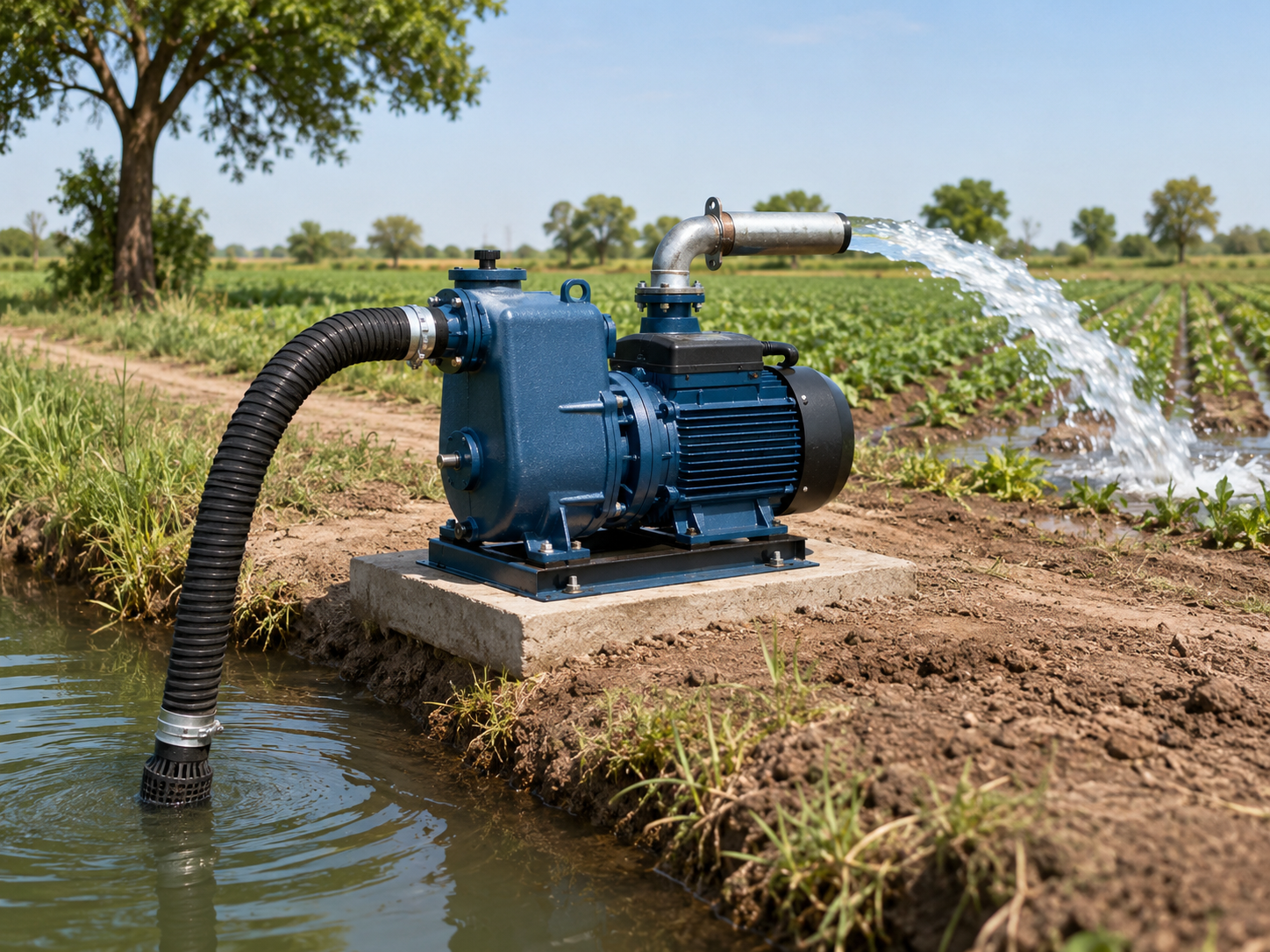
Centrifugal pump and electric motor assembly mounted on a base frame, showing the common pump type used to draw and push water through irrigation and water-supply pipelines
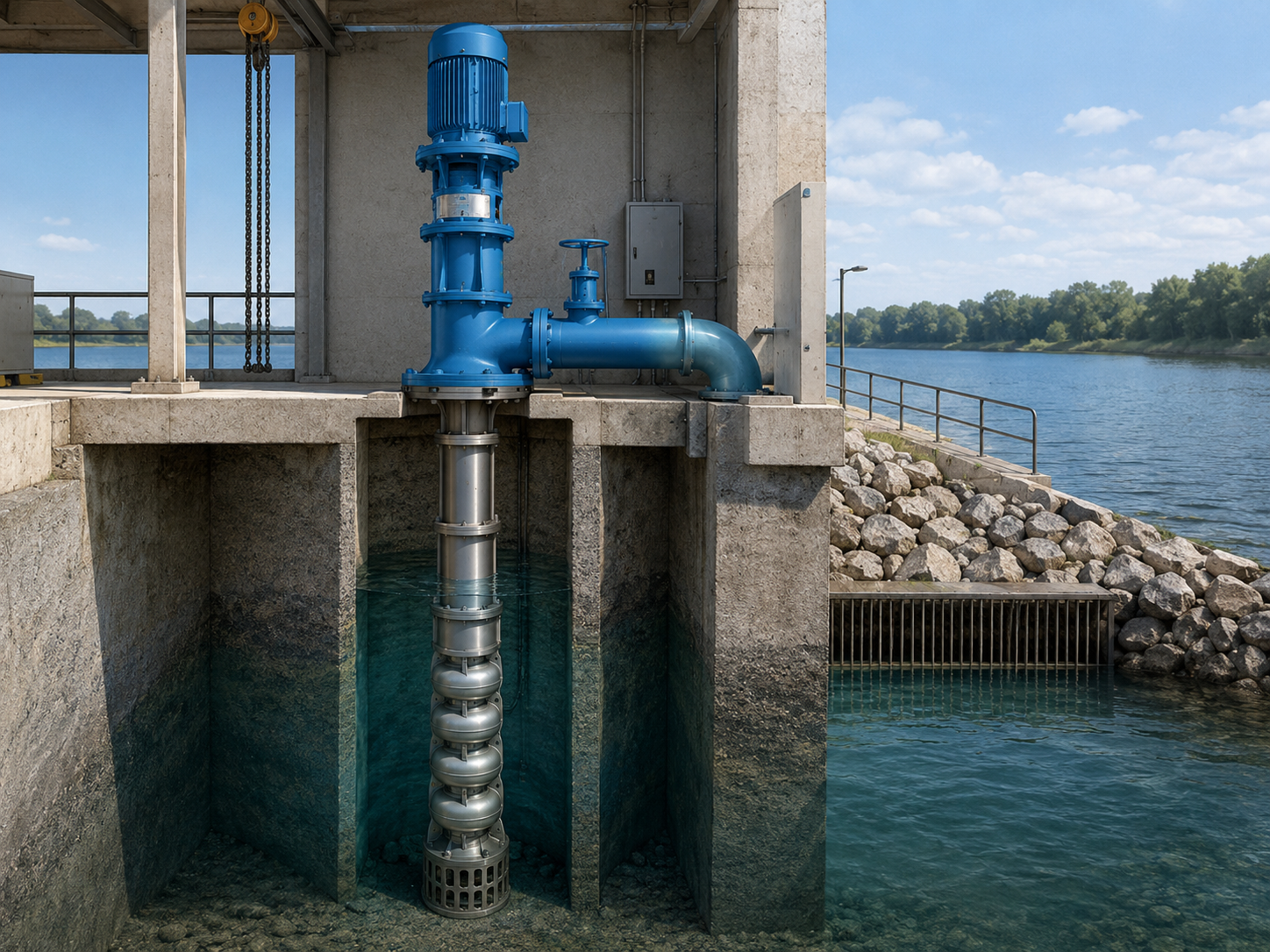
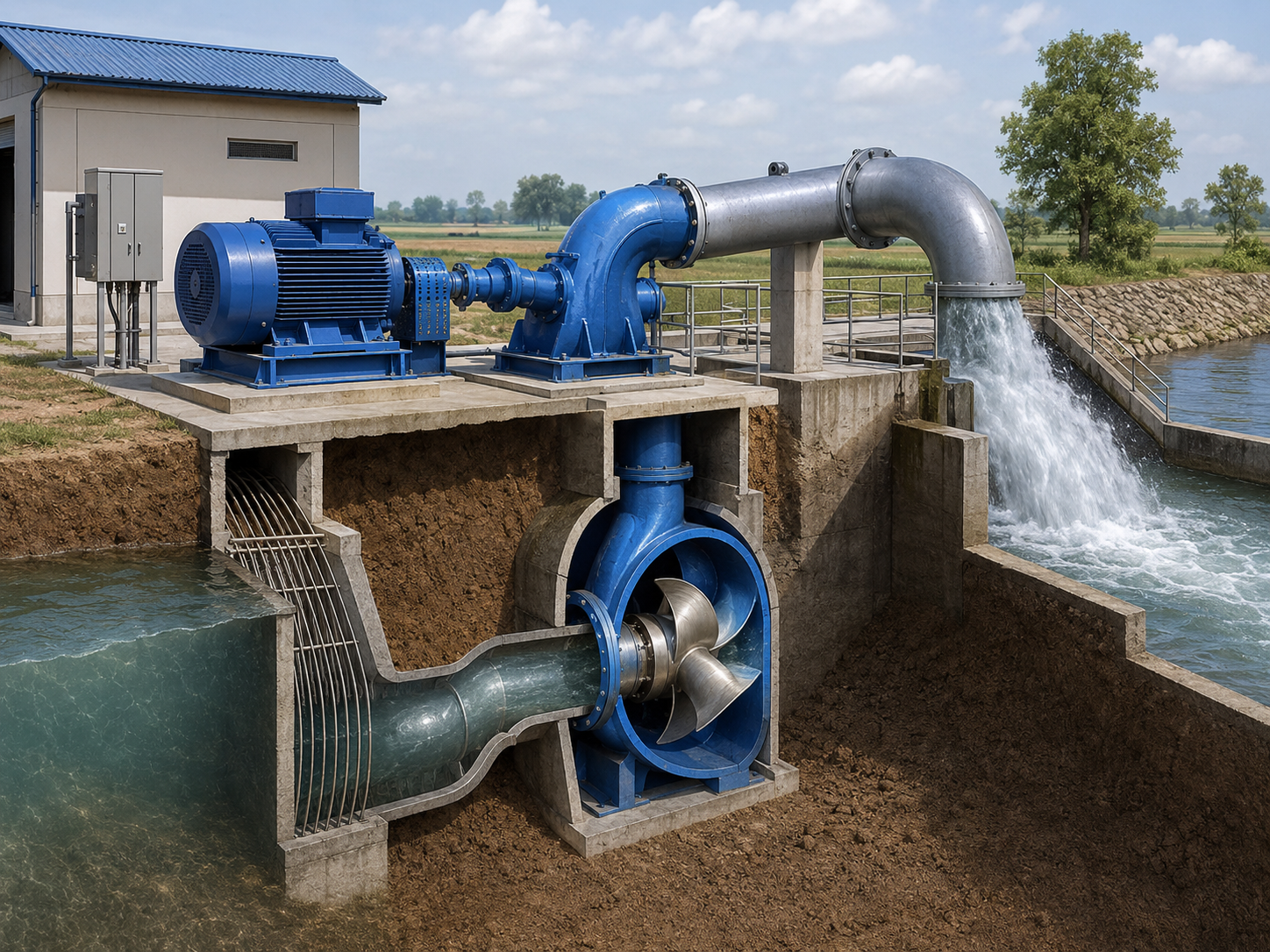
Vertical turbine pump installed in a water-intake structure, demonstrating how large quantities of water can be lifted from deep sumps, rivers, reservoirs, or wells.
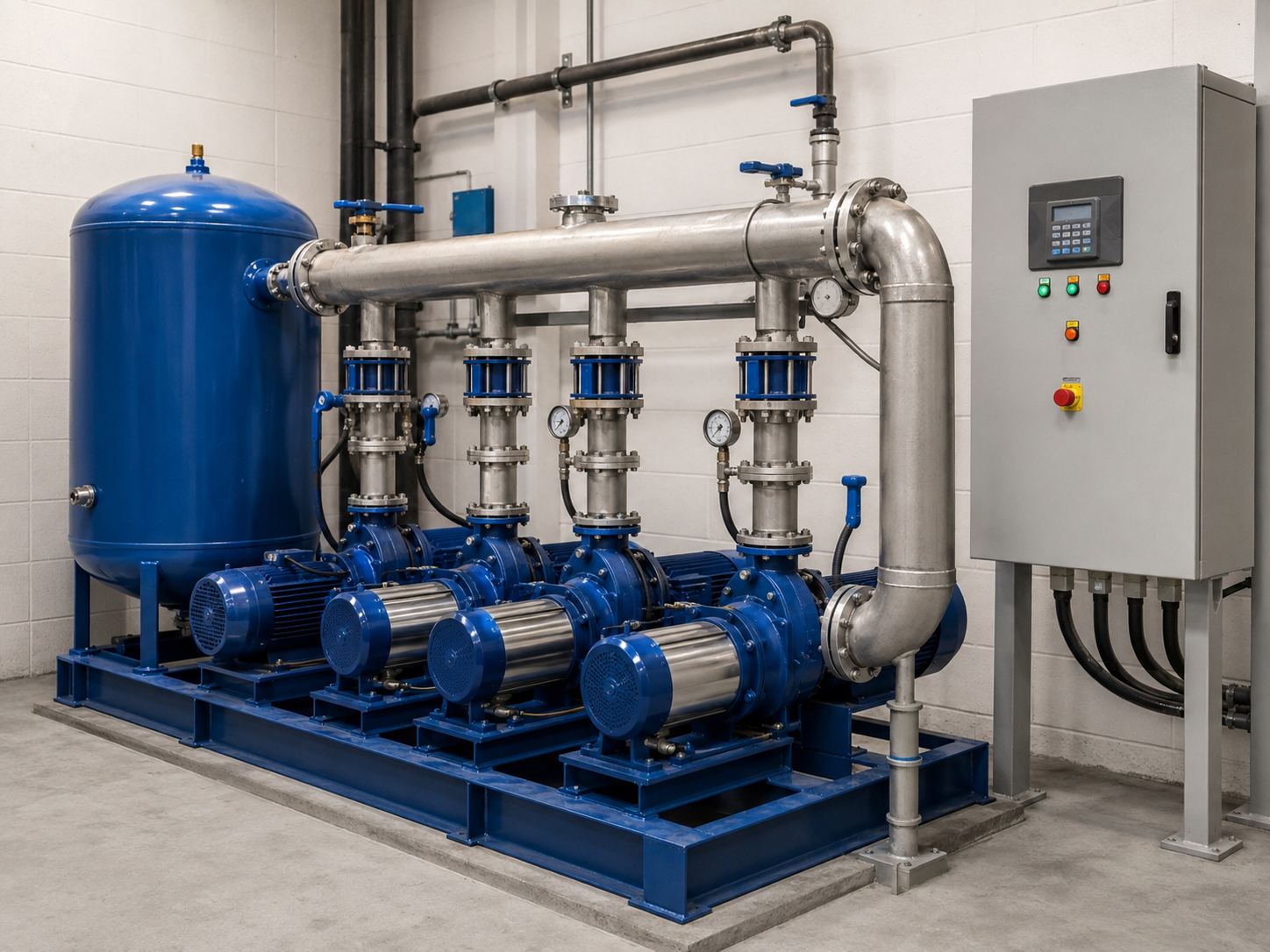
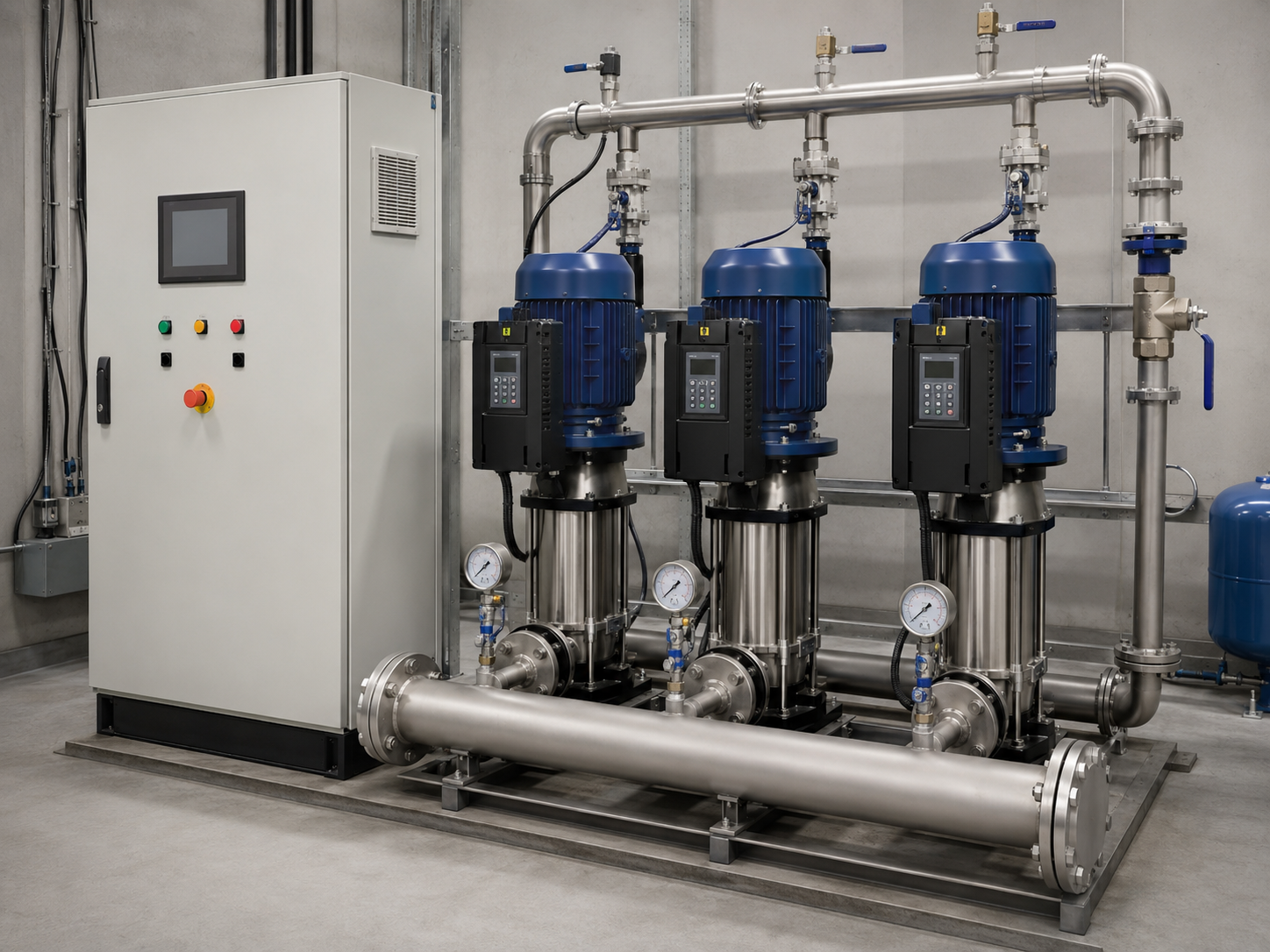
Booster pump station with pressure tank, manifold, and control system, used to increase water pressure in irrigation and water-distribution networks.
Common water sources: Boreholes, wells, rivers, lakes, canals, reservoirs, storage tanks, and treated-water systems
Power options: Grid electricity, solar photovoltaic power, hybrid solar-grid systems, battery-supported systems, and backup diesel generators
Control options: Manual control, pressure-switch control, float-switch control, variable-frequency drive control, PLC control, sensor-based automation, and remote monitoring
Compatible irrigation systems: Drip irrigation, sprinkler irrigation, center-pivot irrigation, micro-sprinklers, greenhouse irrigation, and open-field irrigation
Main benefits: Energy savings, reliable water delivery, better pressure control, lower operating cost, reduced manual work, automation, water-use efficiency, and stronger system protection
Main risks if poorly designed: Oversizing, undersizing, cavitation, high energy cost, dry running, pipe bursts, pressure fluctuation, groundwater over-abstraction, sediment damage, and frequent breakdowns
Strategic value: Modern pumps connect water engineering, energy efficiency, irrigation productivity, automation, and climate-resilient agriculture.
Why Modern Pumps Matter for Africa
Modern pumps are especially important in Africa because many communities and farms face three major challenges: unreliable rainfall, limited electricity access, and high fuel costs. A farmer may have access to groundwater or a nearby river, but without a reliable pump, that water cannot be transformed into productive irrigation.
Solar-powered pumps are becoming increasingly important in this context. The World Bank notes that solar-powered groundwater irrigation is growing quickly in low- and middle-income countries, and that solar pumps are becoming an important technology for expanding irrigated agriculture in Sub-Saharan Africa. However, the same source also warns that solar irrigation must be carefully monitored to avoid risks such as excessive groundwater abstraction.
This is why the future is not only “more pumps.” The future is better pump selection, smarter operation, responsible groundwater management, and integration with sensors, meters, and water-accounting systems.
A good modern pumping system should answer several questions before installation:
- What is the water source?
- How much water is available?
- What is the required flow rate?
- What is the pumping head?
- What is the pipe length and diameter?
- What irrigation method will be used?
- What is the energy source?
- Will the pump run manually or automatically?
- Is the groundwater resource sustainable?
- Who will maintain the system?
When these questions are answered correctly, a pump becomes part of a complete engineering solution rather than just a machine installed in the field.
Salient Points of Modern Pump Technology
The first salient point is energy efficiency. Pumping water can consume large amounts of energy, especially when water must be lifted from deep boreholes or transported over long distances. A high-efficiency pump reduces energy consumption and lowers operating cost.
The second salient point is correct sizing. A pump must match the required flow rate and total dynamic head. If the pump is too small, the system will not deliver enough water. If it is too large, it may waste energy, damage pipes, create pressure problems, or operate inefficiently.
The third salient point is variable-speed operation. Variable-frequency drives allow pump speed to change according to demand. This is useful in irrigation zones, pressure networks, and water-supply systems where flow demand changes during the day.
The fourth salient point is solar power. Solar pumps can reduce dependence on diesel fuel and extend irrigation possibilities in rural areas where grid electricity is weak or unavailable. In Niger, the World Bank reported that solar-powered pumps helped farmers expand irrigation, diversify crops, and increase yields under a solar electricity access project.
The fifth salient point is automation. Modern pumps can start and stop based on water level, pressure, soil moisture, tank storage, irrigation schedule, or software decision. This reduces manual work and improves reliability.
The sixth salient point is protection. Modern pump systems may include dry-run protection, overload protection, pressure control, temperature protection, non-return valves, filters, and alarms. These features reduce breakdowns and extend pump life.
The seventh salient point is remote monitoring. A pump connected to sensors and internet-based communication can report flow rate, pressure, energy use, operating hours, faults, and maintenance needs. This is useful for irrigation schemes, rural water systems, and institutional water supply.
The eighth salient point is compatibility with drip and sprinkler systems. Drip irrigation requires controlled pressure and clean water. Sprinkler irrigation requires enough pressure to distribute water uniformly. A modern pump must therefore be selected together with filters, pipes, valves, emitters, sprinklers, and control systems.
The ninth salient point is maintenance. Even the best pump will fail if it is not maintained. Spare parts, trained technicians, proper installation, and regular inspection are essential.
The tenth salient point is sustainability. A pump should not abstract more water than the source can safely provide. This is especially important for groundwater systems, where excessive pumping can lower water tables and damage long-term water security.
Engineering and Design Considerations
Modern pump design begins with the required discharge and pumping head. The engineer must calculate the amount of water needed by the crop, community, or system, then determine the pressure and elevation difference that the pump must overcome.
For irrigation, crop water requirement, irrigation area, application efficiency, irrigation interval, soil condition, and system type must be considered. Drip irrigation may require lower flow but steady pressure. Sprinkler irrigation usually needs higher pressure. Center-pivot systems require both flow reliability and pressure stability.
For water supply, the design must consider daily demand, peak demand, storage capacity, pumping hours, borehole yield, treatment needs, pipe friction losses, elevation difference, and service pressure.
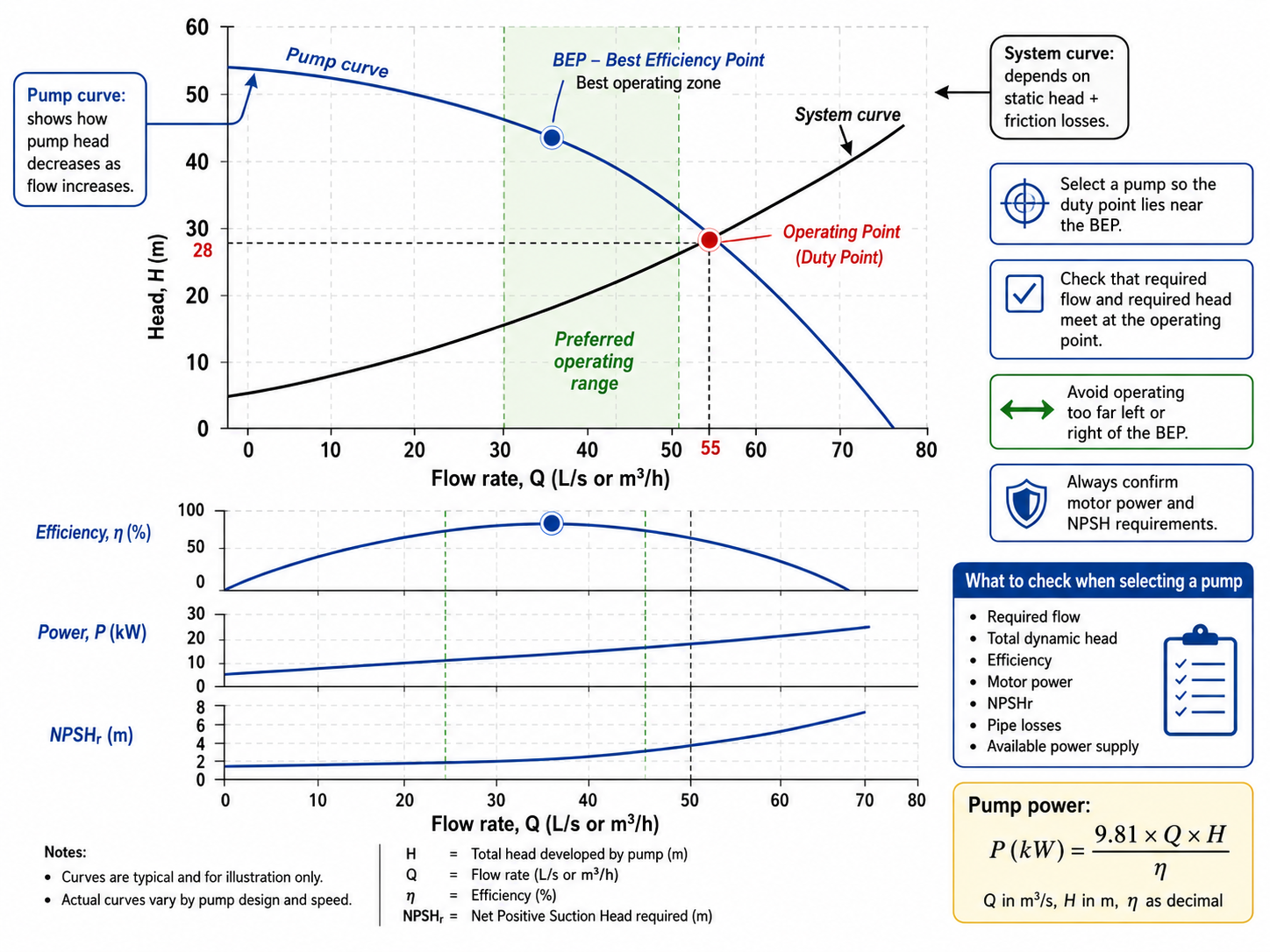
The pump curve is essential. A pump should operate near its best efficiency point. If it operates far from this point, energy consumption rises and mechanical stress increases. This is why pump selection must be based on hydraulic calculation, not guesswork.
The pipe system is also important. A good pump can perform badly if the pipe diameter is too small, the suction condition is poor, the intake is blocked, or the system has excessive friction losses. Filters, valves, bends, and fittings must be included in the hydraulic design.
In solar pumping, the design must also consider solar radiation, panel capacity, pump power, daily water demand, storage tank volume, borehole yield, and seasonal variation. A solar pump may work best when combined with elevated storage tanks, so water pumped during sunny hours can be used later when needed.
Role in Smart Irrigation
Modern pumps are central to smart irrigation control. In a smart system, the pump is not operated blindly. It responds to information.
A soil-moisture sensor detects field condition. A controller receives the data. Software checks whether irrigation is needed. If the soil is dry and water is available, the system starts the pump and opens the correct valve. Water then flows through drip lines or sprinklers to the crop.
This is the practical chain:
Sensor → internet message → software decision → pump starts → valve opens → irrigation begins.
In such systems, the pump becomes the active heart of digital agriculture. It connects water source, energy supply, field demand, and software control.
Challenges and Risks
Modern pumps create great opportunities, but they must be used responsibly. One major risk is poor installation. A badly installed pump can fail quickly, even if the pump itself is good.
Another risk is poor water quality. Sand, silt, iron, algae, and debris can damage pumps, clog filters, and reduce efficiency. Proper intake design and filtration are therefore essential.
A third risk is excessive groundwater pumping. Solar pumps are attractive because they reduce fuel cost, but low operating cost can encourage over-pumping if there is no monitoring. This is why solar irrigation should be combined with groundwater assessment, water-use rules, metering, and responsible management. The World Bank specifically warns that rapid solar pump adoption must be matched with monitoring and regulation to avoid long-term groundwater depletion.
A fourth risk is lack of maintenance. Pumps need inspection, cleaning, electrical checks, bearing protection, seal inspection, and periodic servicing. Rural systems should therefore include training, spare parts, and local technical support.
Why Modern Pumps Deserve Attention
Modern pumps deserve attention because they are the hidden engine behind irrigation, water supply, food production, and climate resilience. Many people see the crop field, the storage tank, the canal, or the sprinkler, but the pump is often the machine that makes the whole system function.
For Africa, modern pumps can support smallholder farmers, commercial agriculture, rural water supply, livestock systems, solar irrigation, greenhouse production, and urban expansion. They can reduce dependence on diesel, improve water delivery, reduce manual labor, and make irrigation more precise.
However, the best result comes when pumps are not treated as isolated machines. They must be designed as part of a complete water system that includes source assessment, hydraulic design, energy planning, irrigation method, automation, environmental protection, and long-term maintenance.
Modern pump technology is therefore not only about moving water. It is about moving African agriculture and water supply towards efficiency, resilience, automation, and sustainable development.
Technical Note:
Modern pumps should be understood by type, function, discharge capacity, pumping head, energy source, field scale, and suitability for African farming conditions. A pump is not selected only by brand name. It is selected by matching the water source, required discharge, total dynamic head, irrigation method, energy availability, maintenance capacity, and farmer budget.
The main pump types used in irrigation and water supply include submersible borehole pumps, surface centrifugal pumps, self-priming pumps, booster pumps, solar pumps, vertical turbine pumps, mixed-flow pumps, axial-flow pumps, and dosing pumps. Each type has a different role.
A submersible pump is installed inside a borehole or deep well. It pushes groundwater upward through a rising main pipe. This type is suitable where groundwater is deep and the suction depth is beyond the limit of a surface pump. Submersible pumps are widely used for boreholes, village water supply, livestock watering, drip irrigation, and sprinkler irrigation. Large submersible pump ranges can reach very high capacities and heads; Franklin Electric, for example, lists submersible pump ranges with flows up to 540 m³/h and heads up to 700 m for larger applications.
Self-priming pumps
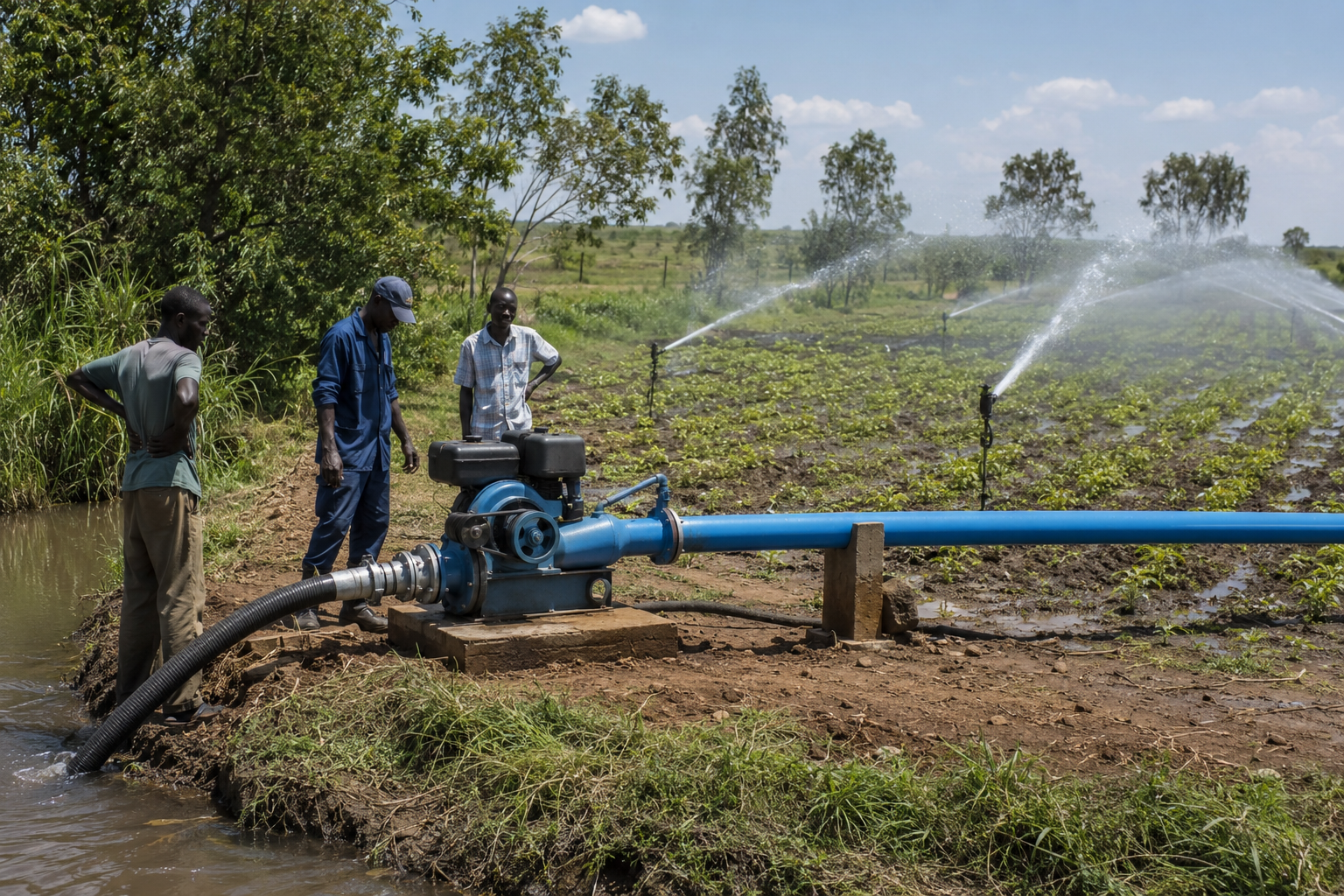
A self-priming pump is selected when the water source is shallow and the pump is placed above ground, but the suction line may contain air. It is useful for pumping from ponds, canals, shallow wells, small reservoirs, rivers, or temporary farm water sources.
It is better than an ordinary surface pump when farmers need a more practical and forgiving pump that can restart after priming, especially in field conditions where suction pipes are moved, air enters the line, or the water level changes.
Beneficiaries: small farmers, mobile irrigation users, vegetable growers, livestock farms, and farmers pumping from shallow surface sources.
Best field situation: shallow water source, mobile irrigation, canal or pond pumping, and places where easy maintenance is important.
Mixed-flow pumps
A mixed-flow pump is selected when the system needs a large flow but only a moderate head. It works between a centrifugal pump and an axial-flow pump. It can move more water than many ordinary centrifugal pumps, but it can also push water against more head than an axial-flow pump.
It is important in canal irrigation, drainage, flood control, river intake works, and large field supply systems. It is often used where large volumes of water must be moved, but the lift is not extremely high.
Beneficiaries: large irrigation schemes, drainage projects, water-user associations, commercial farms, and government irrigation authorities.
Best field situation: medium-head and high-flow conditions, such as canal pumping, lowland irrigation, river lifting, and drainage systems.
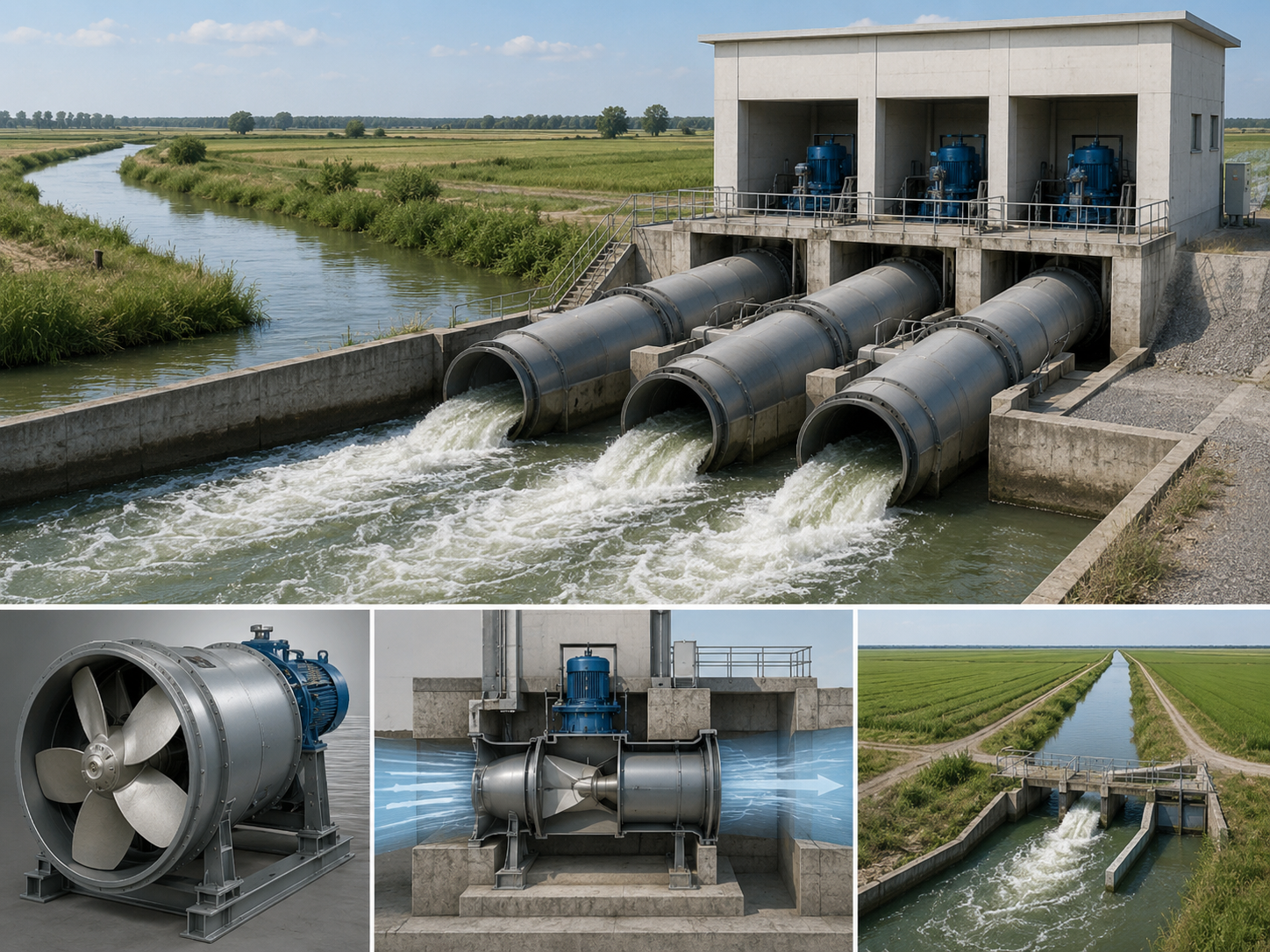
Axial-flow pumps
An axial-flow pump is selected when the system requires a very large discharge at a low head. It moves water almost like a propeller inside a pipe. It is not designed for high pressure or deep lifting. Its strength is moving huge quantities of water over a small elevation difference.
It is important for drainage, flood control, low-lift irrigation, polders, rice schemes, wetland water management, and large canal systems.
Beneficiaries: rice irrigation schemes, flood-prone communities, drainage authorities, large irrigation farms, and water-management agencies.
Best field situation: very large water volume, low lift, flat land, drainage canals, floodwater removal, and low-head irrigation.
Citation
A surface centrifugal pump is installed above ground and draws water from a river, pond, lake, canal, shallow well, or storage tank. It is suitable where the suction lift is small and water is close to the surface. Surface pumps are common for small irrigation farms, riverbank irrigation, sprinkler systems, drip irrigation headworks, and booster stations.
A self-priming pump is a surface pump that can restart more easily after air enters the suction line. It is useful where farmers pump from shallow wells, canals, ponds, or rivers and where suction conditions are not always perfect.
A booster pump increases pressure in an existing pipeline. It is used when water is already available but the pressure is not enough for sprinklers, drip irrigation filters, long pipelines, elevated tanks, or distribution networks.
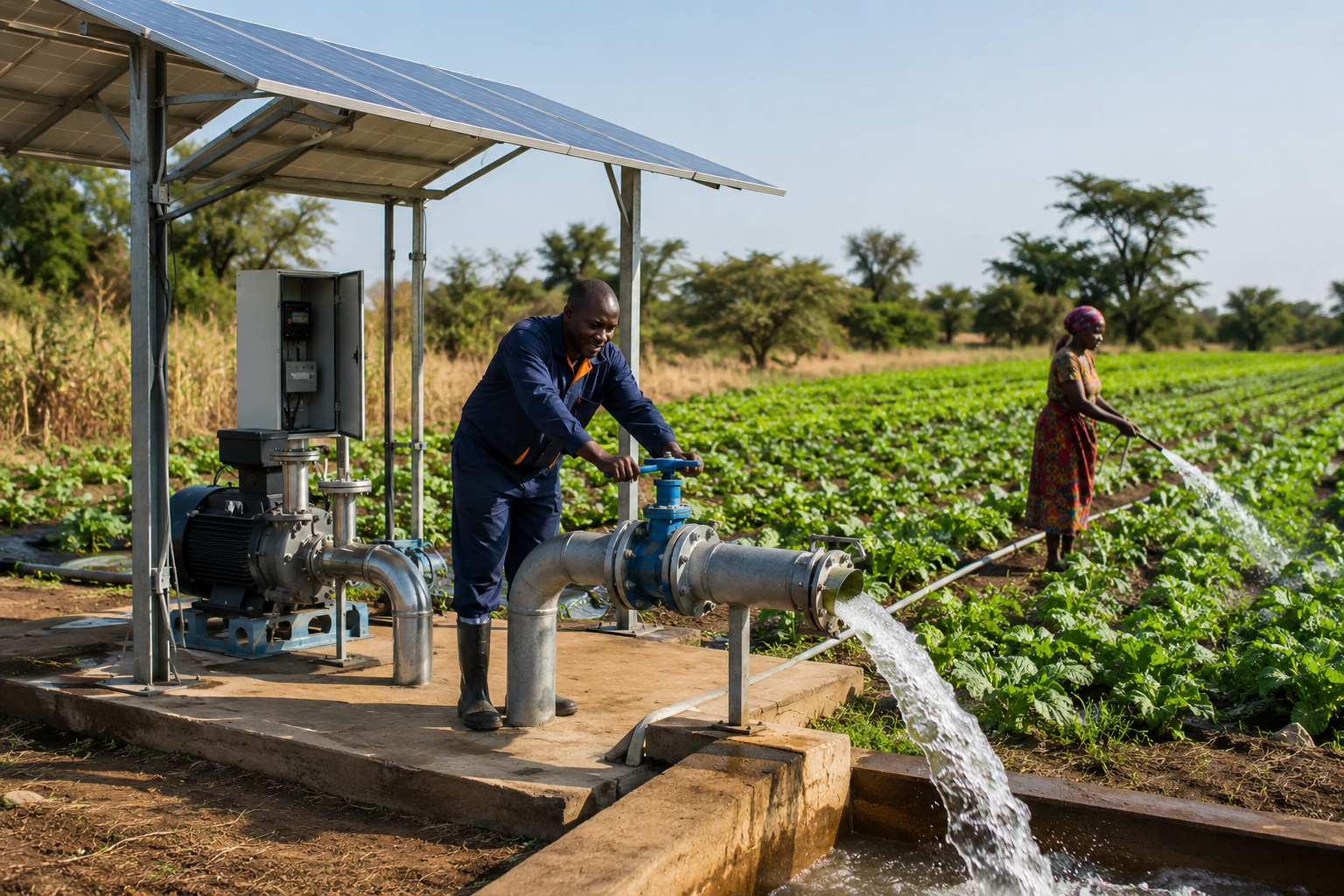
A solar pump uses photovoltaic panels to power the pump motor directly or through a controller/inverter. Solar pumps are very important for African farmers because they reduce dependence on diesel fuel and can work in remote areas without reliable grid electricity. However, solar pumping must be used responsibly because cheap pumping can encourage over-abstraction of groundwater if there is no monitoring.
Discharge capacity and head
The two most important technical values for any pump are discharge and head.
Discharge means how much water the pump delivers. It may be expressed in litres per second, cubic metres per hour, cubic metres per day, or gallons per minute.
Head means the height and pressure the pump must overcome. Total dynamic head includes vertical lift, pressure requirement, pipe friction losses, fittings, valves, filters, and elevation difference.
A small farmer using drip irrigation may need only a few cubic metres per day. A community water-supply system may need tens or hundreds of cubic metres per day. A large irrigation scheme may require hundreds or thousands of cubic metres per hour.
This is why pump selection must begin with calculation, not guesswork. The required information includes the project location, daily flow requirement, static lift, dynamic water level, pipe length, pipe diameter, irrigation pressure, and energy source.
Which pump is best for African farmers?
For most African smallholder farmers, the best practical choice is often a solar-powered submersible pump for boreholes or a solar/electric surface centrifugal pump for rivers, ponds, canals, and shallow wells.
If the water source is groundwater from a borehole, a submersible solar pump is usually the best option. It is protected inside the borehole, can push water upward from depth, and can fill a storage tank during sunny hours.
If the water source is a river, pond, canal, lake, or shallow reservoir, a surface centrifugal pump may be better because it is easier to install, inspect, repair, and move.
If the farm uses drip irrigation, the pump must provide steady pressure and must be combined with filters and pressure control. If the farm uses sprinkler irrigation, the pump must provide higher pressure so that sprinklers distribute water uniformly.
For very small farms, the priority should be affordability, simple maintenance, low energy cost, and available spare parts. For medium and large farms, the priority should be efficiency, automation, pressure control, durability, and professional design.
Best brands and practical advice
There is no single “best” pump brand for every African farmer. The best pump is the one that is correctly sized, durable, energy-efficient, affordable, locally supported, and easy to maintain.
Important international pump brands used in irrigation and water supply include Grundfos, Lorentz, Franklin Electric, Pedrollo, Shakti Pumps, and KSB(KSB is a major international pump and valve manufacturer from Germany. The company supplies pumps, valves, automation, and service for water, industry, energy, mining, building services, and other sectors. KSB describes itself as one of the world’s leading manufacturers of pumps and industrial valves, founded in 1871 in Frankenthal, Germany).
Grundfos is strong in submersible, solar, booster, and intelligent pump systems. Lorentz is well known for solar water pumping for people, livestock, and crops. Franklin Electric is strong in submersible motors, submersible pumps, and solar pump packages. Pedrollo offers many surface, centrifugal, booster, borehole, and agricultural irrigation pumps. Shakti Pumps is known for solar-powered agriculture pumps and energy-efficient pump systems. KSB is strong in larger irrigation, water-supply, industrial, and service-supported pump applications.
For African farmers, the best pump is not necessarily the most expensive brand. The best pump is the one that matches the water source, required discharge, total dynamic head, irrigation method, energy source, spare-part availability, and local technician support.
Modern pumps are therefore not only machines for moving water. They are the mechanical heart of irrigation, water supply, livestock watering, fertigation, and climate-resilient farming. When properly selected, a pump can transform a borehole, river, canal, or reservoir into a productive water source. But when poorly selected, it can waste energy, damage pipes, fail quickly, or over-exploit groundwater.
For Africa, the most promising direction is the use of correctly sized solar and electric pumps combined with drip irrigation, sprinkler irrigation, storage tanks, filters, pressure control, soil-moisture sensors, and remote monitoring. This combination can help farmers save water, reduce fuel costs, improve crop production, and move towards smart irrigation and sustainable agricultural development.
A practical pump-selection table
| Pump Type | How it Functions | Best Use | Typical Scale | Energy Source |
|---|---|---|---|---|
| Submersible borehole pump | Pushes groundwater upward from inside the borehole. | Boreholes, deep wells, rural water supply, drip/sprinkler irrigation. | Small farm to large scheme. | Solar, grid electricity, generator. |
| Surface centrifugal pump | Draws water from a nearby surface source and pushes it into pipes. | Rivers, canals, ponds, lakes, storage tanks. | Small to medium farm. | Electric, solar inverter, diesel/petrol. |
| Self-priming pump | Surface pump that can handle air better after priming. | Shallow wells, ponds, canals, mobile irrigation. | Small farm. | Petrol, diesel, electric. |
| Booster pump | Adds pressure to an existing pipe network. | Sprinkler irrigation, drip filters, elevated tanks, water supply. | Small to municipal scale. | Electric, solar-grid hybrid. |
| Vertical turbine pump | Lifts large quantities of water from deep sumps, rivers, reservoirs, or wells. | Large irrigation schemes, municipal intake works. | Medium to large scale. | Electric/diesel. |
| Mixed-flow pump | Moves large flow at moderate head. | Canal irrigation, drainage, large field supply. | Medium to large scale. | Electric/diesel. |
| Axial-flow pump | Moves very large flow at low head. | Drainage, flood control, low-lift irrigation. | Large scale. | Electric/diesel. |
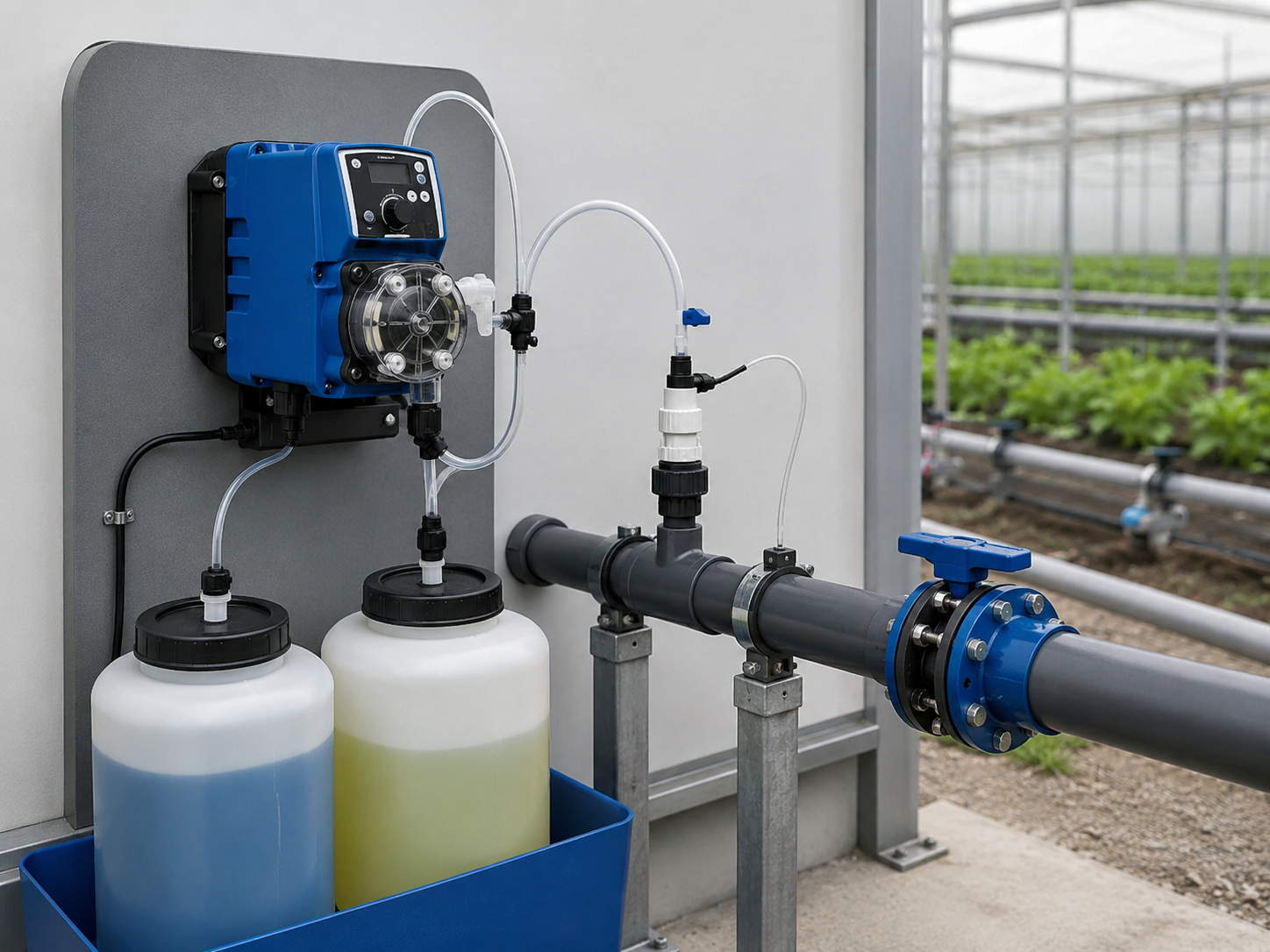
| Dosing pump | Injects fertilizer or chemicals accurately. | Fertigation, chlorination, water treatment. | Small to large system. | Electric/solar-supported. |
Addendum: Pipes, Valves, and Field Accessories Used with Modern Pumping Systems
A pump alone does not make a successful irrigation or water-supply system. The pump must work together with the correct pipes, valves, fittings, filters, pressure-control devices, and field distribution network. Many pump problems are not caused by the pump itself, but by wrong pipe selection, poor valve arrangement, excessive pressure loss, weak joints, poor filtration, or lack of protection against air, backflow, and water hammer.
For this reason, pump selection should always be followed by pipe and valve selection. The engineer must ask: What water source is used? Is the water for irrigation or drinking? What is the required discharge? What is the total head? What is the pressure in the pipeline? Is the pipe buried or exposed to sunlight? Is the system manual or automatic? Is the water clean or carrying sand and sediment? Can local technicians repair it? Are spare parts available?
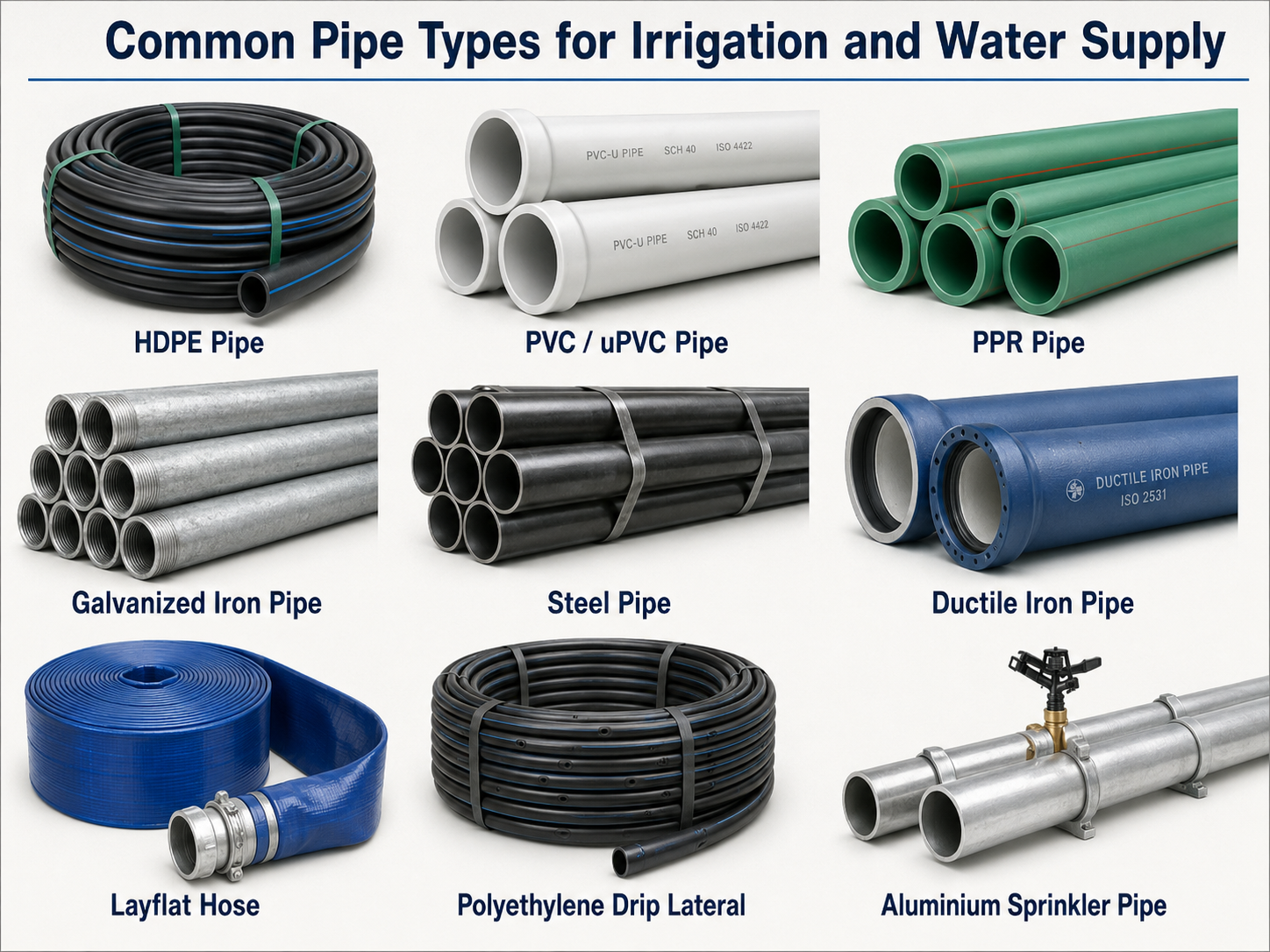
Common Pipe Materials Used in Irrigation and Water Supply
HDPE pipes are widely used for irrigation, borehole rising mains, rural water supply, and long buried pipelines. They are flexible, resistant to corrosion, and suitable for difficult ground conditions. HDPE is especially useful where soil movement, uneven terrain, or long pipe runs are expected. It is also good for pressurized irrigation systems, but the correct pressure rating must be selected.
PVC or uPVC pipes are commonly used in water supply, irrigation networks, and buried distribution lines. They are light, relatively affordable, and easy to install. PVC is suitable for clean water and moderate pressure systems, but it can become brittle if exposed to sunlight for a long time. For this reason, PVC should usually be buried or protected from ultraviolet radiation.
PPR pipes are often used in building plumbing and small water-supply systems. They are useful for hot and cold water inside buildings, institutions, offices, houses, and small facilities. They are less common for large field irrigation networks.
Galvanized iron pipes can be used for exposed pipework, pump connections, short mechanical sections, and places where strength is required. However, they are heavier, more expensive, and can corrode with time, especially in aggressive water or wet soil conditions.
Steel pipes are used in larger pumping stations, high-pressure pipelines, exposed mechanical sections, and major water-transfer systems. They are strong and can handle high pressure, but they require corrosion protection, good welding, proper coating, and professional installation.
Ductile iron pipes are used in municipal water supply, high-pressure transmission mains, and large distribution systems. They are strong and durable, but they are more expensive and usually require skilled installation.
Layflat hoses are used for temporary irrigation, mobile pumping, emergency water transfer, and seasonal farm operations. They are flexible and easy to move, but they are not always suitable for permanent buried systems.
Drip irrigation laterals are usually made from polyethylene tubes. They distribute water directly near the crop root zone through emitters. These pipes must be protected from clogging by using filters.
Sprinkler irrigation pipes may use HDPE, PVC, aluminium, steel, or portable pipe systems depending on the scale. Sprinkler systems need enough pressure, so pipe diameter and pressure losses must be carefully calculated.
Important Warning About Lead Pipes
Lead pipes should not be used for drinking-water systems. Lead can contaminate water and create serious health risks. For any drinking-water supply, pipes and fittings should be safe for potable water and should meet accepted water-quality and material standards.
In modern water-supply design, lead pipe is not a suitable choice. It should be avoided, especially in borehole systems, schools, hospitals, houses, rural water points, and community water-supply networks.
For drinking water, safer choices include approved HDPE, uPVC, ductile iron, stainless steel, or other certified potable-water materials depending on the project scale, pressure, and local regulations.
Practical Pipe Selection Guide
Deep borehole rising main: HDPE, stainless steel, galvanized iron, or approved borehole riser pipe depending on depth, pressure, and water quality.
Small farm surface irrigation: HDPE, PVC, layflat hose, or flexible irrigation pipe.
Drip irrigation: HDPE mainline and sub-main, with polyethylene drip laterals and proper filtration.
Sprinkler irrigation: HDPE or PVC mainline, with portable aluminium, HDPE, or steel sprinkler laterals depending on pressure and scale.
Drinking-water distribution: Approved potable-water HDPE, uPVC, ductile iron, or other certified pipe material.
Large irrigation scheme: HDPE, steel, ductile iron, concrete pressure pipe, or reinforced pipe depending on diameter, pressure, terrain, and cost.
Temporary pumping: Layflat hose, flexible suction hose, and portable delivery pipes.
Pump station pipework: Steel, galvanized iron, stainless steel, ductile iron, or flanged pipe sections for strength and maintenance access.
Common Valves Used in Pumping, Irrigation, and Water Supply
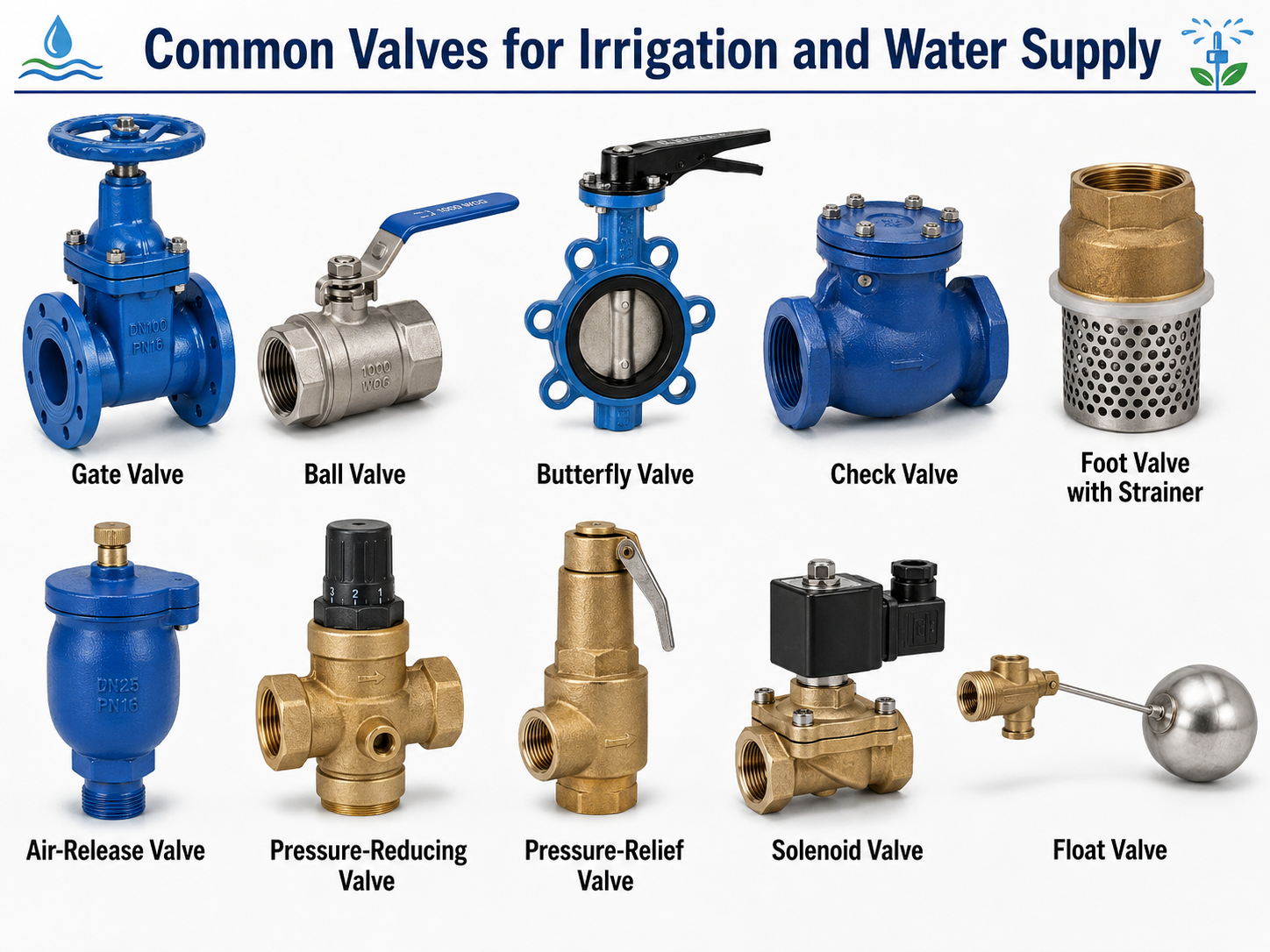
Valves control flow, pressure, direction, safety, and maintenance. A good pumping system must not only deliver water; it must also be controllable and protected.
Gate valves are used to open or close flow in pipelines. They are common in water supply, irrigation mains, and pump stations. They are not ideal for fine flow control, but they are good for isolation.
Ball valves are simple and fast-opening valves, often used in small irrigation systems, tanks, filters, and local control points. They are good for small and medium pipe sizes.
Butterfly valves are useful for larger pipes because they are lighter and easier to operate than large gate valves. They are common in pump stations, treatment plants, and large irrigation systems.
Check valves allow water to flow in one direction only. They are very important after pumps because they prevent reverse flow when the pump stops. Without a check valve, water can flow backward and damage the pump or pipeline.
Foot valves are installed at the end of suction pipes for surface pumps. A foot valve usually includes a strainer and check-valve function. It helps keep the suction pipe full of water and prevents debris from entering the pump.
Air-release valves remove trapped air from pipelines. Air pockets can reduce flow, increase pressure loss, cause surging, and damage the system. Air-release valves are especially important at high points in long pipelines.
Pressure-reducing valves reduce high pressure to a safer lower pressure. They are useful where the terrain is steep, where water flows downhill, or where drip irrigation needs controlled pressure.
Pressure-relief valves protect pipelines and pumps from excessive pressure. They are useful where sudden valve closure, pump start-up, or water hammer can create dangerous pressure surges.
Solenoid valves are electrically operated valves used in automatic irrigation systems. They can open and close irrigation zones according to a controller, soil-moisture sensor, timer, or software decision.
Float valves control water entering storage tanks. They close automatically when the tank becomes full.
Scour valves or washout valves are placed at low points in pipelines to drain sediment, empty the pipe, or clean the system.
Hydrant valves are used in irrigation networks to supply water to field outlets, sprinkler lines, or mobile irrigation equipment.
Practical Valve Selection Guide
To isolate a pipeline: Use gate valve, butterfly valve, or ball valve.
To stop reverse flow after a pump: Use check valve.
To protect a surface pump suction line: Use foot valve with strainer.
To remove trapped air from long pipelines: Use air-release valve.
To reduce excessive pressure: Use pressure-reducing valve.
To protect against pressure surge: Use pressure-relief valve or surge-control device.
To automate irrigation zones: Use solenoid valves or motorized control valves.
To control tank filling:Use float valve.
To clean sediment from low points: Use scour valve or washout valve.
To connect field irrigation outlets: Use hydrant valves or field control valves.
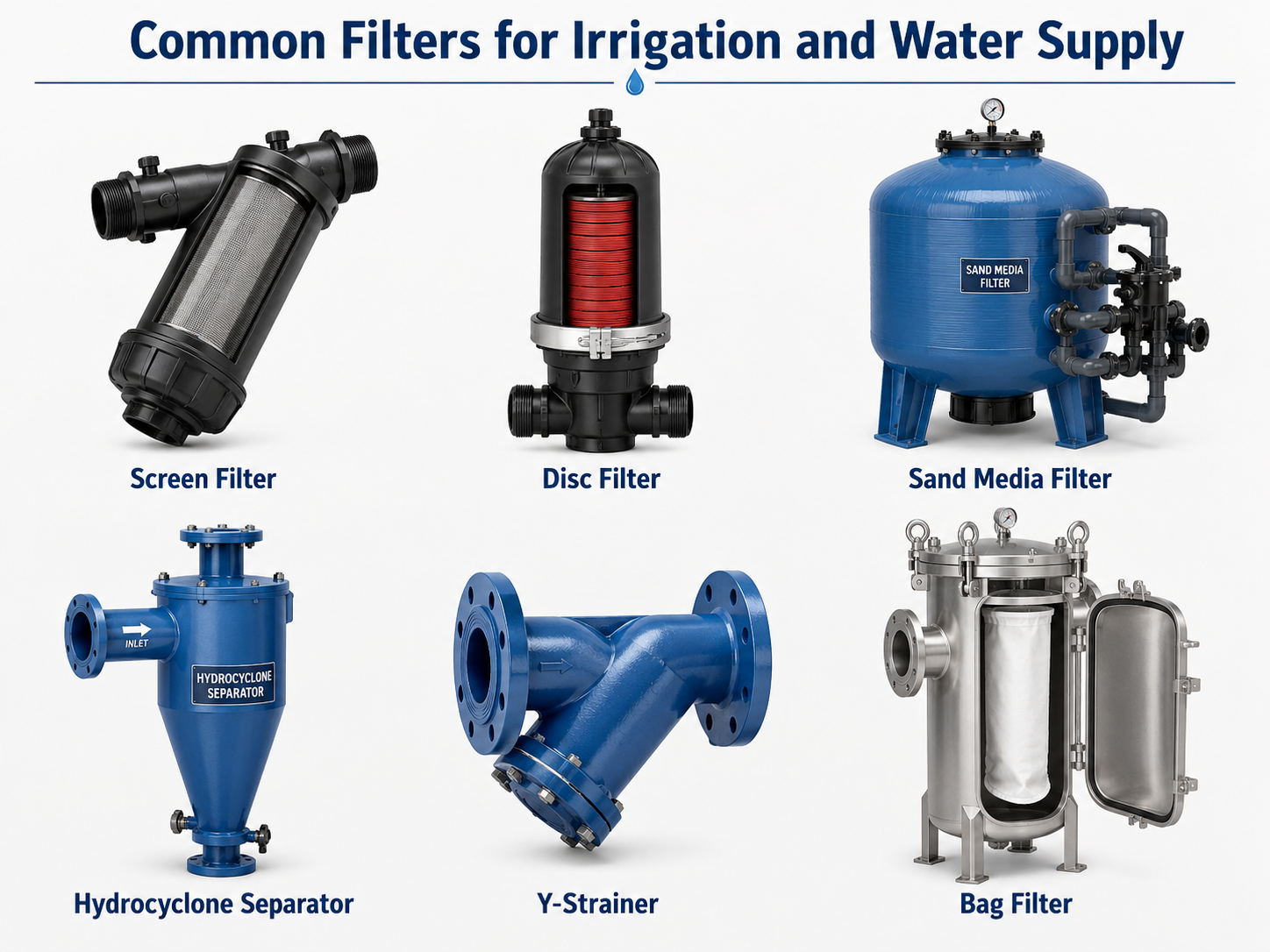
Filters and Protection Devices
Sources
Official references used for this article.
Comments
Comments are reviewed by AquaLinked Media before public display. If your email matches an approved AquaLinked expert profile, your comment may appear with your expert profile link after approval.
No approved comments yet. Be the first to contribute respectfully.
No password is needed. Enter the email connected to your expert profile, and the system will check whether your expert profile exists.
Please login or register before commenting.