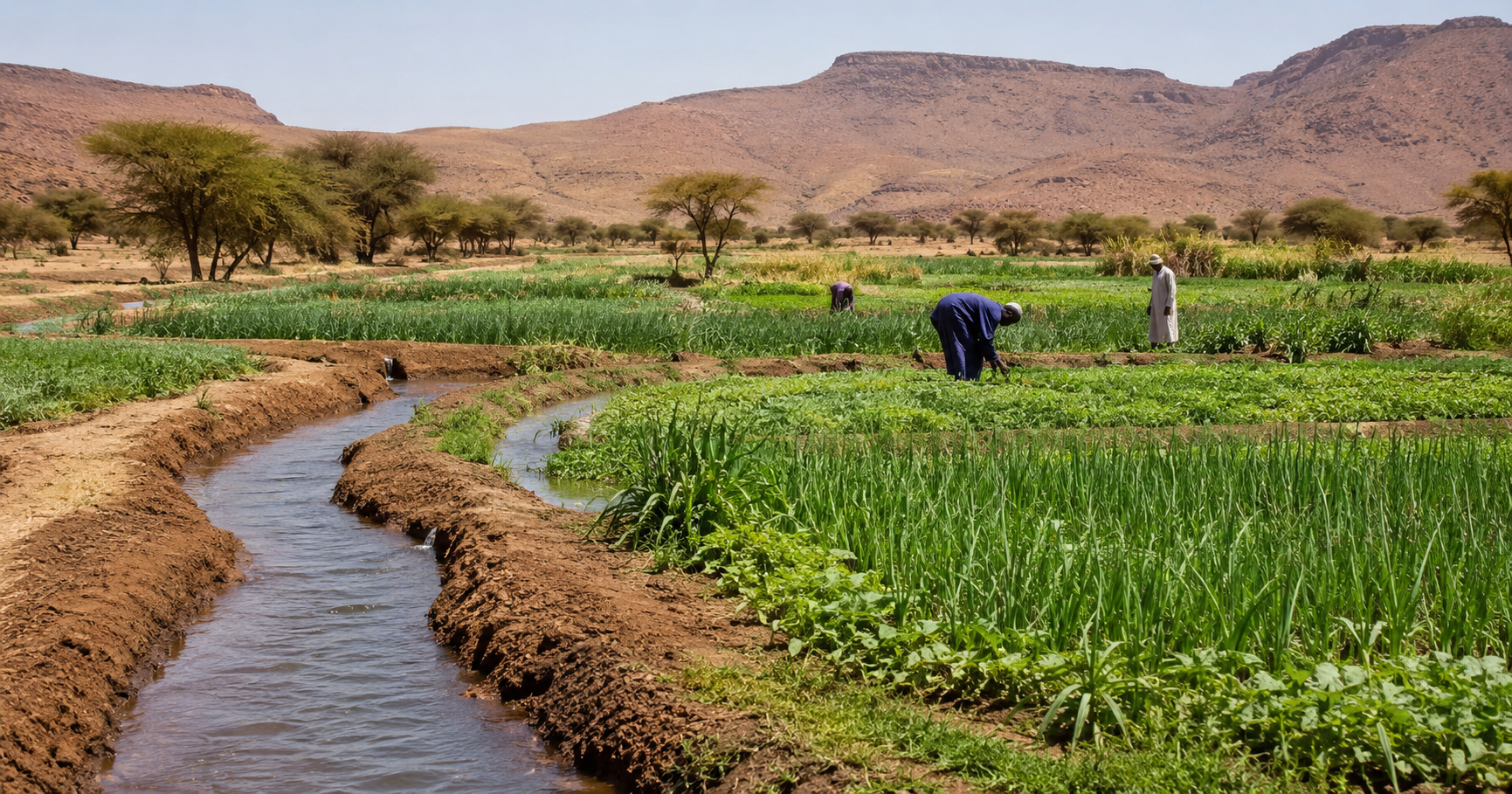
The governments of Burkina Faso, Mali, Mauritania, Niger, Senegal, and Chad have issued a renewed call for stronger investment in irrigation across the Sahel. The appeal came during the Dakar+10 Forum, held ten years after the original Dakar Declaration on Irrigation in the Sahel.
The central objective is ambitious: to bring 1,000,000 hectares of land under full water control by 2035. This goal reflects the growing recognition that food security in the Sahel cannot depend only on rainfall. In a region exposed to drought, heat, land degradation, and climate uncertainty, water control is becoming a foundation for agricultural transformation.
The renewed Dakar Declaration emphasizes efficient, sustainable, and climate-resilient irrigation. It calls for stronger national irrigation programs, improved public and community-managed schemes, farmer-led irrigation development, diversified water sources, better governance, and stronger regional cooperation.
This is especially important because the Sahel has significant water, land, and energy potential, but much of that potential remains underused. When irrigation is properly planned and maintained, it can help farmers produce beyond the rainy season, reduce dependence on imported food, create jobs in rural value chains, and strengthen local economies.
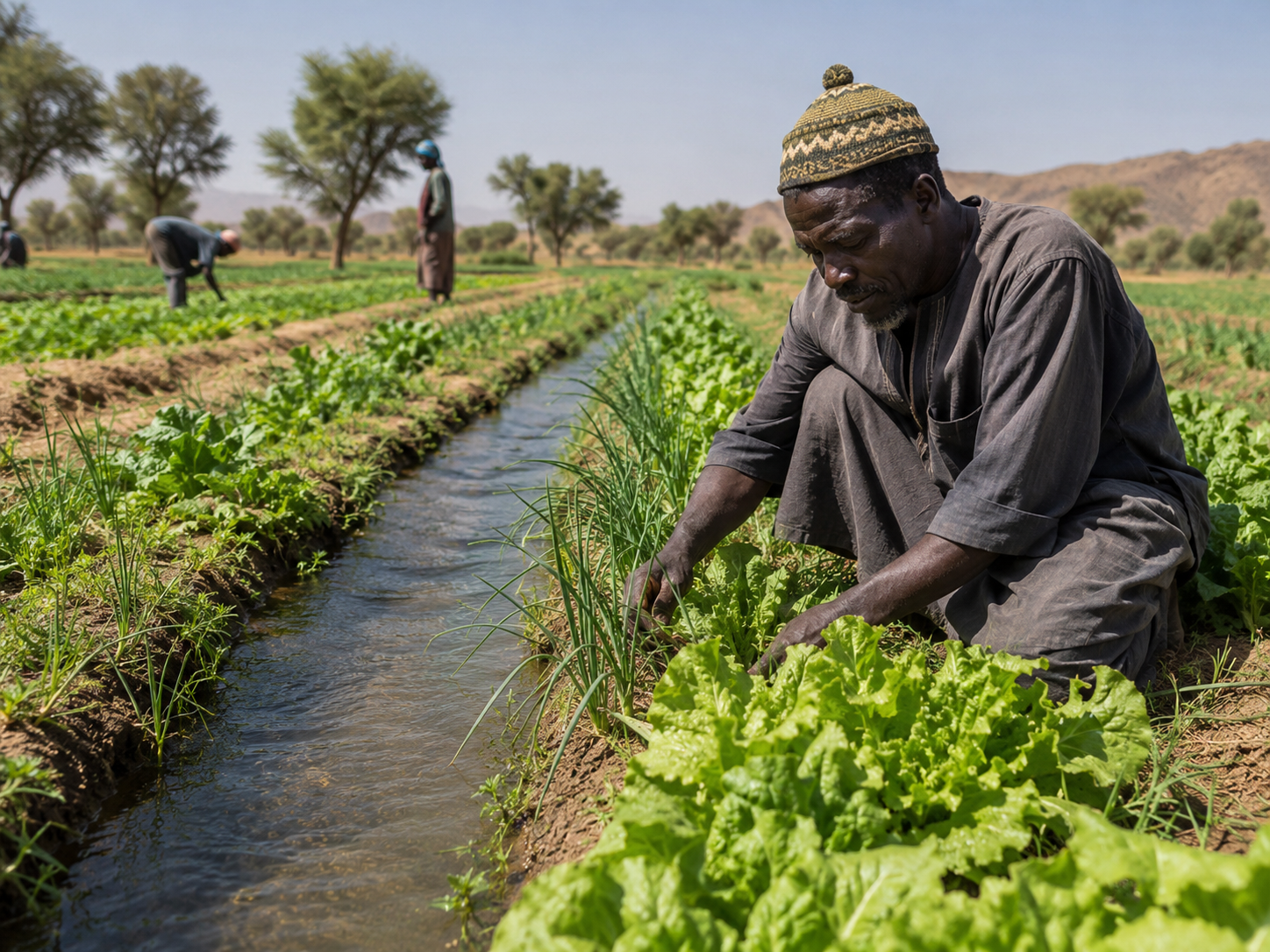
The initiative also highlights the importance of farmers themselves. Their role is not only to produce food, but also to participate in the financing, maintenance, and long-term management of irrigation systems. This makes the irrigation agenda not only an infrastructure issue, but also a governance and community-development issue.
For AquaLinked / Water for Africa Experts, this story is highly relevant. It shows that the future of water in Africa is not limited to emergency response. It is also about professional planning, hydraulic engineering, irrigation design, groundwater and surface-water management, climate adaptation, and regional cooperation.
The Sahel’s irrigation challenge is therefore a call to engineers, hydrologists, agronomists, environmental specialists, policy makers, and local communities. If the target is achieved, one million hectares under controlled water management could become one of the most important agricultural resilience milestones in the region.
Sources
Official references used for this article.
Comments
Comments are reviewed by AquaLinked Media before public display. If your email matches an approved AquaLinked expert profile, your comment may appear with your expert profile link after approval.
No approved comments yet. Be the first to contribute respectfully.
No password is needed. Enter the email connected to your expert profile, and the system will check whether your expert profile exists.
Please login or register before commenting.