Internet-Based Smart Irrigation System
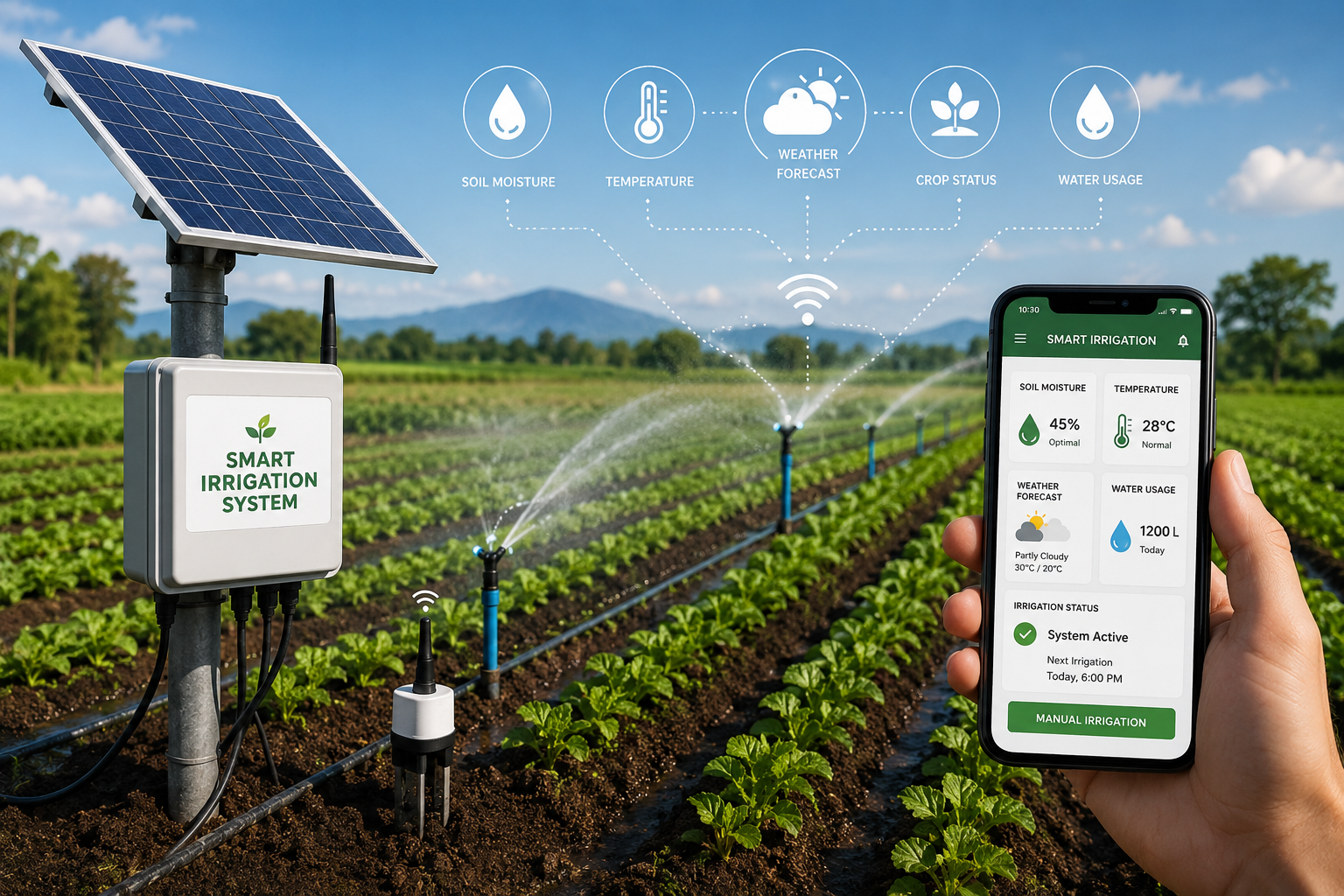
An internet-based smart irrigation system allows the farm to communicate with the farmer through sensors, controllers, and a mobile phone. Instead of guessing when to irrigate, when to stop the pump, or whether the tank has enough water, the farmer receives real-time information from the field.
In a traditional irrigation system, the farmer must visit the field, observe the soil, check the tank, listen to the pump, and estimate whether the crop needs water. This can waste time, energy, and water. In a smart irrigation system, sensors collect information continuously and send it to a control unit. The control unit sends the information to the farmer’s phone and can also make automatic decisions.
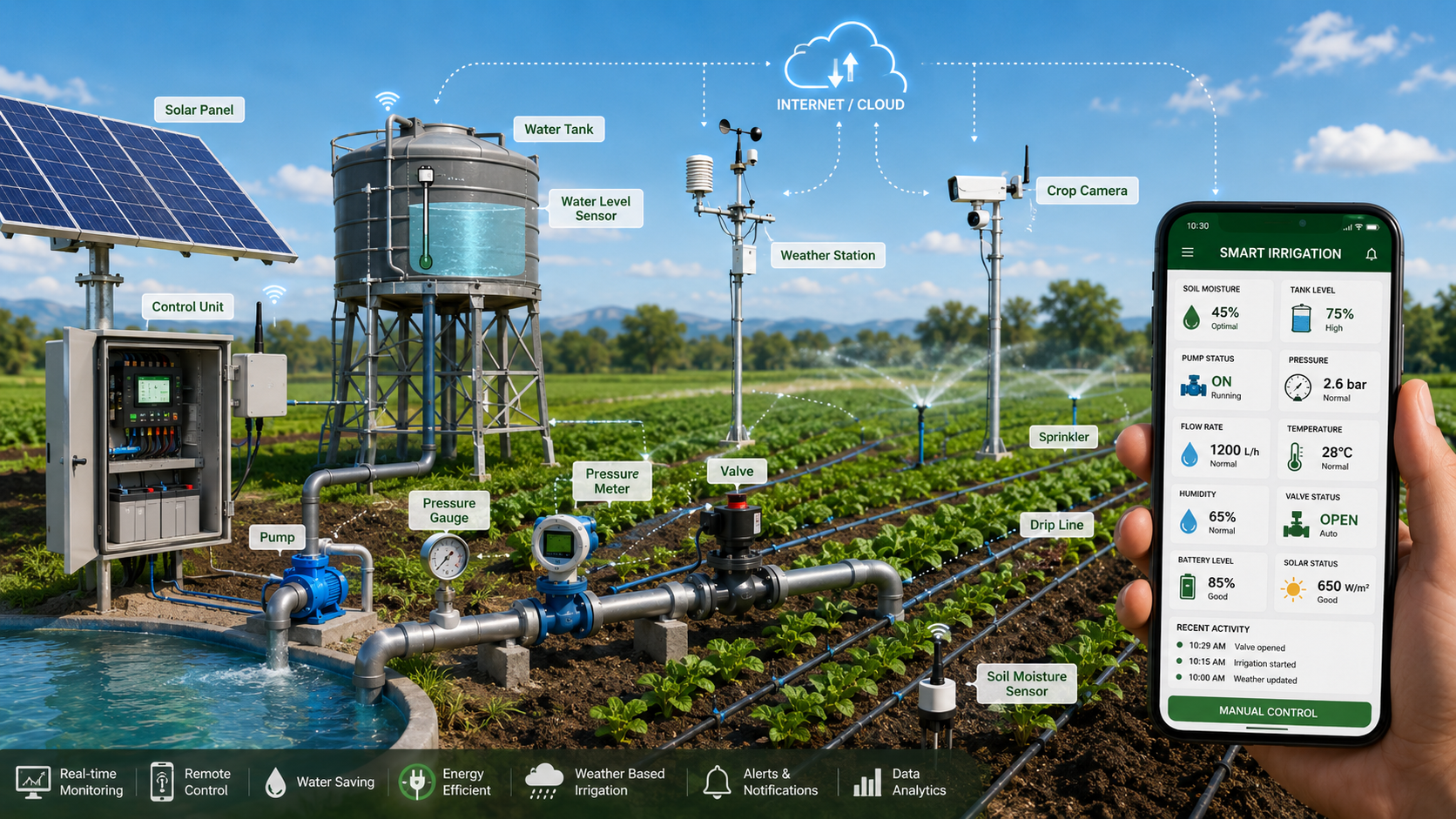
The system can monitor many important conditions, including soil moisture, water level in the tank or reservoir, pump status, pipe pressure, flow rate, battery level, solar power condition, weather data, temperature, humidity, valve status, and crop-field condition.
- The farmer no longer has to guess.
- The field speaks through sensors.
- The phone becomes the field-control center.
- If the soil moisture is low, the system can open the irrigation valve.
- If the tank water level is low, the system can stop the pump to protect it from dry running.
- If the pipe pressure is too high, the system can send a warning before pipes or fittings are damaged.
- If rain is expected, the system can delay irrigation and save water.
- If the solar battery is weak, the system can reduce operation or postpone pumping until enough power is available.
This type of system is especially useful for drip irrigation, sprinkler irrigation, greenhouse irrigation, solar-powered pumping systems, and remote farms where the farmer cannot visit the field every day. It helps save water, reduce labor, protect equipment, improve crop growth, and make irrigation more scientific and reliable.
In simple terms, internet-based irrigation connects four things:
The field sensors that observe the condition of the farm.
The controller that receives data and makes decisions.
The pump and valves that act physically in the field.
The farmer’s phone, which becomes the command center.
With this system, irrigation becomes intelligent. Water is applied when the crop needs it, the pump runs only when conditions are safe, and the farmer receives warnings before small problems become expensive failures.
Sources
Official references used for this article.
Comments
Comments are reviewed by AquaLinked Media before public display. If your email matches an approved AquaLinked expert profile, your comment may appear with your expert profile link after approval.
No approved comments yet. Be the first to contribute respectfully.
No password is needed. Enter the email connected to your expert profile, and the system will check whether your expert profile exists.
Please login or register before commenting.