HDPE Pipe
View the book, technical guide, training material, or water technology item in detail.
Move the mouse over the product image. A zoom preview will appear beside the product. Click the image to open it full size.
water-technology
HDPE Pipe
Category: Drip Irrigation Components
Price on request
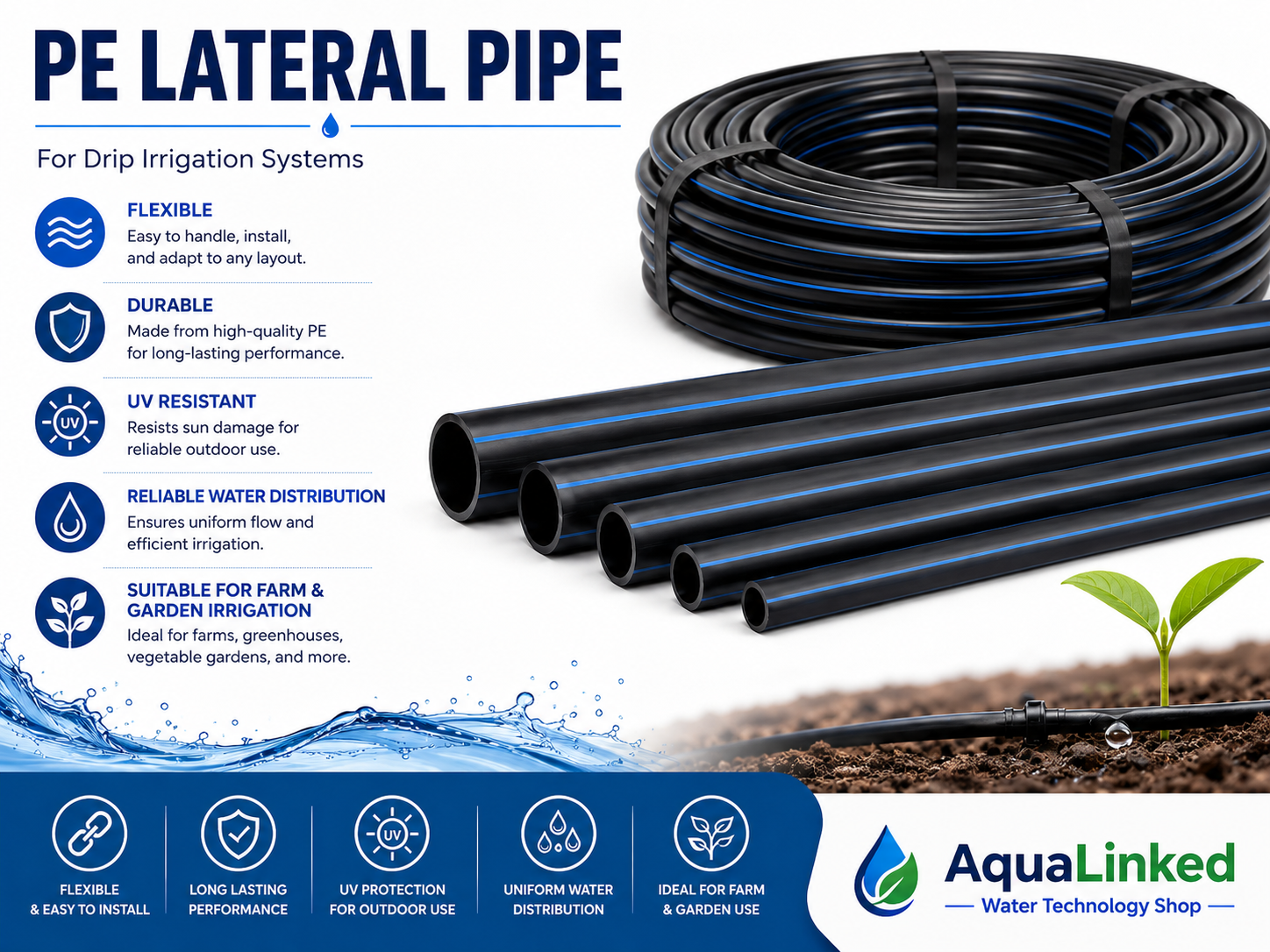
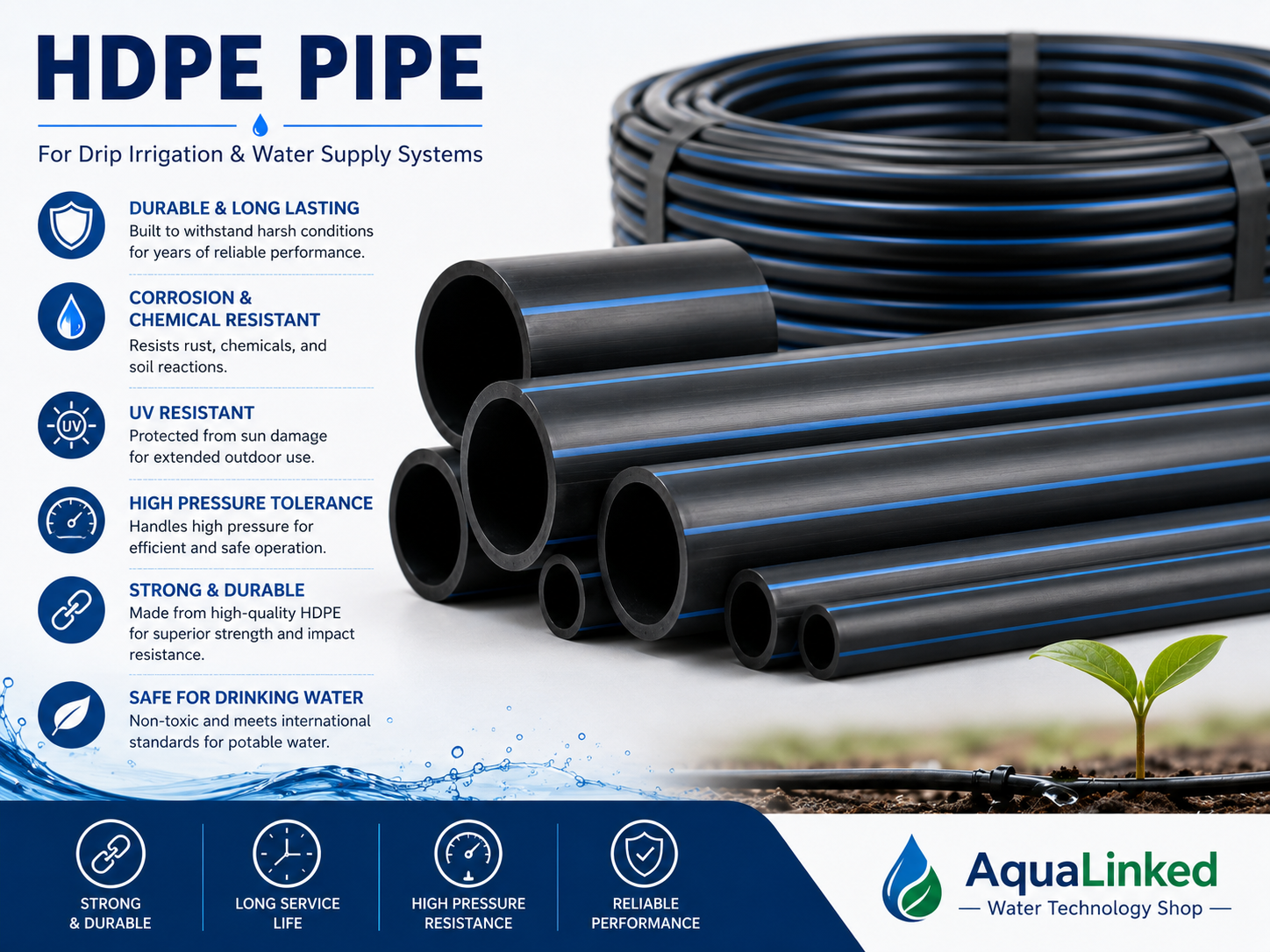
HDPE pipe is a strong and flexible irrigation pipe used as a mainline or submain to carry water from the pump, tank, filter station, or control head to the field. It is widely used in drip irrigation, sprinkler systems, farm water distribution, and pump delivery lines because it is durable, pressure-resistant, and suitable for outdoor irrigation networks.
Product Description
Full Description:
HDPE pipe is a strong, flexible, and durable pipe used as a mainline or submain pipe in irrigation and water distribution systems. In drip irrigation, it normally carries water from the water source, pump, tank, filter station, or control head toward the field before the water is distributed into smaller lateral pipes, inline driplines, drip tape, or sprinkler lines.
HDPE stands for High-Density Polyethylene. This material is widely used in irrigation because it is resistant to corrosion, flexible during installation, suitable for underground or above-ground use, and able to carry pressurized water over long distances. Compared with rigid pipe materials, HDPE can better tolerate ground movement, field conditions, and outdoor exposure when the correct pipe grade and pressure class are selected.
In an irrigation system, the HDPE pipe acts like the backbone of the network. It does not normally release water directly to plants. Instead, it transports water safely and efficiently from the source to the required irrigation zones. From there, valves, submains, manifolds, inline driplines, drip tape, or sprinkler laterals distribute the water closer to the crops.
HDPE pipes are selected according to diameter, pressure class, SDR rating, pipe length, flow requirement, pump pressure, and elevation difference. A pipe that is too small may create high friction loss and pressure drop, while a properly sized pipe helps maintain good pressure and uniform water distribution throughout the irrigation system.
Small HDPE pipes may be joined using compression fittings, while larger mainlines are commonly connected by butt-fusion welding, electrofusion fittings, or flanged joints. Correct installation and jointing are important to prevent leakage, pressure loss, and system failure.
This product is suitable for drip irrigation, sprinkler irrigation, pump delivery lines, farm water supply, greenhouse irrigation, orchards, nurseries, and agricultural water distribution networks. It is also useful for training and demonstration because it helps learners understand the difference between mainlines, submains, and lateral irrigation lines.
Before purchase or installation, users should confirm the final supplier specifications, including pipe diameter, wall thickness, PE grade, PN pressure class, SDR rating, roll length, joining method, UV resistance, certification standards, and suitability for the intended irrigation or water-supply application.
Availability, Delivery and Support
For special delivery, bulk purchase, technical support, or supplier confirmation, visitors can send an inquiry before purchase.
Ask About AvailabilityCustomer Reviews
Customer Reviews
Reviews are published after admin approval.