AquaLinked Store Bookstore & Water Technology Shop

Irrigation Flow Meter — Water Use Monitoring and Flow Measurement

View the book, technical guide, training material, or water technology item in detail.
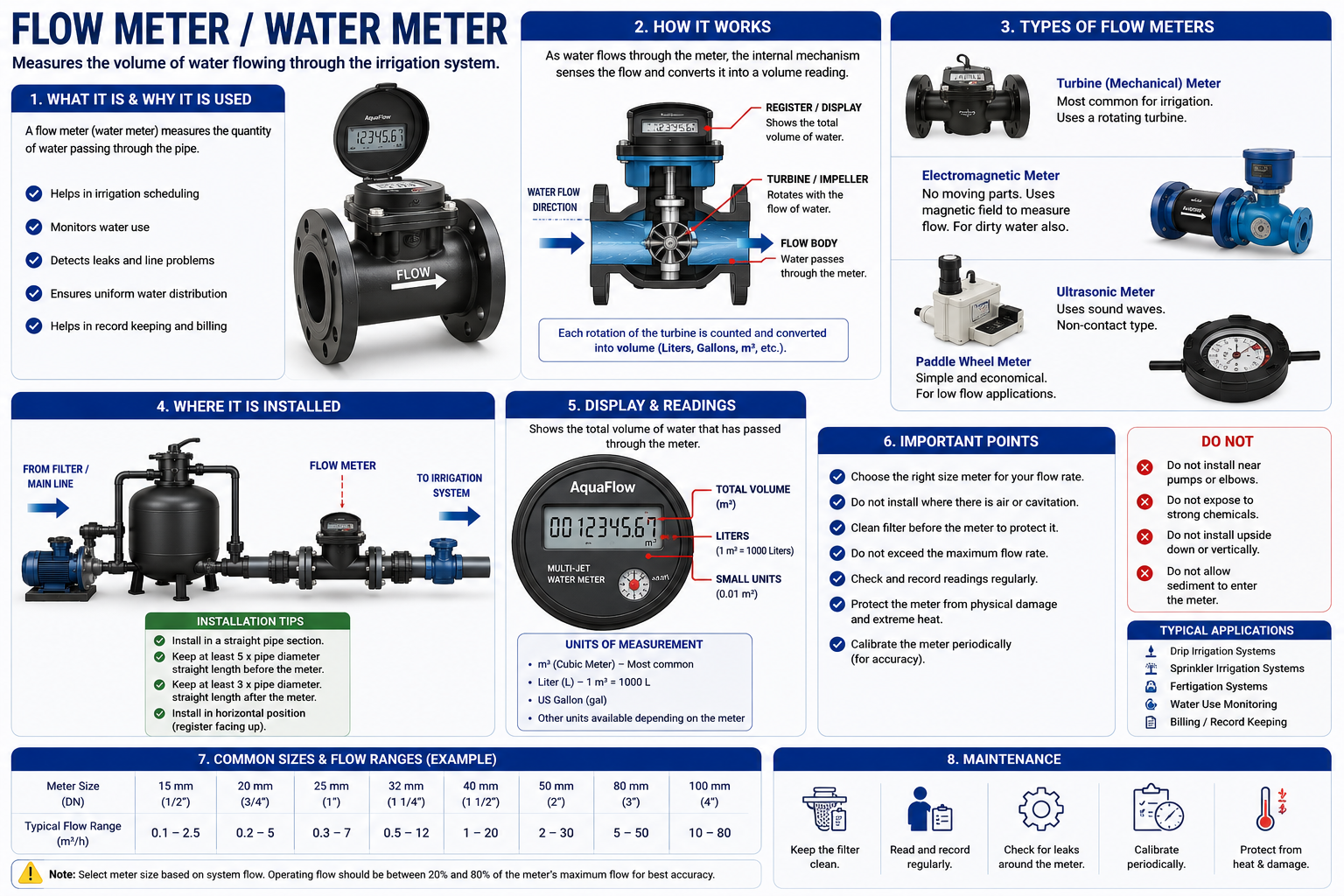
Irrigation Flow Meter — Water Use Monitoring and Flow Measurement

Move the mouse over the product image. A zoom preview will appear beside the product. Click the image to open it full size.

water-technology

Irrigation Flow Meter — Water Use Monitoring and Flow Measurement

Category: Drip Irrigation Components

Price on request

Produced by irrigation equipment, water-meter, and flow-measurement manufacturers. Common producers include irrigation and water-control companies that manufacture mechanical turbine meters, paddle-wheel meters, electromagnetic meters, and ultrasonic flow meters. The exact manufacturer depends on meter type, pipe size, flow range, pressure rating, and connection type.

Coming soon This material is currently not in stock. Please visit us again later, or send an inquiry if you would like to be notified when it becomes available.

Product Description

A flow meter, also called a water meter, is used to measure the volume of water passing through an irrigation pipeline. It helps farmers, technicians, engineers, and project managers know how much water is being used in a drip irrigation, sprinkler irrigation, fertigation, or water-supply system.

In irrigation, a flow meter is important because it helps monitor water use, detect abnormal flow, identify possible leaks, support irrigation scheduling, and improve water-management decisions. It can also help compare the actual water delivered to the field with the planned irrigation requirement.

The meter is usually installed on the mainline or sub-main line, preferably in a straight pipe section where the flow is stable. For good accuracy, the pipe should be full of water and the meter should not be installed too close to pumps, elbows, valves, or fittings that disturb the flow. In many systems, it is installed after the filter and before the irrigation zones.

Availability, Delivery and Support

Stock Status coming_soon

For special delivery, bulk purchase, technical support, or supplier confirmation, visitors can send an inquiry before purchase.

Ask About Availability

Customer Reviews

Customer Reviews

Reviews are published after admin approval.
0.0 / 5
☆☆☆☆☆
0 approved reviews
Direct link

Technical Material Information

Manufacturer / Producer
Produced by irrigation equipment, water-meter, and flow-measurement manufacturers
Material
Plastic, reinforced nylon, brass, cast iron, stainless steel, or coated metal body depending on model, meter size, pressure rating, and manufacturer. Internal parts may include plastic, stainless steel, rubber seals, turbine/impeller parts, electronic sensors, and a mechanical or digital display.
Pipe / Tape Diameter
Common irrigation sizes include ½″, ¾″, 1″, 1¼″, 1½″, 2″, 3″, and 4″. Larger sizes are available for commercial farms and main irrigation networks. The correct size must match pipe diameter, expected flow rate, and allowable pressure loss.
Connection Type
Threaded BSP / NPT, compression, union, flanged, or clamp connection depending on meter type, pipe size, and irrigation system design.
Working Pressure
Typical working pressure may range from about 1 to 16 bar depending on the model and manufacturer. The selected meter must match the irrigation system pressure and should not be used above its rated pressure.
Flow Rate
Flow rate depends on meter size and model. Small meters may measure low flows such as 0.1–5 m³/h, while larger irrigation meters may measure 10–80 m³/h or more. The meter should be selected so the normal operating flow remains within the recommended flow range.
Application
Used to measure and monitor water flow and total water volume in drip irrigation, sprinkler irrigation, fertigation systems, greenhouse irrigation, farm water supply, water distribution networks, and irrigation management systems.
Best Used With:
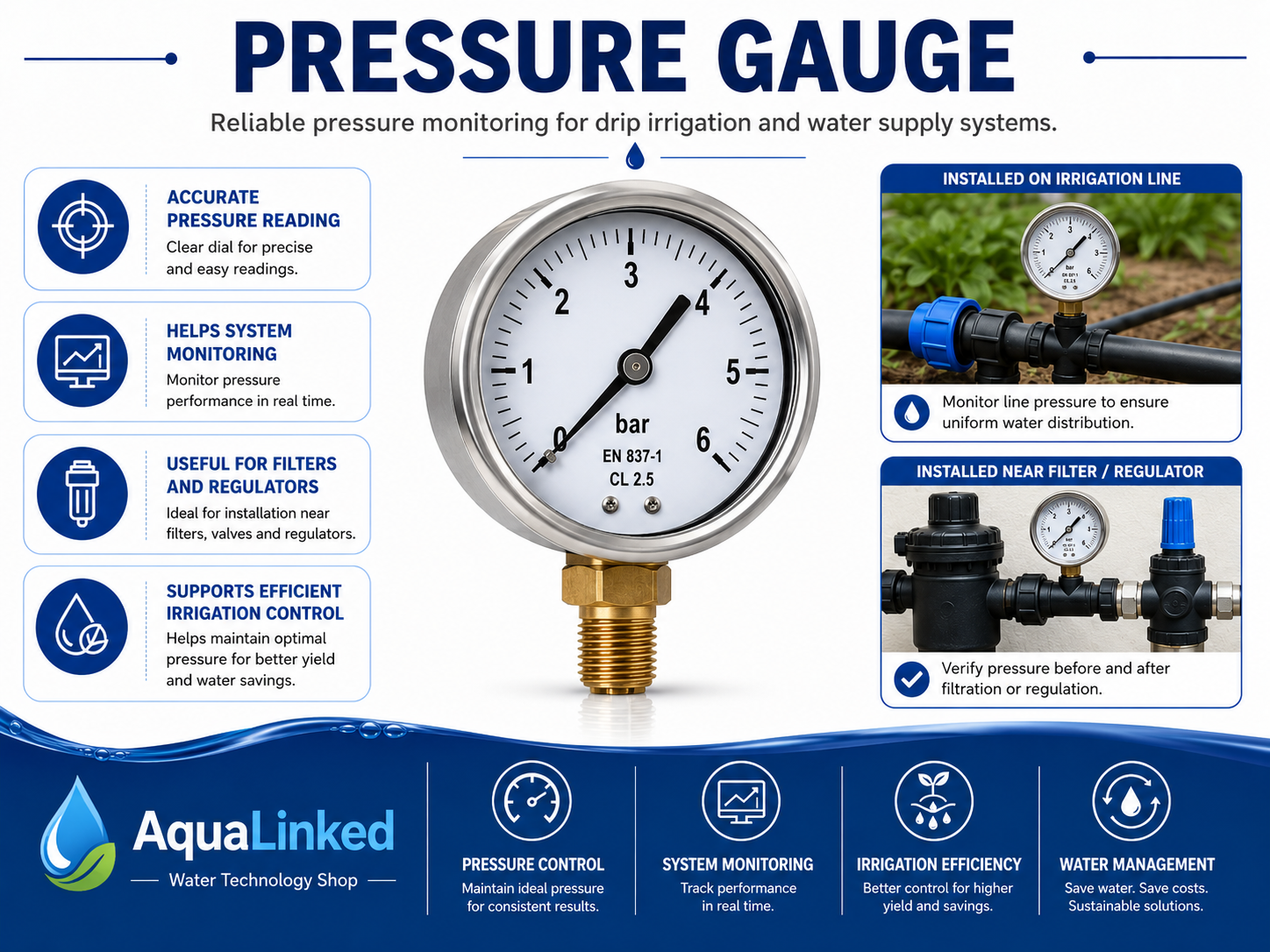
Pump, filter, pressure regulator, pressure gauges, mainline pipe, sub-main pipe, drip irrigation system, sprinkler system, fertigation unit, and irrigation controller.

Practical Installation Note:
Install the meter in the correct flow direction, following the arrow on the meter body. Keep the meter horizontal or according to manufacturer instructions. Avoid installing it directly after pumps, elbows, valves, or reducers unless enough straight pipe length is provided. Clean the filter regularly to protect the meter from sand and debris.
Product Group / Sub-Group
Connectors and Fittings
Bookstore Update

View Updates