Pressure Regulator
View the book, technical guide, training material, or water technology item in detail.
Move the mouse over the product image. A zoom preview will appear beside the product. Click the image to open it full size.
water-technology
Pressure Regulator
Category: Drip Irrigation Components
Price on request
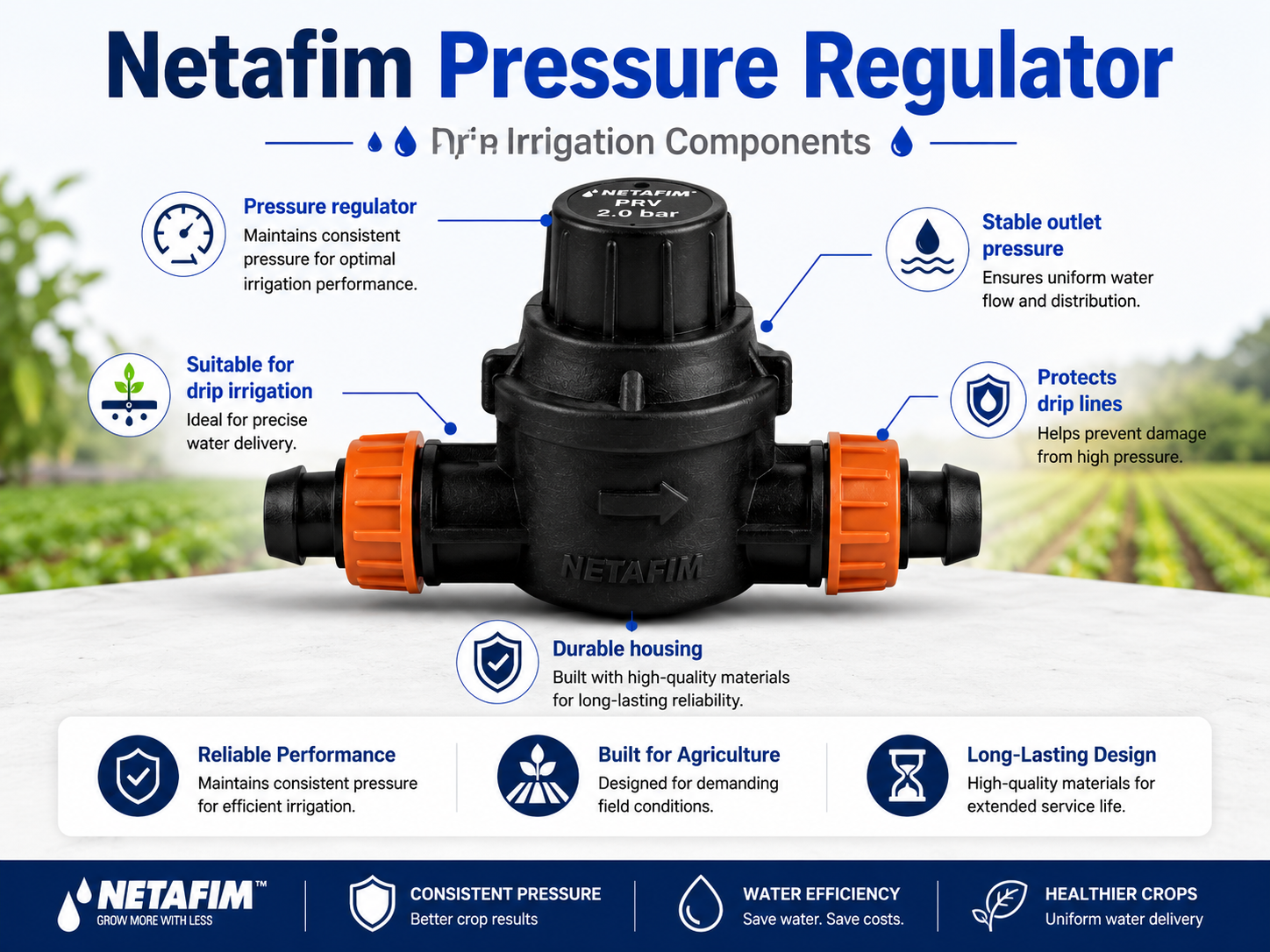
A pressure regulator is used in drip irrigation systems to control and stabilize water pressure before it reaches drip tape, drip pipes, and emitters. It helps prevent bursting, leakage, and uneven water discharge, making the irrigation system safer and more uniform.
Product Description
Full Description:
A pressure regulator is an important control device used in drip irrigation systems to reduce and stabilize water pressure before the water enters drip tape, drip pipes, emitters, or micro-irrigation laterals. Drip irrigation works best at low and steady pressure. If the pressure is too high, drip tape may expand, leak, or burst. If the pressure is too low or unstable, some emitters may release less water than others, causing poor irrigation uniformity.
The pressure regulator helps protect the irrigation system by converting higher or changing inlet pressure into a safer and more stable outlet pressure. This allows water to move through the drip network more evenly, helping crops receive a more balanced water supply along the irrigation line.
When downstream pressure pushes the diaphragm, the spring compresses and the valve moves toward the closed position. This reduces the flow opening. Water passes through a narrower gap, local velocity increases, and pressure drops across the valve due to throttling and energy loss. The result is a lower, more stable outlet pressure for the drip system.
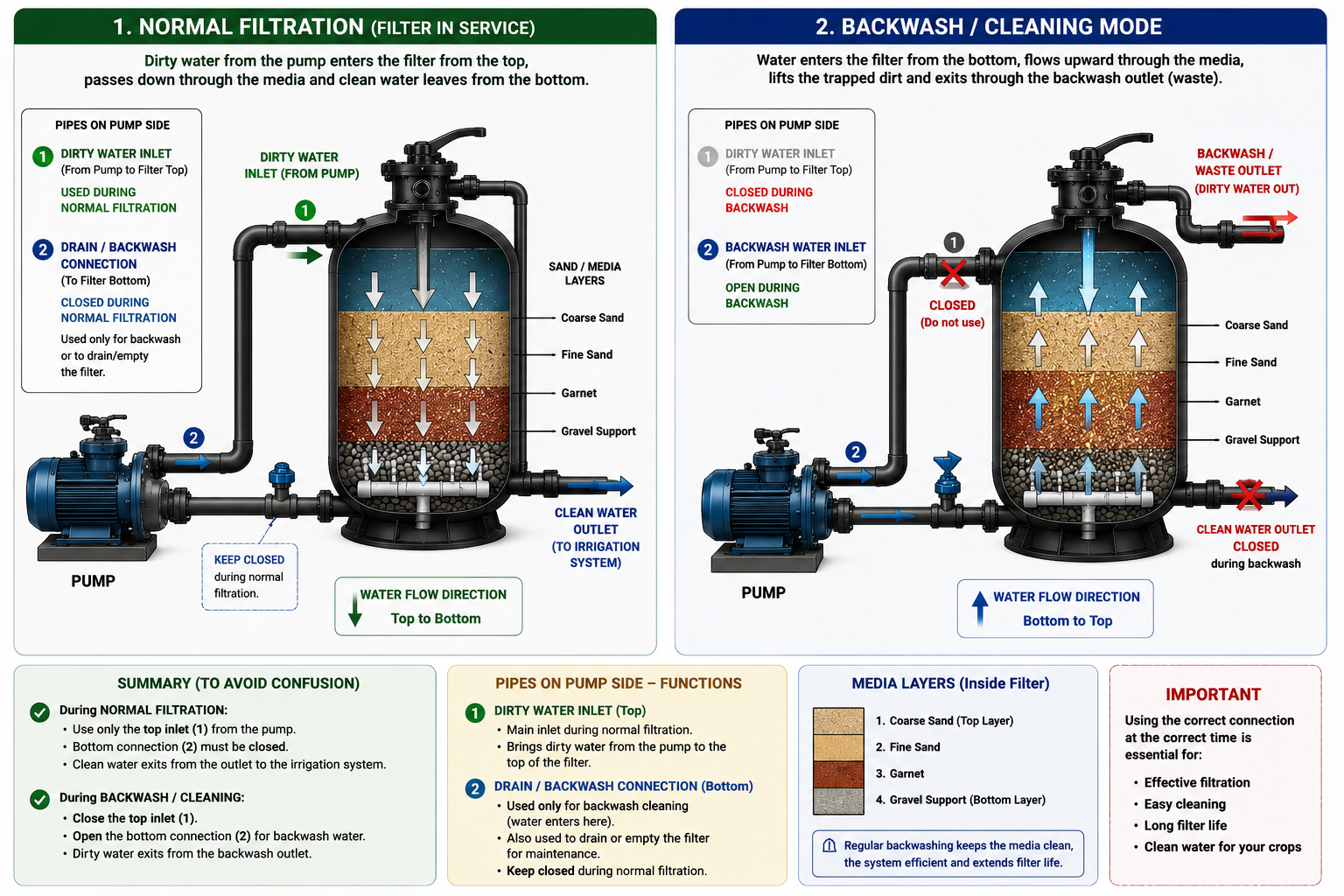
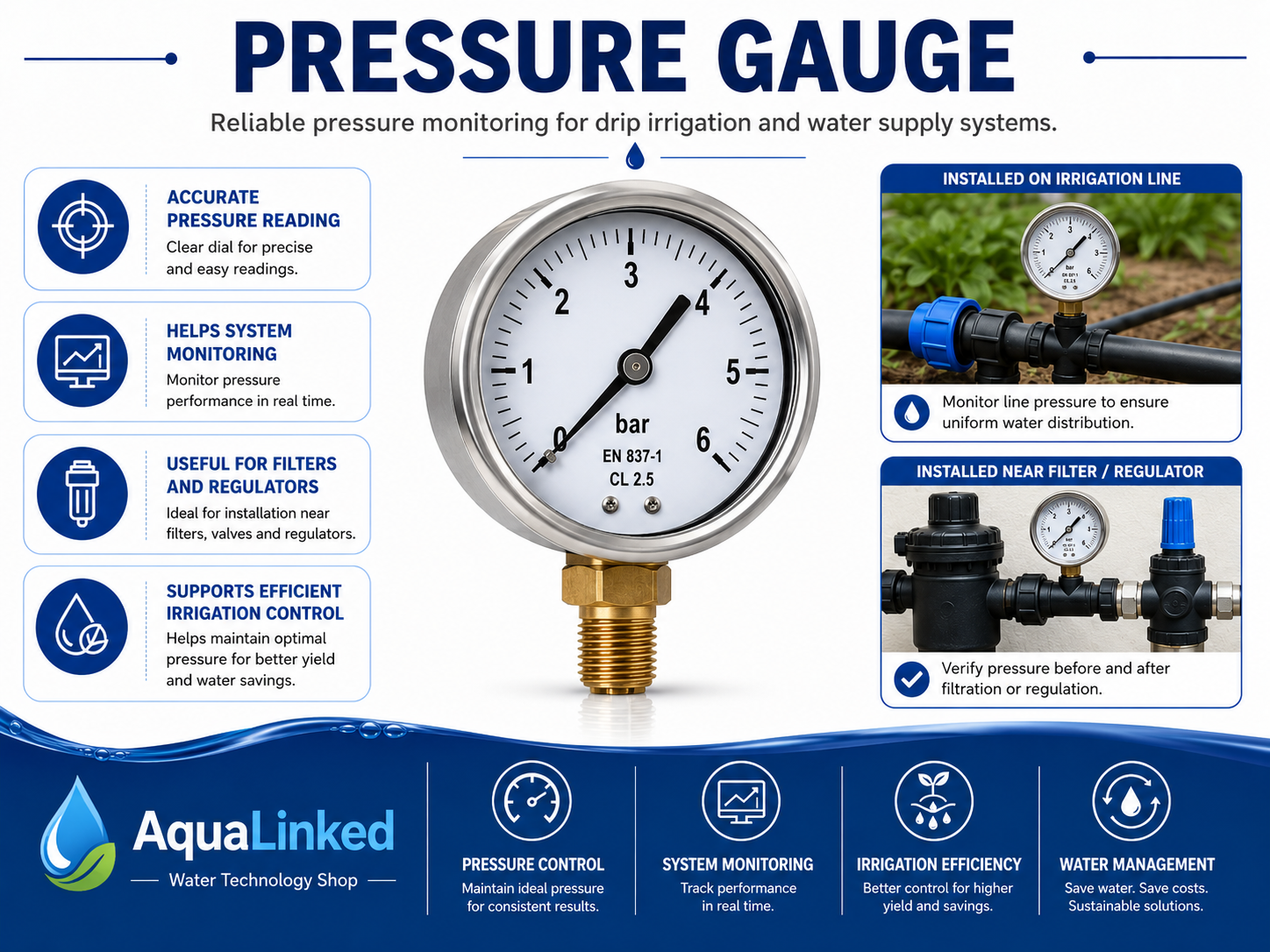
In a drip irrigation control head, the pressure regulator is commonly installed after the filter and before the drip lines. It works together with filters, valves, pressure gauges, fertigation units, and mainline fittings. A filter removes particles that may clog emitters, while the pressure regulator ensures that the filtered water enters the drip system at the correct pressure.
This product is useful for vegetable farms, greenhouses, nurseries, orchards, smallholder irrigation systems, and irrigation training demonstrations. It is also a good teaching material because it clearly shows why pressure control is necessary in modern drip irrigation.
Before purchase or installation, users should confirm the final supplier specifications, including connection size, inlet pressure range, preset outlet pressure, flow range, material type, installation direction, and compatibility with the irrigation system.
NEWTON (N) – UNIT EXPLANATION
1 Newton is the SI unit of force.
1 N = 1 kg · m/s²
Meaning:
A force of 1 Newton is required to accelerate a mass of 1 kilogram
at a rate of 1 meter per second squared.
From Newton’s second law:
F = m × a
Where:
F = force (Newton)
m = mass (kg)
a = acceleration (m/s²)
--------------------------------------
In pressure terms:
Pressure P = N/m²
Since:
1 N = kg · m/s²
Then:
P = (kg · m/s²) / m²
P = kg / (m · s²)
--------------------------------------
In Bernoulli equation:
P / γ
Where:
γ = ρg = kg/m³ × m/s² = N/m³
So:
P / γ = (N/m²) / (N/m³) = m
FINAL RESULT:
Pressure becomes meters of water head (m)
When flow passes through a narrow section, velocity increases due to continuity. However, the expected increase in velocity head is small compared to the large pressure drop because significant energy is lost due to turbulence, friction, and flow separation. Therefore, most of the pressure energy is dissipated as head loss rather than being converted into velocity.
Availability, Delivery and Support
For special delivery, bulk purchase, technical support, or supplier confirmation, visitors can send an inquiry before purchase.
Ask About AvailabilityCustomer Reviews
Customer Reviews
Reviews are published after admin approval.